Express delivery and free returns within 24 hours

No.2-1, Fourth Road, Yongkang City, Jinhua, Zhejiang Province

info@biyoti.com

home/news

News

How to Use an Impact Wrench Without Damaging Wheel Studs

How to Use an Impact Wrench Without Damaging Wheel Studs

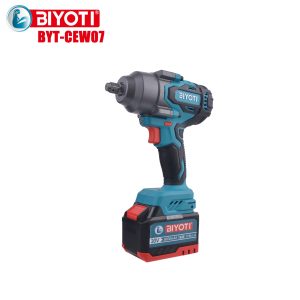
A cordless impact wrench speeds up tire changes, but wheel hardware leaves little room for careless technique. Use impact power mainly for removal, start each lug nut by hand, and finish with a calibrated torque wrench. This guide shows how to use an impact wrench without damaging wheel studs. Why Impact Wrenches Damage Wheel Studs A lug nut creates clamping force by stretching the wheel stud slightly. Too much torque can stretch it beyond its working range. Over-Torque Is Not Extra Safety An impact wrench delivers repeated hammer blows, not measured force. It breaks seized fasteners well but cannot confirm proper lug nut torque. Many passenger vehicles specify roughly 90–120 N·m, though the owner’s manual takes priority. Wheel stud damage from impact wrench misuse may include: The BYT-CEW07 Impact Wrench produces up to 800 N·m. That force is most useful during removal; short trigger pulls are safer near the wheel. Prepare the Vehicle and Tool Park on firm ground, apply the parking brake, use the correct lifting points, and wear eye protection. Check studs and nuts for damaged threads, rust, or binding. Use the Right Socket Choose a fully fitting impact-rated socket. A loose socket can round the nut, while a
Read More
Floor Jack vs Bottle Jack vs Scissor Jack Best Choice by Use

Floor Jack vs Bottle Jack vs Scissor Jack: Best Choice by Use

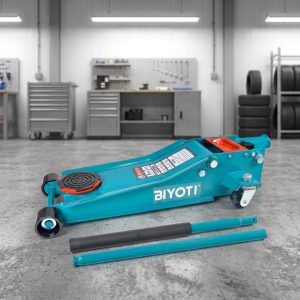
A car jack is not “best” by itself. The right choice depends on where you lift, work frequency, vehicle size, and storage. A trunk tool may feel slow in a repair bay, while an upright jack may not fit under a sedan. This floor jack vs bottle jack vs scissor jack guide compares three designs for a home garage, roadside tire change, and workshop. It also explains where the BYT-J4T Horizontal Jack, a 4 ton hydraulic floor jack with dual pumps, fits for repeated lifting. Quick Comparison for Garage, Roadside, and Workshop Use Start with the job, not the largest capacity number. Home mechanics value stability and speed. Drivers need compact storage. Technicians need predictable operation across vehicles. Use case Recommended jack Main advantage Main limitation Home garage Floor jack Stable, quick, easy to position Bulky Roadside tire change Scissor jack Compact and light Slow, narrow base High-clearance vehicle Bottle jack Strong lift in a small body High starting height Workshop Floor jack Fast repeated service Needs floor space For garages handling cars, SUVs, off-road vehicles, vans, and light trucks, the BYT-J4T Horizontal Jack offers a 4-ton rating and dual-pump operation. Its horizontal layout provides the settled stance expected from a

Read More
650W vs 800W vs 1150W Blowers Find Your Best Choice

650W vs 800W vs 1150W Blowers: Find Your Best Choice

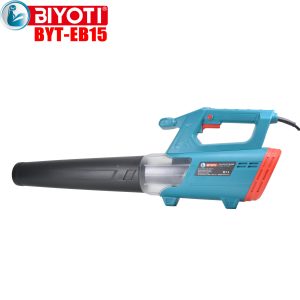
Choosing an appropriate electric blower is more than determining only the watts rating. The user must consider the kind of work he does and the places and frequency in which the tool will be used. A blower with 650W power would suit most domestic applications. However, 1150W blower is best for more difficult activities performed in workshops or outdoors. Comparing electric blowers of different watts ratings such as 650W, 800W, and 1150W is very common. The comparison involves the performance of the tools in terms of air volume and efficiency as well as the nature of the job that each can handle. How Does Blower Power Affect Performance? The wattage in an electric blower changes the motor strength. It also impacts the air output and how well it clears tough dirt or bits of stuff. More power usually means the blower makes stronger air push. This makes hard cleaning jobs quicker and simpler. But you do not always need the highest power. Small offices, home desks, or quick computer cleaning do not call for the same level as a big woodworking shop or a large warehouse. Here is a quick look at the main differences: Power Level Main Use Performance 650W

Read More
What Can a 1200W Plunge Router Cut

What Can a 1200W Plunge Router Cut?

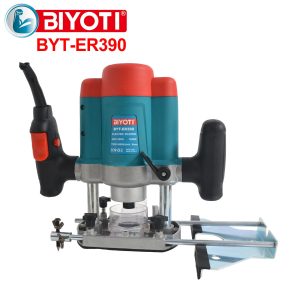
The 1200W plunge router is small to be used on site but it can also handle cabinetry grooving, furniture jointing, making templates, recesses, and shaped edges. The real issue is cutting through hardwood, MDF, and plywood without burning or tearout. This review will address hardwood, MDF, plywood, and edge profiling with the BYT-ER390 Router. It has a 1200W input, variable speed, plunge operation, an 8mm collet, and a 220V/50Hz rating. What a 1200W Plunge Router Can Do Bit diameter, sharpness, plunge depth, timber density, feed rate, and chip removal define cutting capacity. A 1200W wood router works best through controlled passes, not one full-depth cut. Typical workshop jobs A machine in this class can handle: How deep can a plunge router cut? The final groove may be deep, but several shallow passes are cleaner and safer than one heavy pass. The BYT-ER390 Router suits this method. Its plunge base lets the cutter enter from a panel face, while the 8mm collet accepts common grooving, trimming, and profiling bits. Hardwood Tests: Grooves, Mortises, and Burn Marks Hardwood is the toughest test because dense fibres load the cutter and hold heat. Oak, maple, walnut, and similar stock can be routed well, but a

Read More
Cordless LED Light Uses for Camping, Outdoor Work & Emergencies

Cordless LED Light Uses for Camping, Outdoor Work & Emergencies

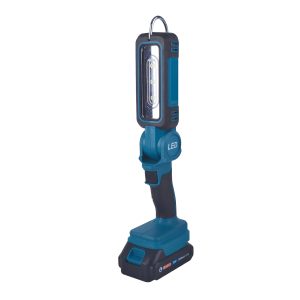
A cordless LED light is no longer just a backup item kept in a drawer. For outdoor work, weekend camping, roadside repair, and sudden power outages, people need lighting that moves as quickly as the job changes. This guide explains practical applications of cordless LED lights in outdoor, camping, and emergency situations, with a close look at the BYT-LA01 Cordless LED Light as a compact 20V option. Why Cordless LED Lights Fit Outdoor Work Outdoor lighting is often about timing. A loading area may need temporary light before permanent wiring is installed. A farm tool, trailer, pump, or may need inspection far from a wall socket. In these cases, an outdoor cordless light removes two common problems: finding power and managing cables. Outdoor work areas that need movable light A battery powered LED work light is useful for: Cool daylight output helps users see screws, cable colors, water leaks, surface cracks, and small hardware more clearly. For inspection jobs, a daylight LED work light 6500K can feel closer to clear daylight than warm decorative lighting. For these outdoor tasks, the BYT-LA01 Cordless LED Light gives buyers a practical product format: 20V battery voltage, 6500K color temperature, 30–50W rated power, MAX500W marked power,

Read More
Cordless Hot Air Gun Uses for Automotive Technicians

Cordless Hot Air Gun Uses for Automotive Technicians

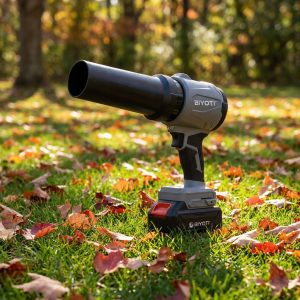
Automotive heat work does not always happen at a bench. It happens under dashboards, around bumpers, inside trunks, beside lift posts, and outdoors in fleet yards. That is why a cordless hot air gun is more than a convenience. For wiring, hoses, decals, vinyl film, plastic trim, and adhesive-backed parts, controlled hot air can make small jobs cleaner and faster. This guide shows where the BYT-EB16 Cordless Hot Air Gun fits daily automotive work. Why Portable Heat Matters in Automotive Repair Heat is quite prevalent in automotive servicing; however, the use of an open flame poses dangers when dealing with wire looms, foam, rubber, fuel deposits, and interior panels. The hot air gun provides heat without flames for shrink wrapping tubing, heating adhesives, warming plastics, and even stripping labels. It is important to note that cordless operation is significant because most tasks take just two to three minutes. Job in the bay Why controlled hot air helps Wire repair Shrinks tubing around joints Hose fitting Softens hose ends before seating Decal removal Warms adhesive before peeling Interior trim Softens tape, clips, and plastic edges Plastic repair Helps shape or prepare plastic parts The BYT-EB16 Cordless Hot Air Gun is built for mobile

Read More
Weld PPR Pipe Without Leaks in 7 Field-Tested Steps

Weld PPR Pipe Without Leaks in 7 Field-Tested Steps

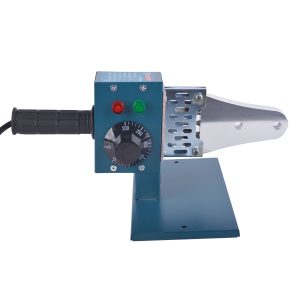
A PPR water line rarely fails in the middle of the pipe. The weak point is usually the joint: one crooked cut, a wet socket, a cold weld, or a pipe twisted while the plastic is still soft. For plumbers, renovation teams, and tool buyers, leak-free work comes from a steady routine and the right PPR pipe welding machine. This guide explains how to weld PPR pipe without leaks, from cutting to cooling. It is written for real job sites: apartments, bathroom refits, hot water lines, and small commercial maintenance. The method also shows where the BYT-PPR02 PP-R Pipe Welding Machine fits into daily PP-R socket fusion work. Why PPR Pipe Welds Leak Before picking up the tool, look at the failure points. They are small, but they can stay hidden behind tile or inside a wall for years. Leak Risk What Happens on Site Better Habit Angled cut One side melts deeper than the other Cut square and deburr Dust or water Bubbles or gaps form in the weld face Wipe pipe and fitting dry Low heat Only the surface softens Work near 260°C Overheating Plastic collapses inward Heat for the needed seconds Twisting Melted layers are torn Push straight,

Read More
Stop Spray Gun Runs and Spatter with Better Control

Stop Spray Gun Runs and Spatter with Better Control

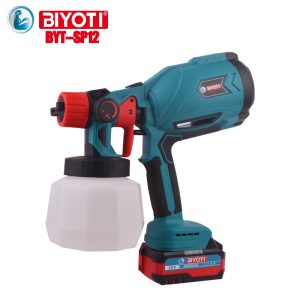
A clean spray finish is not magic. Most spray gun defects come from small habits repeated across a wall, fence, cabinet door, or metal frame. The two problems that ruin a job fastest are spray gun runs and spray gun spatter. One leaves wet paint crawling down the surface. The other throws material onto masking film, floors, hardware, and nearby work. For decorators, furniture shops, renovation teams, and tool distributors, paint sprayer troubleshooting affects coating cost, cleanup time, and customer satisfaction. This guide explains why runs and spatter happen, how to fix them, and how the BYT-SP12 spray gun supports steadier spraying with a brushless motor, 600W input power, 1000ml paint cup, and 1200ml/min flow rate. What Causes Spray Gun Runs? Spray gun runs happen when the wet film is too heavy for the surface to hold. On a vertical wall or door edge, the coating gathers into tear-shaped marks. If it dries like that, sanding and repainting are often needed. Run causes and field fixes Cause What you see Practical fix Gun too close Paint piles up fast Start around 30cm, then adjust within 30-40cm Slow hand speed Heavy wet stripes Move at about 10-12 m/min Paint too thin Coating

Read More
Search

categories

services
leave your message