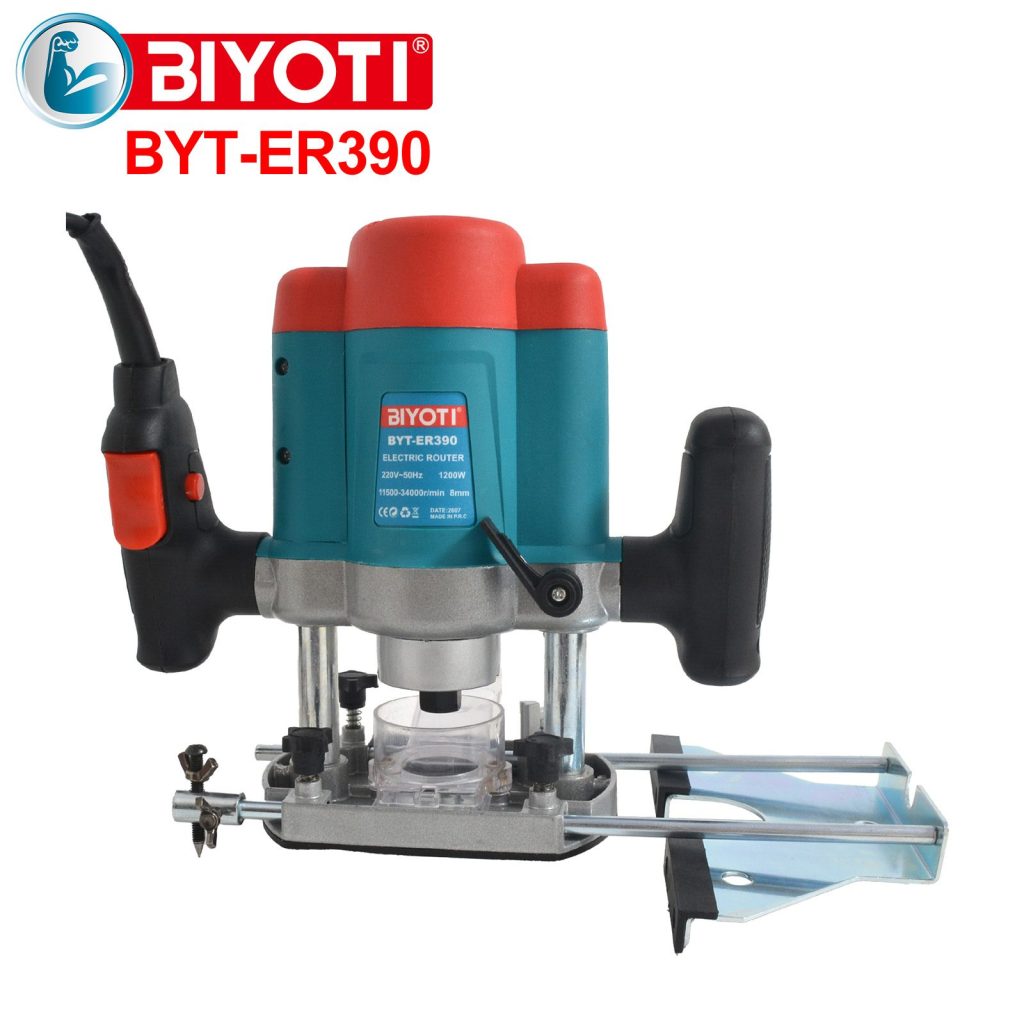
The 1200W plunge router is small to be used on site but it can also handle cabinetry grooving, furniture jointing, making templates, recesses, and shaped edges. The real issue is cutting through hardwood, MDF, and plywood without burning or tearout.
This review will address hardwood, MDF, plywood, and edge profiling with the BYT-ER390 Router. It has a 1200W input, variable speed, plunge operation, an 8mm collet, and a 220V/50Hz rating.
What a 1200W Plunge Router Can Do
Bit diameter, sharpness, plunge depth, timber density, feed rate, and chip removal define cutting capacity. A 1200W wood router works best through controlled passes, not one full-depth cut.
Typical workshop jobs
A machine in this class can handle:
- stopped grooves for shelves, backs, and drawer bottoms;
- mortises, hinge recesses, and hardware pockets;
- flush trimming with a template or guide bearing;
- roundovers, chamfers, rabbets, and decorative profiles;
- repeated parts made with a straightedge or template.
How deep can a plunge router cut? The final groove may be deep, but several shallow passes are cleaner and safer than one heavy pass.
The BYT-ER390 Router suits this method. Its plunge base lets the cutter enter from a panel face, while the 8mm collet accepts common grooving, trimming, and profiling bits.
Hardwood Tests: Grooves, Mortises, and Burn Marks
Hardwood is the toughest test because dense fibres load the cutter and hold heat. Oak, maple, walnut, and similar stock can be routed well, but a deep cut or slow feed may leave dark marks.
Best router speed for hardwood
With a 6–8mm straight bit, begin around 18,000–24,000 r/min. Use the lower end for a wider cutter. Raise speed only when the cut sounds even and chips clear freely.
For plunge router cutting depth per pass, start near 3–4mm in dense stock. A 12mm mortise can be made in three or four stages, followed by a light finishing pass. Keep moving; pausing creates heat quickly.
Use a sharp carbide bit, clear chips between passes, and remove less than 1mm on the last pass for a cleaner wall.
For a plunge router for hardwood, the BYT-ER390 Router combines 1200W input, adjustable speed, and plunge control for mortises, grooves, templates, and furniture joints.
MDF Tests: Clean Edges Need Dust Control

MDF has no grain direction, so it cuts consistently in door panels, painted furniture, jigs, and templates. Its drawbacks are fine dust and faster bit wear.
Router bit for MDF clean edges
Use a sharp straight or spiral carbide bit. Start near 16,000–22,000 r/min and take 4–6mm passes for grooves. An 8mm dado is often better in two passes than one aggressive cut. Leave a light final pass to remove fuzzy fibres.
MDF router dust control is essential. Connect extraction, wear eye and hearing protection, and use a respirator rated for fine dust. If the edge will be painted, sand lightly and seal the porous surface before finishing.
For buyers seeking a router for MDF, the BYT-ER390 Router offers variable speed, an 8mm collet, and plunge action for grooves, recesses, templates, and shaped panel edges.
Plywood Tests: Routing Without Tearout
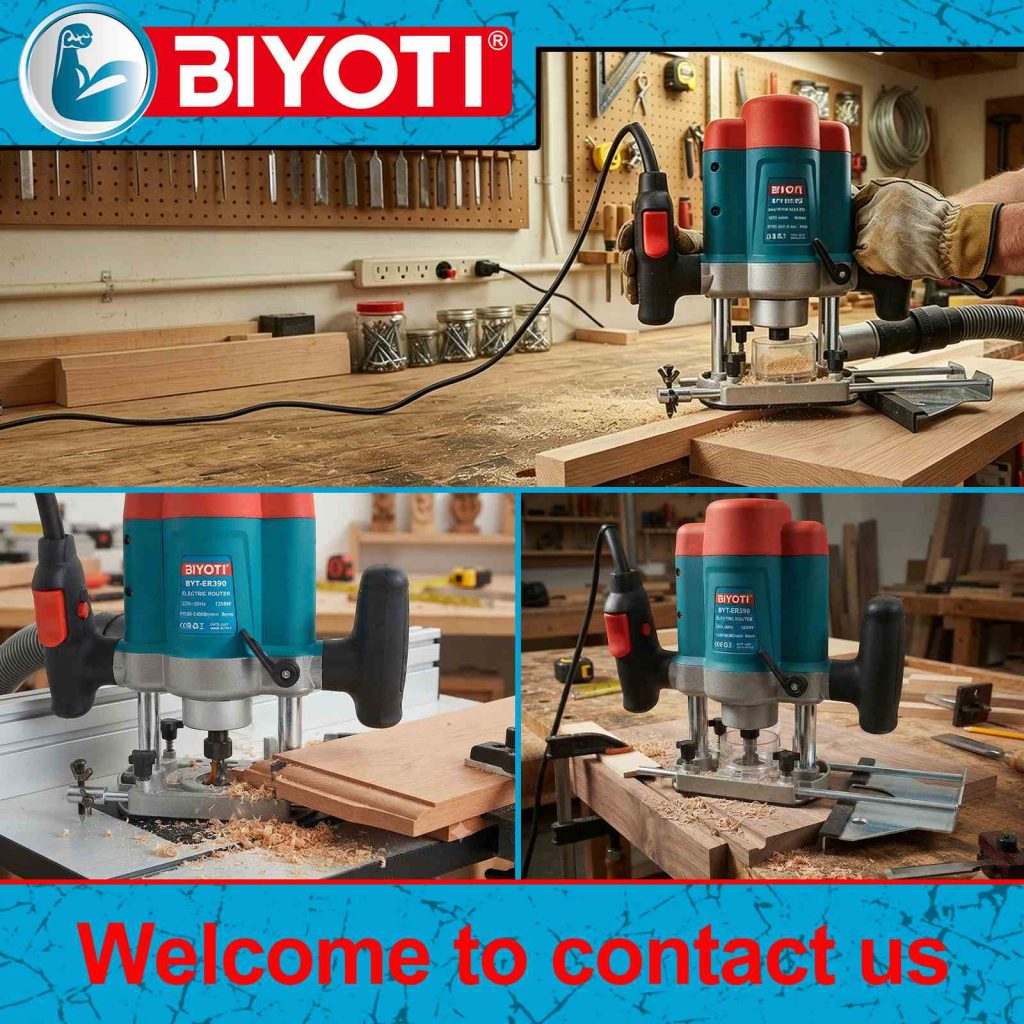
Plywood cuts easily but can be difficult to finish neatly. Its cross-laminated layers may chip at the top veneer, especially near corners or across the face grain.
Plywood edge routing setup
Use a sharp flush-trim, pattern, or spiral bit, and remove bulk waste first. For grooves, begin around 18,000–26,000 r/min, take 4–6mm passes, and clamp the straightedge securely.
To route plywood without tearout, score the line, support fragile veneer with tape or a sacrificial face, and take a shallow first pass. Feed against cutter rotation for control. A light climb-cut scoring pass may help difficult grain, but never use it at full depth.
The BYT-ER390 Router is a practical plywood edge routing tool for cabinet sides, shelves, templates, recesses, and flush trimming where stable plunge action matters.
Edge-Profile Tests on Common Materials
Edge profiling is lighter than a deep groove, but it shows every feed mark. Roundovers, chamfers, and decorative profiles look best when the base stays flat and the bearing follows a clean edge.
Starting settings
| Material or task | Starting speed | Pass depth | Main risk |
| Hardwood groove | 18,000–24,000 r/min | 3–6mm | Burning |
| MDF groove | 16,000–22,000 r/min | 4–8mm | Fine dust |
| Plywood groove | 18,000–26,000 r/min | 4–6mm | Tearout |
| Edge profile | 20,000–30,000 r/min | 1–3mm | Chatter |
Profile end grain first, then the long-grain edges so the later pass removes corner breakout. On a 25mm tabletop, use two settings for a large cutter.
For wood router edge profiles, the BYT-ER390 Router provides adjustable speed and plunge control for roundovers, chamfers, flush trimming, and guided decorative work.
Setup Habits That Protect the Finish

Good routing comes from repeatable setup, not pushing the motor harder. Clamp the work, seat the bit correctly, lock the depth, and make a test cut on matching scrap.
Before every cut
Choose a bit rated for the intended speed. Keep it sharp and resin-free. Let the motor reach full speed before plunging. Feed against rotation, keep both hands on the handles, and never lift the base while the cutter is turning. Clear packed chips between passes.
Mark the waste side, keep the cable behind the tool, and finish with a shallow pass. This is quicker than repairing burn marks or torn veneer.
The BYT-ER390 Router supports this routine with a 1200W motor, variable-speed operation, plunge mechanism, and 8mm collet.
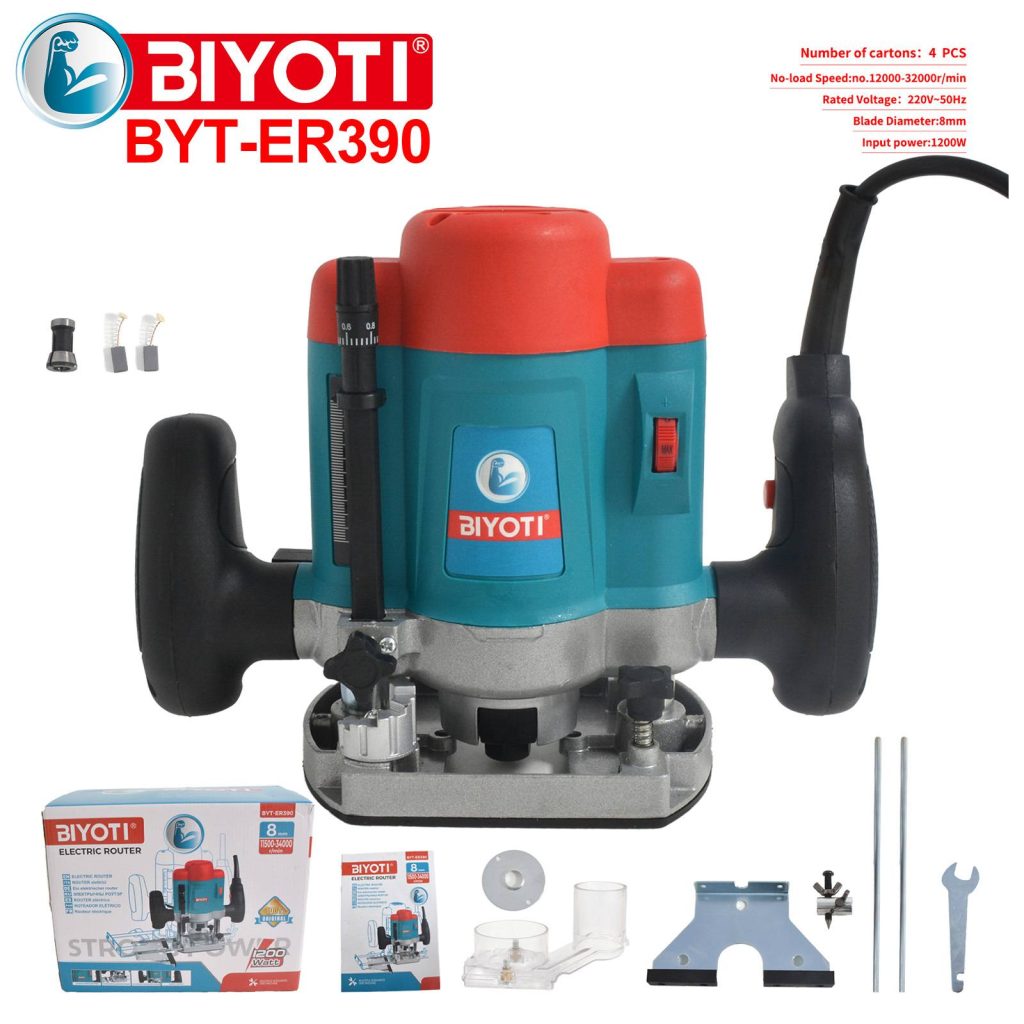
The BYT-ER390 Router is made for cabinet grooves, plunge-cut mortises, template shaping, plywood trimming, MDF recesses, and edge work. It is rated at 220V/50Hz, uses an 8mm collet, and is packed four units per carton for trade purchasing.
Yongkang Jiakai Industry and Trade Co., Ltd.

Yongkang Jiakai Industry and Trade Co., Ltd. manufactures and supplies power tools under the BIYOTI range. Based in Yongkang, Zhejiang, it serves overseas distributors, retailers, workshops, and project buyers. Support includes product consultation, quotations, order discussions, and service communication for BYT-ER390 Router enquiries.
As a BYT-ER390 Router supplier, the company can discuss the 1200W, 8mm-collet plunge router, trade packing, and order requirements.
Conclusion
What can a 1200W plunge router cut? With the right bit and sensible pass depth, it can make hardwood mortises, MDF grooves, plywood edges, template shapes, rabbets, chamfers, and roundovers. Clean results come from shallow passes, a sharp cutter, steady feed, and a final cleanup cut.
For workshops, renovation crews, and tool buyers seeking a variable speed plunge router for mixed materials, the BYT-ER390 Router offers a practical balance of power and control.
FAQs
Can a 1200W plunge router cut hardwood?
Yes. Use a sharp carbide bit, moderate pass depth, and steady feed. In dense hardwood, begin with 3–4mm passes and make the final pass lighter.
Is the BYT-ER390 Router suitable for MDF?
Yes. Its 1200W input, variable speed, and 8mm collet suit MDF grooves, recesses, templates, and edge profiles. Fine-dust extraction and respiratory protection are necessary.
How deep can a plunge router cut in one pass?
It depends on material and bit size. Start around 3–6mm in hardwood, 4–8mm in MDF, and 4–6mm in plywood. Test scrap first.
How can plywood tearout be reduced?
Use a sharp bit, support the veneer, remove bulk waste first, and take a shallow finishing pass. Feed against cutter rotation.
Can the BYT-ER390 Router make edge profiles?
Yes. With the correct 8mm-shank bit, it can make roundovers, chamfers, flush-trimmed edges, and other common profiles. Use light cuts and keep the base flat.