A clean spray finish is not magic. Most spray gun defects come from small habits repeated across a wall, fence, cabinet door, or metal frame. The two problems that ruin a job fastest are spray gun runs and spray gun spatter. One leaves wet paint crawling down the surface. The other throws material onto masking film, floors, hardware, and nearby work.
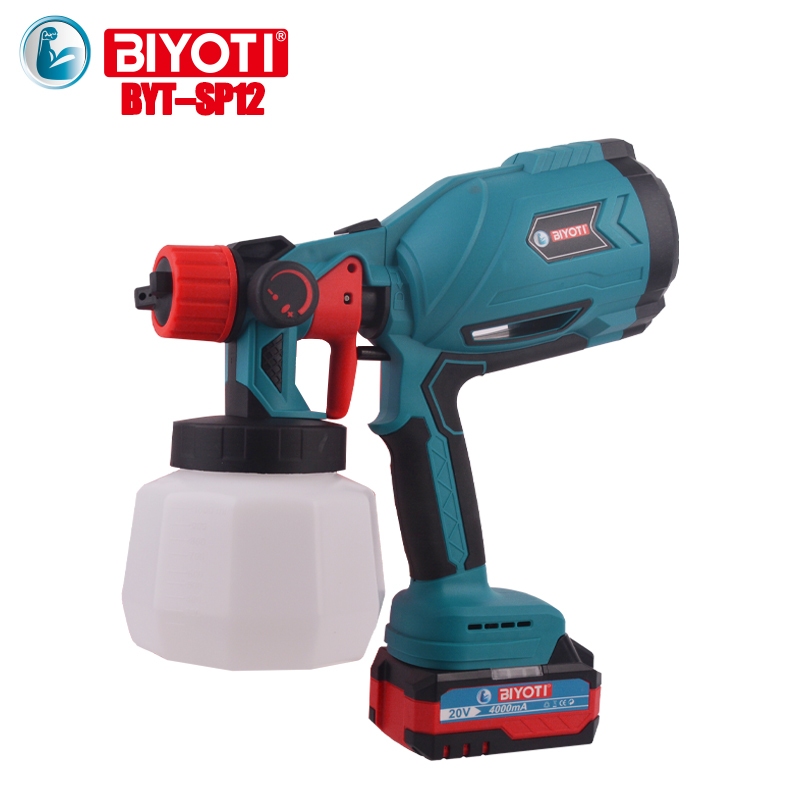
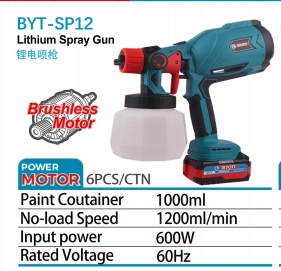
For decorators, furniture shops, renovation teams, and tool distributors, paint sprayer troubleshooting affects coating cost, cleanup time, and customer satisfaction. This guide explains why runs and spatter happen, how to fix them, and how the BYT-SP12 spray gun supports steadier spraying with a brushless motor, 600W input power, 1000ml paint cup, and 1200ml/min flow rate.
What Causes Spray Gun Runs?
Spray gun runs happen when the wet film is too heavy for the surface to hold. On a vertical wall or door edge, the coating gathers into tear-shaped marks. If it dries like that, sanding and repainting are often needed.
Run causes and field fixes
| Cause | What you see | Practical fix |
| Gun too close | Paint piles up fast | Start around 30cm, then adjust within 30-40cm |
| Slow hand speed | Heavy wet stripes | Move at about 10-12 m/min |
| Paint too thin | Coating slides down | Follow the coating maker’s dilution guide |
| Poor atomization | Large wet droplets | Check flow, nozzle condition, and viscosity |
| Low temperature | Film stays wet too long | Work above 10°C when possible |
| One heavy coat | Sags after a minute | Spray 2-3 thin coats instead |
How to fix spray gun runs before they dry?
If the run is still wet, feather it out lightly with a clean brush. Do not spray over the same spot. If the run is dry, sand the raised area with P1200 or P1500 paper, wipe dust, test on cardboard, then spray a light repair coat.
The better habit is “thin spray, repeat.” Apply one light coat, wait about 15-20 minutes, then add the next coat. Overlap each pass by about one-third to one-quarter. At the end of each stroke, release the trigger quickly because edges often receive extra paint.
The BYT-SP12 spray gun helps users keep this rhythm. Its cordless design reduces cable drag, so the operator can keep the gun square to doors, fences, shelving, and stair rails. The 1000ml paint cup also reduces stop-start refilling, helping the coating pattern stay continuous.
What Causes Spray Gun Spatter?
Spray gun spatter is the messy cousin of runs. Instead of a smooth mist, the gun throws coarse droplets or scattered paint. Overspray may land on floors, nearby walls, plants, or finished sections. In real jobs, this means more masking, more cleanup, and more wasted coating.
Spatter usually starts with air, distance, or dirt
Common causes of spray gun spatter include a nozzle held too far away, a tilted spray angle, a nozzle size that pushes out too much coating, dirty paint, loose sealing parts, wind, and high heat. A clogged side of the nozzle may create a “sausage” pattern, while a partly blocked tip can throw droplets.
How to stop paint sprayer spitting during a pass?
Start moving before you pull the trigger. Finish the pass after you release it. This off-surface trigger habit keeps start-and-stop spit away from the workpiece. For doors or boards, use the masked edge as the start zone.
Filter paint before it enters the cup. A small skin, fiber, or dried lump can disturb the fan. Strain coating through a 100-200 mesh filter, then clean the nozzle with solvent and a soft tool. Avoid metal picks that can scratch the nozzle. Keep the nozzle about 30-40cm from the surface and hold the gun at 90°. Outside, wait for calm air rather than fighting wind.
The BYT-SP12 spray gun uses a brushless motor that gives stable power output for more consistent atomization during longer passes. With 600W input power and a stated 1200ml/min flow rate, it has the output needed for fast coverage, while proper nozzle choice and paint filtering help reduce spray gun spatter on real job sites.
A Quick Spray Gun Troubleshooting Routine Before Work
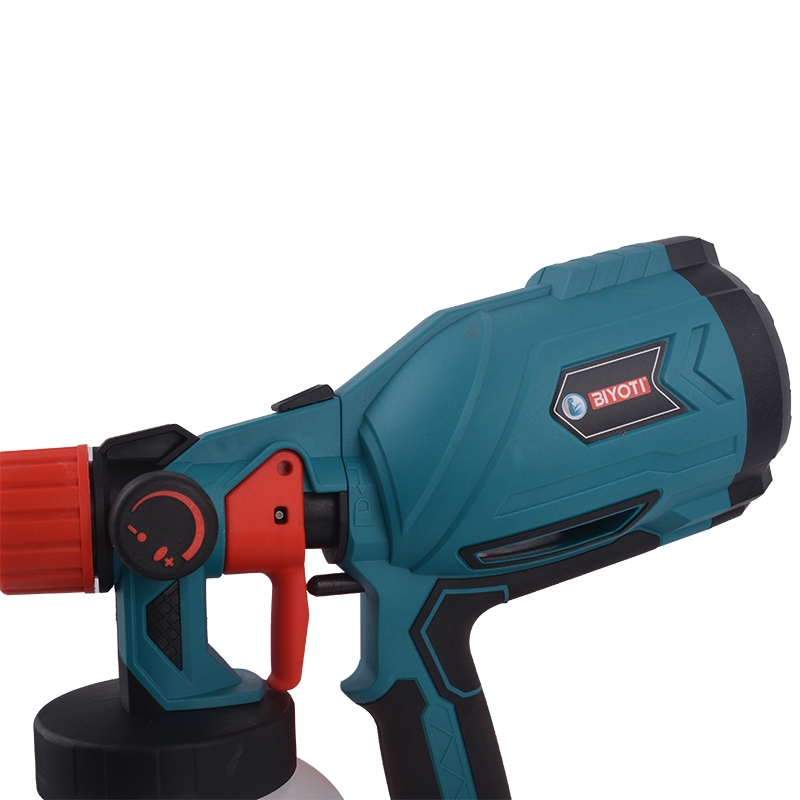
Many spray gun defects show up because the user skips the first five minutes. A test board is cheaper than a repainted wall. Before spraying a customer’s cabinet, gate, or living room wall, run a short check.
Five-minute setup checklist
- Fill the paint cup to about one-half to two-thirds for steady pickup.
- Strain the coating, especially after opening an old can.
- Keep the nozzle 30-40cm from the test surface.
- Hold the gun at 90°, not tilted from the wrist.
- Make two passes on cardboard and inspect the fan shape.
- Adjust dilution, nozzle, or flow before moving to the real surface.
Reading the spray pattern
A good spray pattern looks even from top to bottom, with no heavy center line and no dry tails. If the center is heavy and the sides are weak, the coating may be too thick or the flow balance may be wrong. If the fan is uneven, one side of the nozzle may be dirty. If the gun sprays on and off, the cup may be too empty or the gun angle may be too steep, letting the pickup tube pull air.
The BYT-SP12 spray gun is useful for this setup routine because it is built for cordless movement and steady handling. The large 1000ml container helps maintain a practical liquid level during medium-size jobs such as fences, doors, storage racks, and furniture panels.
Technique Tips for Common Surfaces
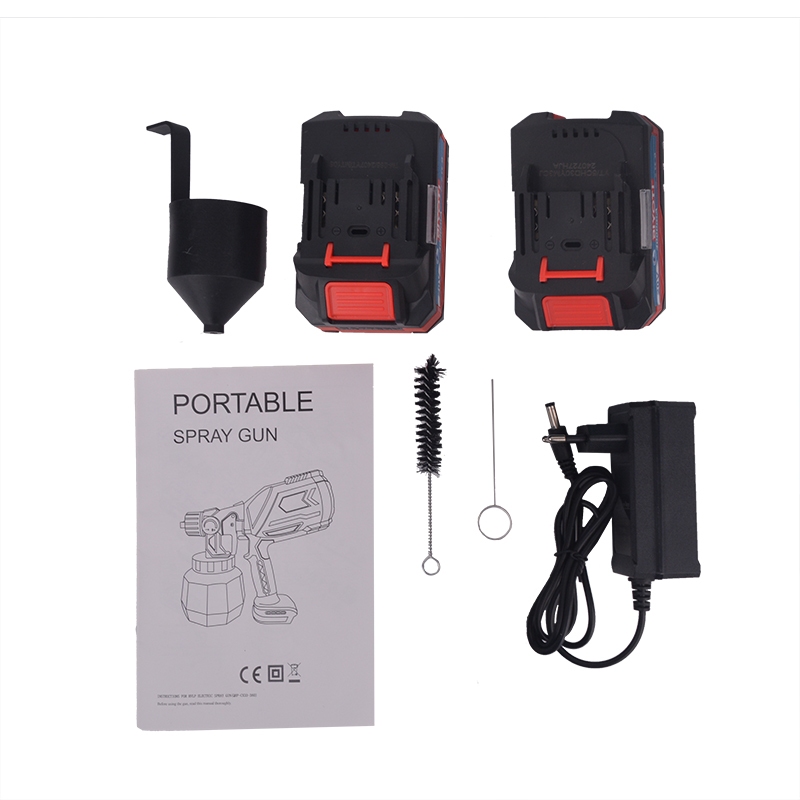
The same cordless spray gun can behave differently from one surface to another. A wall rewards long, even passes. Furniture punishes heavy edges. A fence has gaps that invite overspray. Metal frames often show every thick spot after drying.
Walls, ceilings, and furniture
Work from high to low. Keep the wrist locked and move from the shoulder. Do not arc the gun at the end of the stroke; it puts extra paint in the middle and dry spray at the edges. For furniture and cabinet doors, spray edges first, then broad faces. Edges receive paint from two directions, so use a lighter pass.
Fences and metal frames
On fences, spray early in the day when air is calmer. Keep the gun close enough for the coating to land wet, not dusty. On metal railings, use narrow, controlled passes because paint on round bars runs quickly. Turn the workpiece when possible rather than spraying from a sharp angle.
For these mixed applications, the BYT-SP12 spray gun gives buyers one practical cordless spray gun option for renovation, furniture touch-ups, garden structures, and workshop coating tasks. Its brushless motor, 600W input power, and 1200ml/min flow rate make it suitable for users who need fast coverage without giving up control.
A Brief Look at the BYT-SP12 Spray Gun
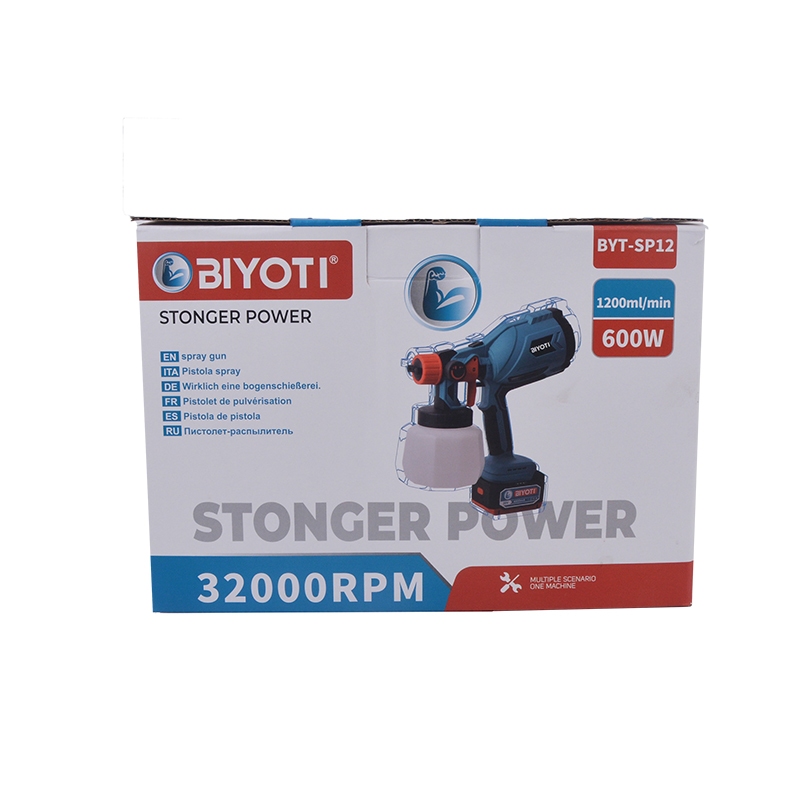
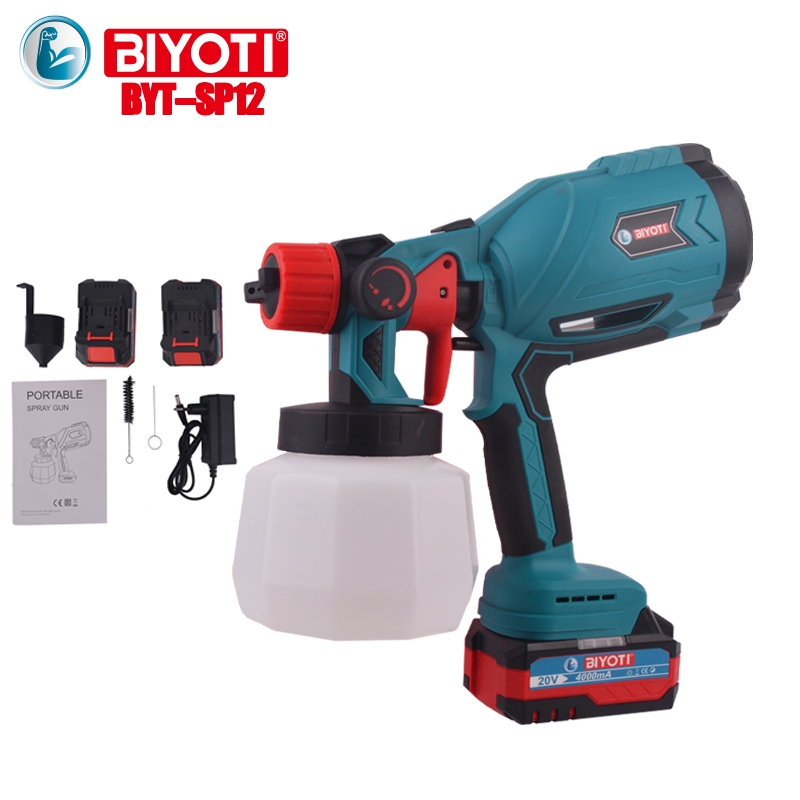
The BYT-SP12 spray gun is a brushless cordless spray gun built for users who want easier movement and stable output on common coating jobs. Key product information includes a brushless motor, 600W input power, 1000ml large-capacity paint cup, 1200ml/min flow rate, and 6PCS/CTN packing. In daily use, those details matter: the motor supports steady spraying, the cup reduces stop-start refilling, and the cordless format makes it easier to keep the gun vertical around awkward surfaces.
Yongkang Jiakai Industry and Trade Co., Ltd. as a BYT-SP12 Spray Gun Supplier
Yongkang Jiakai Industry and Trade Co., Ltd. is the company behind BIYOTI brand power tools. They are a manufacturer and exporter of high quality power tools such as electric drills, angle grinders, laser levels, saws, spray gun and more. For the B2B buyers, assessing a supplier for repeat orders includes factors such as product range, export experience, contact information, and supplier’s support to dealers.
Yongkang Jiakai Industry and Trade Co., Ltd. is a professional supplier of BYT-SP12 spray gun. Yongkang Jiakai Industry and Trade Co., Ltd. is able to supply the spray gun to importers, wholesalers, renovation tool channels, and local distributors who are looking for a cordless spray gun with clear selling points. The supplier provides detailed product information, operating instructions, and contact ways for buyers to compare products and communicate with suppliers for sourcing.
Conclusion
Most spray gun defects are preventable. Runs come from too much wet film, slow movement, thin paint, or poor drying conditions. Spatter comes from distance errors, dirty paint, wrong nozzle choice, tilted spraying, loose parts, or wind. The fix is usually simple: test first, spray at 30-40cm, move at a steady speed, overlap lightly, filter the coating, and clean the gun after use.
BYT-SP12 is a perfect tool for those users that require a spray gun that can be used with cordless convenience whilst still providing the power required to finish coat with a cleaner finish, less chance of rework and more quickly on real world surfaces. It provides the user with a great base from which to develop better spray habits.
FAQs
What is the main cause of spray gun runs?
The cause of wet paint on the surface is too much paint applied to the surface. This can occur due to several reasons, including paint gun being too close to surface, inadequate hand speed, paint being over-thinned or over-coating in attempt to cover surface in one coat.
How do I reduce spray gun spatter?
Nozzle should be held 30-40cm from surface. Gun should be held at 90° to surface. Paint should be strained through 100-200 mesh size. Nozzle should be cleaned before it clogs. No painting should be done in wind or in very hot weather.
Is the BYT-SP12 spray gun good for cordless paint sprayer work?
The BYT-SP12 spray gun is designed for cordless paint sprayer use. This BYT-SP12 sprayer features a brushless motor, 600W input power, a 1000ml paint cup, and a flow rate of 1200ml/min. This allows it to be used effectively to paint surfaces such as walls, fences, pieces of furniture and for carrying out touch-up work for building renovations.