Express delivery and free returns within 24 hours

No.2-1, Fourth Road, Yongkang City, Jinhua, Zhejiang Province

info@biyoti.com

home/news

News

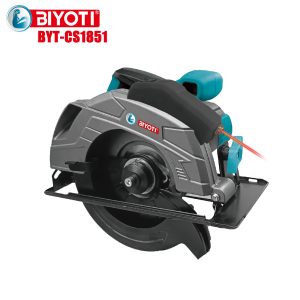
Circular Saw Safety Prevent Kickback and Blade Binding

Circular Saw Safety: Prevent Kickback and Blade Binding

Circular saw safety begins long before the blade actually hits the timber. A smooth cut can quickly become hazardous if the kerf narrows, the blade bends, or the wood moves. These issues lead to circular saw kickback and circular saw blade binding in an instant. Staying safe is straightforward. You must support your material well and keep the blade straight. Always use both hands and pull the trigger to stop as soon as you feel the tool struggle. This guide walks you through how to use a circular saw safely. It covers the roots of kickback and the right steps to take if your blade gets stuck. Why Circular Saw Kickback Happens Kickback is a sudden force that can jerk a handheld saw back toward the user. This usually occurs when the blade gets pinched or stops moving while under power. The danger grows if a large panel starts to sag or if the teeth hit a hidden object inside the wood. Three common kickback triggers The primary cause is a closing kerf. When a plywood sheet is not supported correctly, it can bow and squeeze the spinning blade. The second cause is poor alignment. If you try to twist the
Read More
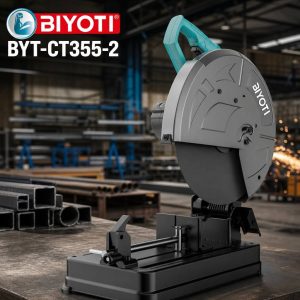
How to Choose a Steel Cutting Machine for Factory Work

How to Choose a Steel Cutting Machine for Factory Work

Buying a steel cutting machine is not about picking the biggest motor. In a factory, ask three questions first: what steel do you cut every day, how large is it, and how many cuts must be finished in a shift? A good match can reduce setup time, rework, and production delays. A poor one becomes a bottleneck. Start With the Workpiece, Not the Motor Before comparing wattage, write down the jobs the machine must handle. Material and section size List the materials and shapes used most often: carbon steel, stainless steel, steel pipe, angle steel, channel, or other profiles. Record the largest regular dimensions. A 355mm metal cutting saw may provide useful capacity, but blade diameter alone does not prove exact cutting size. Ask for confirmed capacities for round pipe, square tube, rectangular tube, angle steel, and solid stock. Compare them with normal production parts, not a rare one-off job. Daily output and cutting pattern A maintenance shop making 20 cuts a day has a different need from a line making several hundred. Check whether the work is mostly straight cut-off or needs frequent angle changes. For routine profile and pipe work, the BYT-CT355-2 Steel Cutting Machine is worth evaluating. Its 355mm blade

Read More
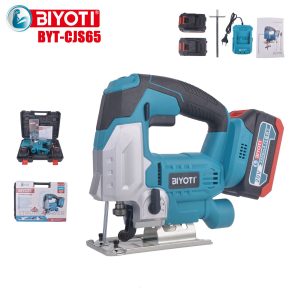
Cordless Jigsaw Applications for DIY and Professional Woodworking

Cordless Jigsaw Applications for DIY and Professional Woodworking

A cordless jigsaw earns its place in a workshop because it handles curved profiles, interior openings, short trims, bevels, and on-site fitting. For a homeowner, that may mean shaping a shelf around a corner. For an installer, it may mean cutting a sink opening after the worktop is in the room. The best cordless jigsaw applications are jobs where control and access matter as much as speed. The BYT-CJS65 cordless jig saw fits that range with a brushless motor, 650W input power, 2800 RPM no-load speed, and stated capacities of 100 mm in wood vertically, 80 mm in wood at 45°, and 21 mm in steel. Why a Cordless Jigsaw Works Across Many Projects A jigsaw uses a narrow reciprocating blade, letting the operator steer through curves and reach awkward cuts. Cordless power also keeps cables away from cabinets, stairs, and jobsite floors. Curves, Cutouts, Trims, and Bevels A cordless jigsaw for woodworking can move from a rounded edge to an internal opening with little setup. For enclosed cutouts, drill a starter hole and follow the marked line. For bevel work, keep the shoe firmly seated. For readers asking how to use a cordless jigsaw across curves, openings, or a jigsaw

Read More
5 Features That Matter in a Professional Cordless Jobsite Light

5 Features That Matter in a Professional Cordless Jobsite Light

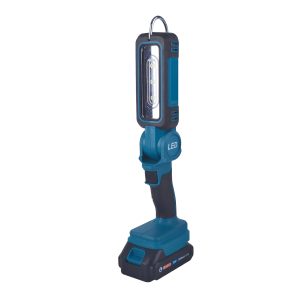
A good cordless lighting tool for the jobsite has more than a task of illuminating a poorly lit site. It needs to be portable, provide enough lighting for detailed tasks, and be user-friendly within a populated work environment. The right choice is not determined by the number that features on the box but the task at hand. BYT-LA01 cordless lighting follows that mobile-work approach. Its listed data includes a 20V battery platform, 6500K color temperature, 30–50W rated power with MAX500W marked output, a 280×150×235mm body, and 1KG weight. Useful Brightness and Clear Task Visibility Brightness is usually the first filter when buyers compare a cordless construction light, but useful light matters more than a headline figure. Brightness, battery compatibility, durability, portability, and working conditions repeatedly appear as key buying factors in professional work-light guides. Match Output to the Work Area A narrow inspection under equipment needs different lighting from a room where several trades are working. Too little light hides edges and surface defects; too much light at close range can create glare and hard shadows. A portable LED work light should create a clear working zone and be easy to reposition when the task moves. Color temperature matters as well.

Read More

Heat Gun Temperature Guide for Materials and Nozzles

A reliable heat gun temperature guide answers two questions: what temperature should a heat gun be set to, and which nozzle gives the safest heat pattern? The answer changes with material, airflow, distance, and time. Heat that lifts paint from steel can warp plastic. This guide covers the best heat gun temperature for different materials, heat gun nozzle types, and the BYT-HG01 Heat Gun in workshop jobs. Balance Temperature, Airflow, and Distance Temperature never works alone. Check the material, thickness, nearby parts, and heated area. Read the Surface, Not Only the Dial Outlet temperature is not the same as workpiece temperature. Start low, keep moving, and test scrap. Darkening, smoke, bubbling, gloss change, or a sharp smell means too much heat. Let the Nozzle Shape the Job A round nozzle concentrates heat. A flat nozzle spreads it across a strip. A reflector sends air around tubing, while a glass-protection nozzle directs heat away from a fragile edge. Concentrated airflow also scorches quickly. The BYT-HG01 Heat Gun pairs a 300–650°C adjustable range with 280–480 L/min airflow. Its 2600W input supports fast heating and steady output for focused metal work and broad coating removal. Heat Gun Temperature Chart by Material Use this heat gun

Read More
Cordless Drill Maintenance for Longer Life and Better Runtime

Cordless Drill Maintenance for Longer Life and Better Runtime

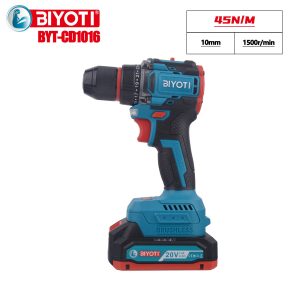
A cordless drill can lose power little by little. The trigger still works fine. Yet holes take more time. The chuck may slip. The battery can die halfway through a job. Often the motor is not broken. Heat, dust, dull bits, bad charging habits, and damp storage quietly raise the load on the tool. A simple cordless drill maintenance routine keeps torque strong. It also protects battery runtime and safe handling. This guide shares practical cordless drill battery care for workshops, installers, maintenance crews, and home users. It also shows how these habits help the BYT-CD1016 / CD1016C Cordless Drill. That tool is a 20V brushless model made for screwdriving, drilling, and impact drilling. Why Cordless Drill Maintenance Matters Maintenance works best when it focuses on the real sources of wear. Small problems build up over time. They make the drill work harder than it should. Good habits stop that early. Heat, Dust, and Resistance Dust around the cooling vents cuts airflow. A blunt bit or the wrong speed adds extra resistance. The motor then pushes harder. The battery sends more current. The housing gets hot faster. Warning signs show up clearly. You may feel odd vibration. Drilling slows down. The

Read More
Cordless Die Grinder Uses in Automotive Repair

Cordless Die Grinder Uses in Automotive Repair

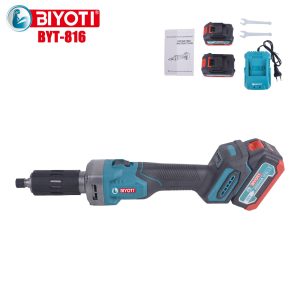
A cordless die grinder for automotive repair is useful when a full-size grinder is too bulky and hand tools are too slow. In an engine bay, beneath a chassis, or beside an exhaust joint, it provides controlled material removal in tight spaces. With the right accessory, a mechanic can clean, shape, deburr, and prepare metal without dragging a hose or cord across the vehicle. BYT-816 die grinder supports this work with cordless lithium power, a brushless motor, 8,500 r/min no-load speed, and a stated collet diameter of 25 mm. Why Cordless Die Grinders Fit Auto Repair Automotive work rarely happens on a clear bench. A bracket may sit behind a suspension arm, while a weld needs dressing above an exhaust pipe. A cordless die grinder for tight spaces cuts setup time and improves access. Workshop need Cordless advantage Engine-bay access No cable catches on hoses or wiring Underbody work No air hose drags across the floor Roadside service Work starts away from mains power Cordless mobility does not make it a heavy cutting machine. It suits focused work on small areas. The BYT-816 die grinder gives shops and distributors a brushless platform for controlled grinding and finishing. Four Automotive Die Grinder

Read More
120mm vs 180mm vs 230mm vs 280mm Water Drilling Choose BYT-1355 for Heavy Jobs

120mm vs 180mm vs 230mm vs 280mm Water Drilling: Choose BYT-1355 for Heavy Jobs

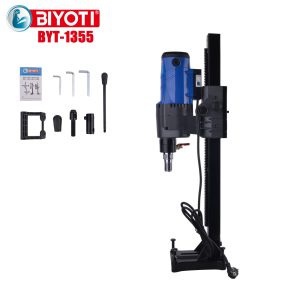
Choosing the right water drilling machine is not only about selecting a larger drilling diameter. Contractors need to consider working conditions, concrete strength, drilling frequency, portability, and power requirements. When comparing 120mm, 180mm, 230mm, and 280mm water drilling sizes, the best choice depends on the actual job. For professional users who need large-diameter drilling, the BYT-1355 Water drilling stands out with its 280mm maximum drilling diameter, 4000W input power, and 600r/min speed. It is designed for demanding concrete drilling applications where stability and strong torque are required. This guide explains how different water drilling sizes perform and why BYT-1355 Water drilling can be a suitable solution for heavy-duty construction projects. Understanding Water Drilling Size and Performance Before choosing a concrete drilling machine, users should understand the relationship between drilling diameter, motor power, and operating method. A larger drilling diameter means the machine needs higher torque and stronger power output. Small diameter drilling is easier to handle, while large diameter drilling requires better stability and professional operation. Key Factor What It Means Impact on Selection Drilling diameter Maximum hole size the machine can create Determines application range Input power Motor output capacity Affects drilling speed and concrete penetration Rotation speed Drill bit

Read More
Search

categories

services
leave your message