Picture this: You’re knee-deep in a home project, smoothing out rough edges on metal or cutting through tile. Without the right tool, it turns into a hassle. Angle grinders fix that. They handle grinding, cutting, polishing, and more. For DIY fans or full-time tradespeople, they’re game-changers. This guide breaks it down step by step. You’ll learn what to look for, so you pick one that fits your work without regrets, like the BYT-AG1256 with its 900 W power and 11,300 r/min no-load speed for fast, efficient tasks.
These tools pack power in a compact body. They spin discs fast to tackle tough jobs. But not all are the same. Size, power, and extras matter. Get it right, and you’ll work smarter. Skip the trial and error. Let’s dive in, highlighting models like the BYT-AG1256 that offer stable 900 W output with optimized airflow for lower heat in continuous duty.
Common Jobs for Angle Grinders
From rust removal on old gates to sharpening lawnmower blades, angle grinders shine. In workshops, they deburr welds or polish surfaces. On sites, they cut rebar or grind concrete. Even simple sanding becomes quick. Versatility keeps them busy. Think about your main tasks. That guides your choice. For instance, the BYT-AG1256 excels in metal fabrication like rebar, angle iron, and pipe cutting, as well as weld prep and cleanup, thanks to its 125 mm versatility for cutting, grinding, flap, and diamond wheels.
Understanding the Basics of Angle Grinders
An angle grinder looks straightforward. A handle, motor, and spinning disc. But details count. The disc sits at a right angle to the body—that’s where the name comes from. It hooks up via a spindle and nut. Guards keep sparks away. Some models add batteries for cordless freedom. The BYT-AG1256 features an M14 spindle thread (with 5/8″-11 optional for North America) and a 22.2 mm bore, ensuring easy compatibility.
Power comes from the copper-wound motor. It drives the disc to high speeds, often thousands of RPM. Discs swap out for different jobs. Grinding wheels for rough work. Cutting discs for slices. The right setup makes all the difference, as seen in the BYT-AG1256’s aluminum gearbox with steel gears for durability and impact resistance.
How Angle Grinders Operate
Pull the trigger, and the motor kicks in. Gears turn the spindle. The disc whirs to life. Speed builds gradually in smart models to avoid jolts. You guide it steadily. For cuts, apply light pressure. For grinding, let the wheel do the work. Always wear gear—sparks fly everywhere. It’s simple once you get the hang of it. Practice on scrap first. With the BYT-AG1256, let the wheel reach full speed before contact for safety.
Types of Angle Grinders to Know
Choices abound. Small ones for detail work. Big ones for heavy cuts. Power sources vary too. Match the type to your needs. Light use? Go compact. Daily grind? Pick durable, like the BYT-AG1256 with its slim barrel grip and 2-position side handle for comfortable control.
Corded models plug in for steady juice. No downtime. Cordless run on batteries, great for spots without outlets. Air-powered ones connect to compressors—lightweight but need setup.
Brushed motors use simple contacts. They’re affordable. Brushless skip those, running smoother and longer. Less heat, more efficiency. The BYT-AG1256’s copper-wound motor provides stable output, making it reliable for continuous duty.
Corded Versus Cordless Options
Corded grinders deliver constant power. Ideal for long sessions. They’re lighter on the wallet and easier to handle without extra weight. But cords limit reach. Extension leads help, though they snag. The BYT-AG1256 is a corded model with a 2.0 m cord (2.5/3 m optional), rated at 220 V ~ 50 Hz (110–120 V ~ 60 Hz optional), offering endless runtime for garage or shop work.
Cordless give mobility. Climb ladders freely. No tripping over wires. Batteries last longer now, but runtime caps at a few hours. Heavier build tires arms faster. For remote jobs, they’re worth it.
- Pros of corded: Endless run, strong torque, budget-friendly. Like the BYT-AG1256’s 900 W for quick cuts.
- Cons of corded: Tethered to outlets, less portable.
- Pros of cordless: Free movement, no cords in the way.
- Cons of cordless: Battery limits, higher price.
Pick based on your spot. Shop or garage? Corded wins. Outdoor or heights? Cordless rules.
Brushed Motors Compared to Brushless
Brushed setups rely on metal brushes for contact. They work fine for basics. But brushes wear out. You replace them now and then. Heat builds up during tough jobs. The BYT-AG1256 includes a carbon-brush pair in its standard kit for easy maintenance.
Brushless motors use electronics instead. No friction means cooler runs. They last years with less upkeep. Power flows better, squeezing more from batteries. Speed stays steady. For heavy users, this pays off big.
If you’re casual, brushed saves cash. Pros swear by brushless for reliability. It cuts downtime, keeps you productive. But the BYT-AG1256’s brushed copper motor with dual ball bearings ensures concentricity and long service life.
Key Features That Make a Difference
Look beyond basics. Good grinders have smart touches. Variable speeds adjust for materials. Soft starts ease into action. Guards that lock tight. These prevent mishaps. The BYT-AG1256 offers safety options like soft-start, restart protection, and overload protection (configurable).
Ergonomics matter too. Rubber grips cut vibration. Side handles boost control. The BYT-AG1256’s TPR over-mold grip with rear-biased balance reduces fatigue in long sessions.
Power Ratings and Speed Controls
Wattage shows muscle. 500-800W suits light tasks like home fixes. 1000W+ tackles metal or stone. 40V for pros. The BYT-AG1256 delivers 900 W at 11,300 r/min for high throughput in quick cuts and smooth grinding.
Speed dials let you tweak RPM. Slow for polishing delicate parts. Fast for quick cuts. Single-speed limits options. Variable opens doors. Match to your materials—wood needs less zip than tile. The BYT-AG1256’s high speed is ideal for construction and renovation, like dry cutting concrete or brick with diamond blades.
Disc size ties in. 115mm for precision. 230mm for deep grooves. Bigger discs eat more power. Balance size with your grinder’s rating.
Ergonomics, Safety, and Extras
Comfort counts for long hauls. Padded handles absorb shakes. Balanced weight feels light. Anti-vibe tech saves wrists. The BYT-AG1256 weighs approx. 2.1–2.3 kg (without disc) with dimensions of approx. 300 × 125 × 105 mm for easy handling.
Safety first. Dead-man switches stop on release. Electronic brakes halt discs quick. Overload protection shuts down if pushed. Spindle locks swap discs easy. The BYT-AG1256’s paddle switch with lock-on and filtered air inlets keep dust out, with front vents for boosted airflow.
Extras shine. Battery indicators show charge. Quick-change systems skip spanners. Dust extraction hooks to vacuums. These make daily use smoother. For the BYT-AG1256, use dust extraction for masonry and always fit the guard with correct flange orientation.
Discover a Trusted Angle Grinder Supplier
Nestled in China’s hardware heartland, Yongkang Jiakai Industry and Trade Co., Ltd. serves as a solid angle grinder supplier. Started in 2019, they craft tools with real-world grit. Focus stays on quality parts and smart designs. Exports reach Europe, Middle East, Asia—proving global trust. They produce reliable models with OEM options for housing color, labeling, plug types (EU/UK/US/AU), and accessory mixes tailored to your market.
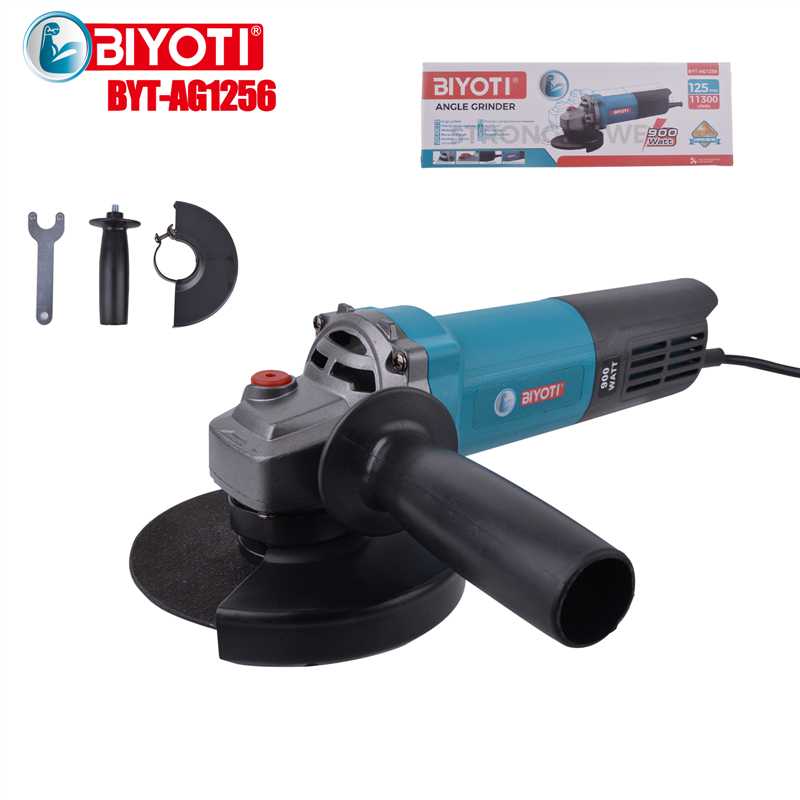
They back every piece with checks like ISO standards. Certifications cover safety needs worldwide. From wholesalers to site crews, their gear fits. Flexible options like custom runs help businesses stand out. If you’re gearing up, this supplier delivers value that builds your toolkit strong, including bundles like the Value Kit (grinder + guard + wrench + 2× cutting wheels + 1× grinding wheel) or Pro Kit (adds flap disc, wire cup, diamond blade, BMC case, spare brushes) for the BYT-AG1256.
Introducing the BYT-AG1256 Angle Grinder
The BYT-AG1256 pairs a 900 W copper-wound motor with a slim body for fast cutting, grinding, and surface prep on a 125 mm platform. It delivers 11,300 r/min for quick stock removal, with a 2-position side handle, adjustable guard, and durable aluminum gearbox. Ideal for metal fab, construction, and maintenance, it includes safety features like configurable soft-start and overload protection, plus a standard kit with guard, side handle, flanges, wrench, and carbon-brush pair. Packed 10 pcs/ctn, it’s OEM-ready with customizable colors, plugs, and bundles.
Final Thoughts on Picking Your Grinder
Choosing an angle grinder comes down to your world. Match power to tasks, type to space. Safety and comfort seal the deal. A smart pick turns jobs from chores to wins. It elevates your work, whether fixing fences or fitting pipes. Invest wisely—you’ll feel the difference every spin, especially with versatile options like the BYT-AG1256.
Frequently Asked Questions
What’s the top tip in an angle grinder buying guide for beginners?
Start with disc size and power. A 125 mm model with 900 W, like the BYT-AG1256, handles most home jobs without overwhelming you.
How does cordless fit into an angle grinder buying guide for mobile work?
Cordless shines for spots without plugs. Look for 18V batteries—they balance weight and runtime for ladder tasks. But for steady power, consider corded like the BYT-AG1256.
Why check safety features in an angle grinder buying guide?
Guards and brakes stop accidents fast. They keep you safe, letting you focus on the cut, as with the BYT-AG1256’s adjustable guard and safety options.
Does disc compatibility matter in an angle grinder buying guide?
Yes, hugely. Match threads and sizes to avoid slips. It keeps work smooth and secure, like the BYT-AG1256’s M14 spindle for 125 mm discs.