Circular saw safety begins long before the blade actually hits the timber. A smooth cut can quickly become hazardous if the kerf narrows, the blade bends, or the wood moves. These issues lead to circular saw kickback and circular saw blade binding in an instant. Staying safe is straightforward. You must support your material well and keep the blade straight. Always use both hands and pull the trigger to stop as soon as you feel the tool struggle.
This guide walks you through how to use a circular saw safely. It covers the roots of kickback and the right steps to take if your blade gets stuck.
Why Circular Saw Kickback Happens
Kickback is a sudden force that can jerk a handheld saw back toward the user. This usually occurs when the blade gets pinched or stops moving while under power. The danger grows if a large panel starts to sag or if the teeth hit a hidden object inside the wood.
Three common kickback triggers
The primary cause is a closing kerf. When a plywood sheet is not supported correctly, it can bow and squeeze the spinning blade. The second cause is poor alignment. If you try to twist the saw to fix a crooked line, the back teeth might catch the wood. Lastly, a dull or dirty blade creates extra friction, making a mishap more likely.
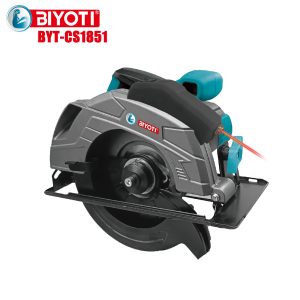
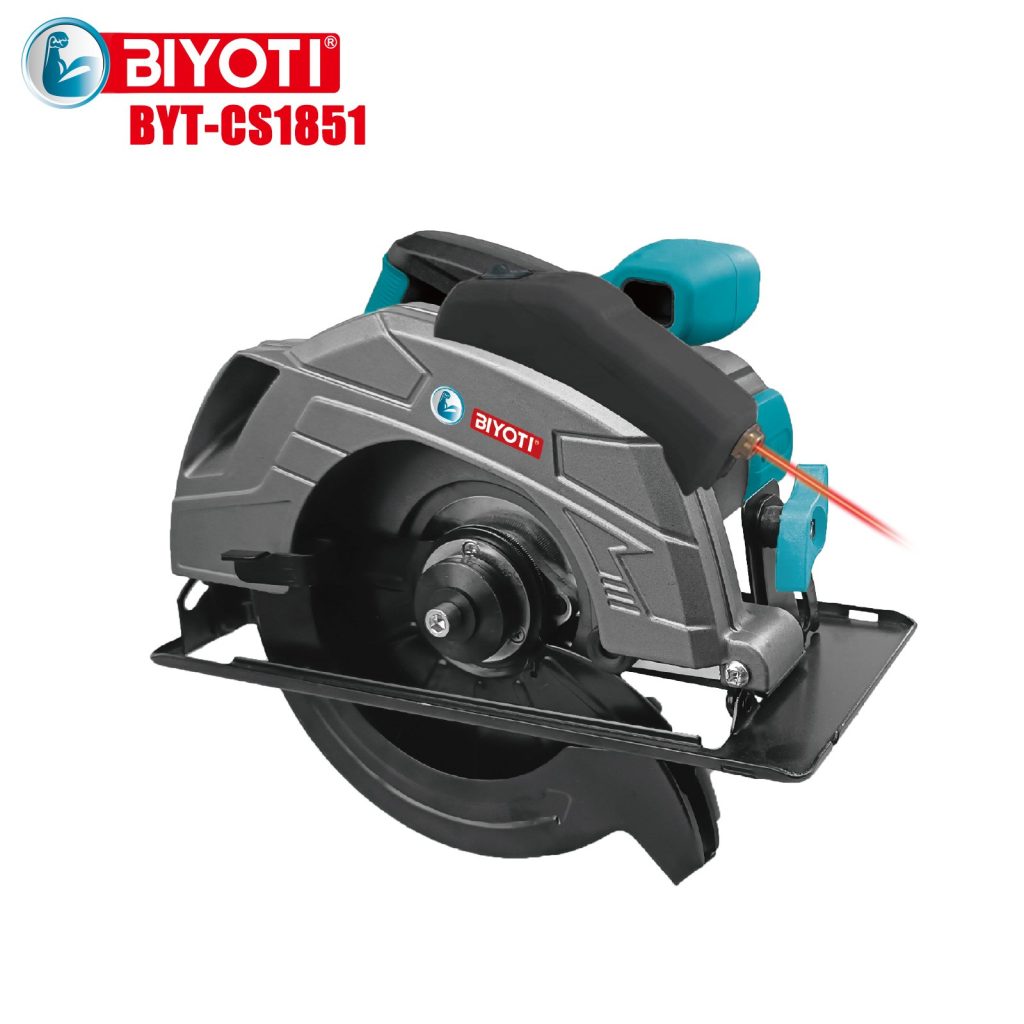
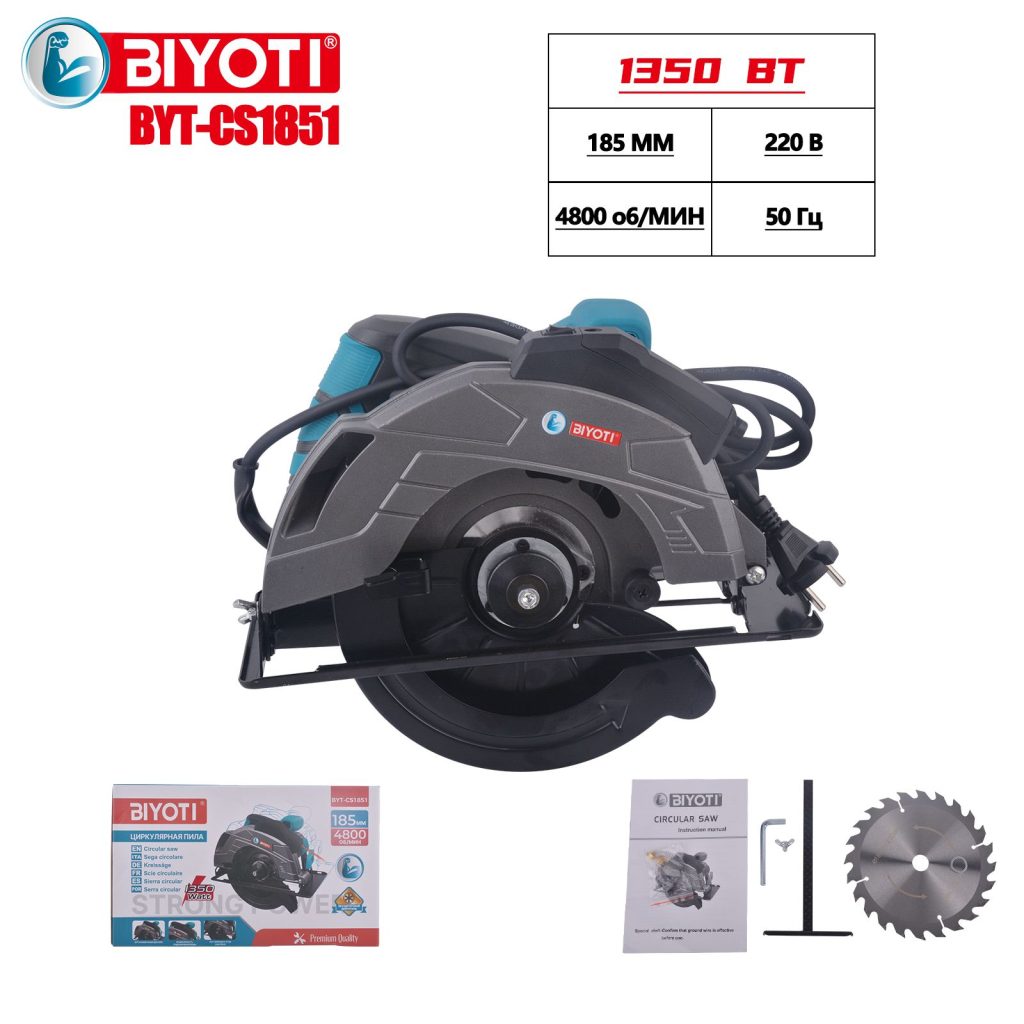
The BYT-CS1851 Circular Saw features a 1350W input motor with a 185mm blade and a 4800r/min no-load speed. While this power helps with smooth cutting, you still need to follow smart circular saw kickback prevention steps to stay in control.
Set Up the Workpiece to Prevent Blade Binding
Most problems with binding start during the setup phase. You must keep the wood steady while letting the waste piece fall away freely. Never try to balance a board on your knee or hold a small piece with your bare hand. Use clamps to lock everything down.
Support large sheets near the cut
While working with large panels, ensure that the supports are kept very close to the cutting line from both sides. Ensure that the wider part of the base of the saw is resting on the piece of wood which is completely supported. This small habit would be the most effective way of preventing blade binding before it occurs.
Match the blade and lock the adjustments
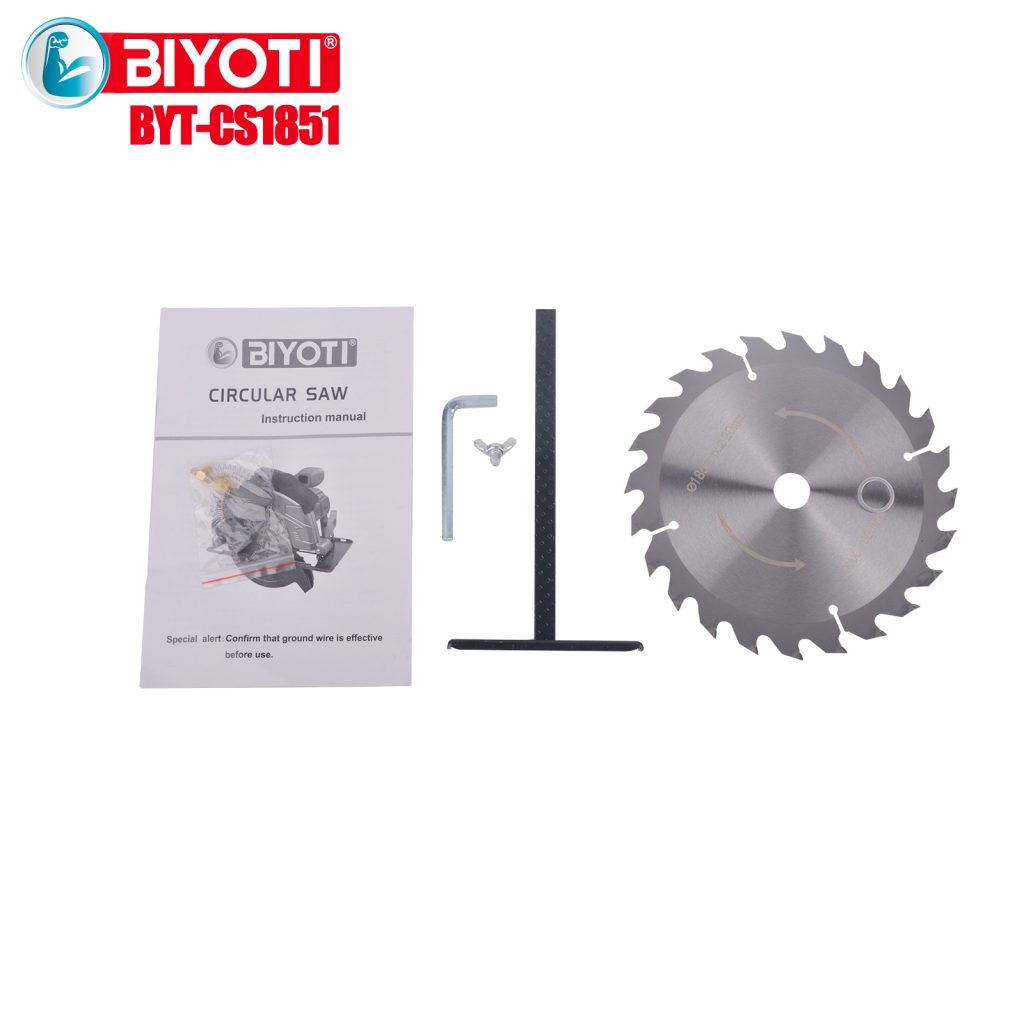
Always pick a sharp blade that fits the right diameter and arbor size. Before you plug the tool in, tighten the depth and bevel locks. If these settings shift while you are working, the blade might tilt and cause a dangerous bind.
| Before the cut | Safer practice |
| Workpiece | Clamp it and use support near the cut line |
| Blade | Ensure it is sharp, clean, and the right size |
| Cut line | Look for nails, knots, or metal obstacles |
| Adjustments | Firmly lock the depth and bevel levers |
| Cord and plug | Check for fraying and keep the lead away |
The BYT-CS1851 Circular Saw runs on a standard 185mm (7-1/4-inch) blade at 220V~50Hz. Its adjustable depth and 0–45° bevel settings help with various tasks, but a careful setup is what truly ensures safety.
Use a Cutting Technique That Keeps the Saw Under Control
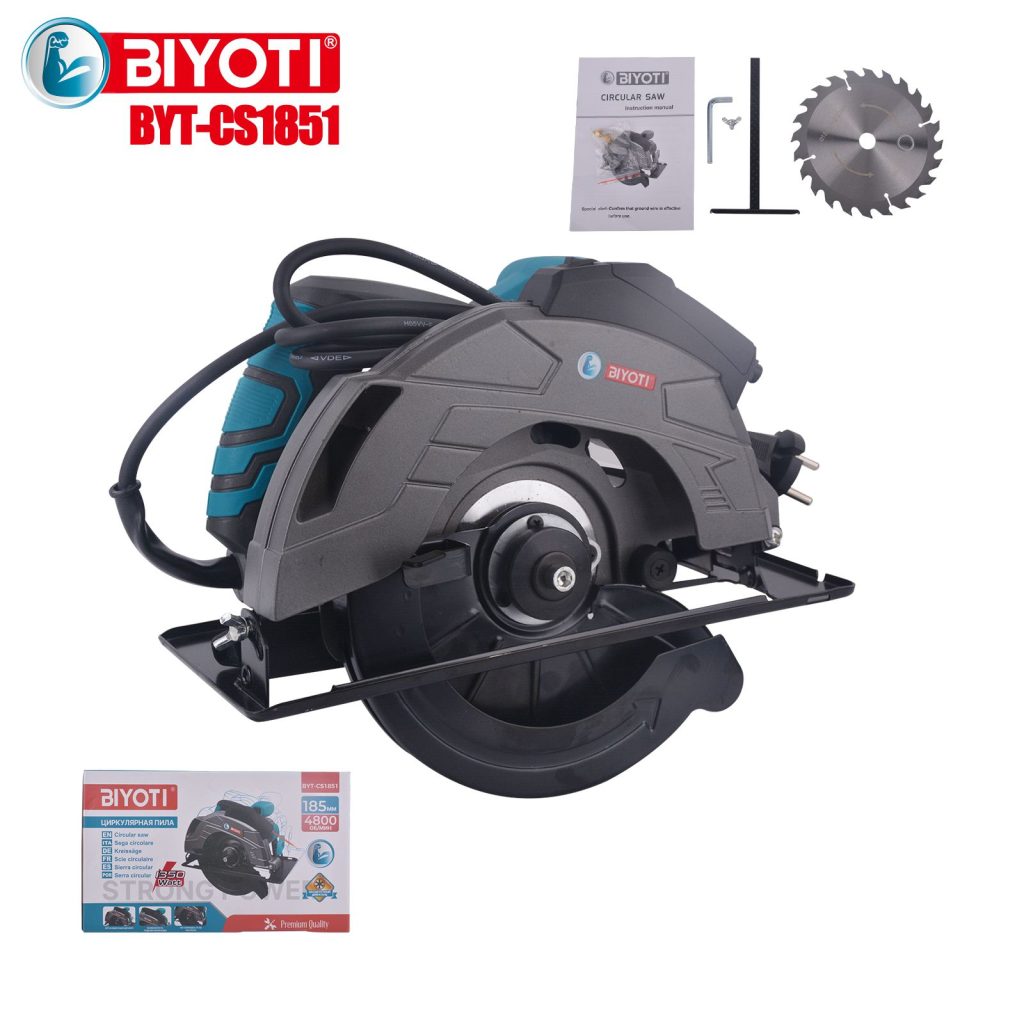
Operating a saw safely is not about using brute force. Instead, you should focus on keeping the metal shoe flat against the wood and moving in a straight, steady line.
Keep both hands on the saw and stand to one side
Hold both the main and the front handles with a firm grip. Position your arms so they can absorb any sudden backward movement. Most importantly, stand to the side of the tool rather than directly behind the blade’s path.
Let the blade cut at its own pace
Do not push the saw too hard through thick lumber. Forcing the tool can slow the motor and make the blade wander. If the saw feels like it is working too hard, take it as a warning that binding is about to happen.
The BYT-CS1851 Circular Saw offers 1350W input power and a 4800r/min speed. It features a reinforced base plate to keep things steady. These parts perform best when you allow the tool to cut at a natural speed.
What to Do When a Circular Saw Blade Binds
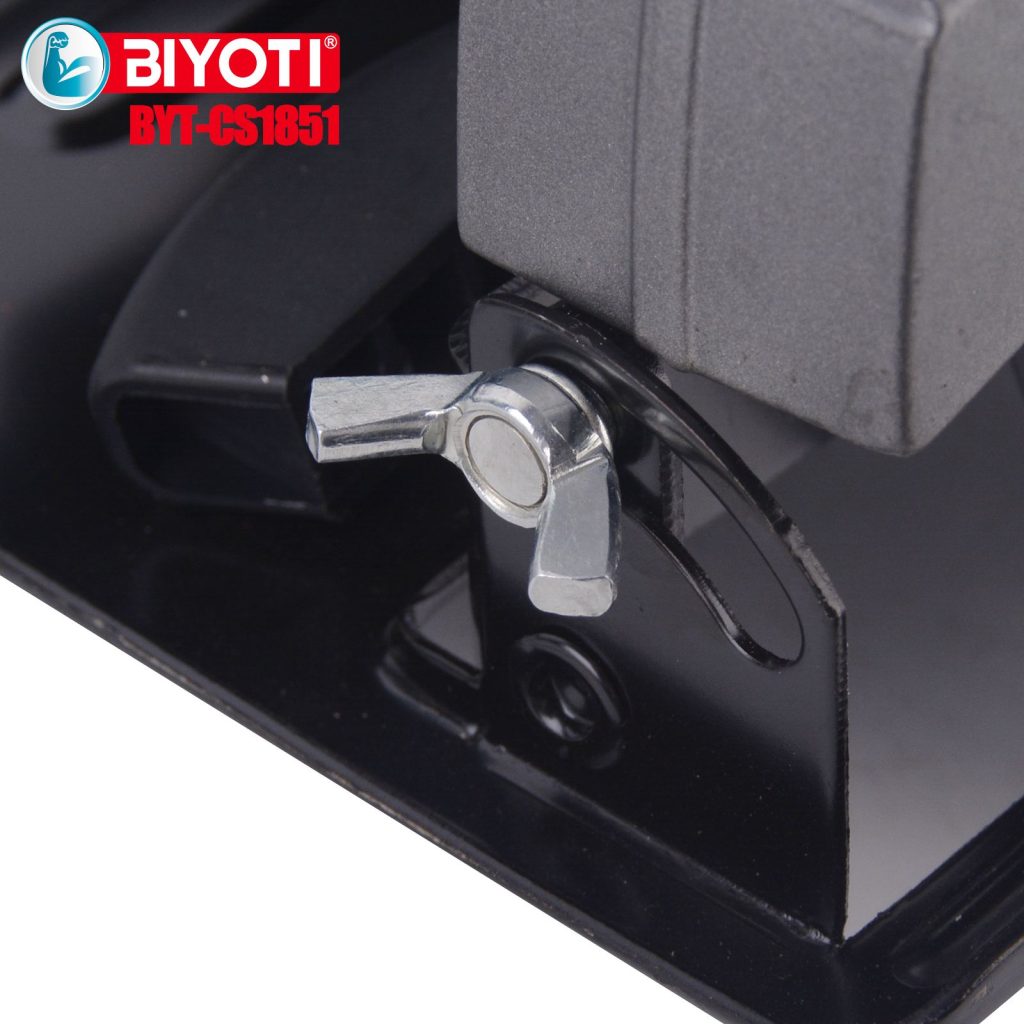
If your blade gets stuck, do not try to pull the saw back while it is still running. Never lift the tool out of the wood until the blade has come to a full stop.
Follow these steps exactly:
- Let go of the trigger immediately.
- Hold the saw perfectly still in the wood.
- Wait for the blade to stop spinning.
- Check for the cause, such as a sagging board or a hidden nail.
- Fix the support or the alignment.
- Place the blade back in the center of the gap before you start again.
This is the only safe way to restart a circular saw. If you try to force the motor to start while the blade is pinched, you will likely trigger a severe kickback.
The BYT-CS1851 Circular Saw has plenty of power for tough jobs, but you should never use that 1350W motor to fight a jam. Stopping to fix the problem protects both you and your project.
Check the Lower Blade Guard Before Every Cut
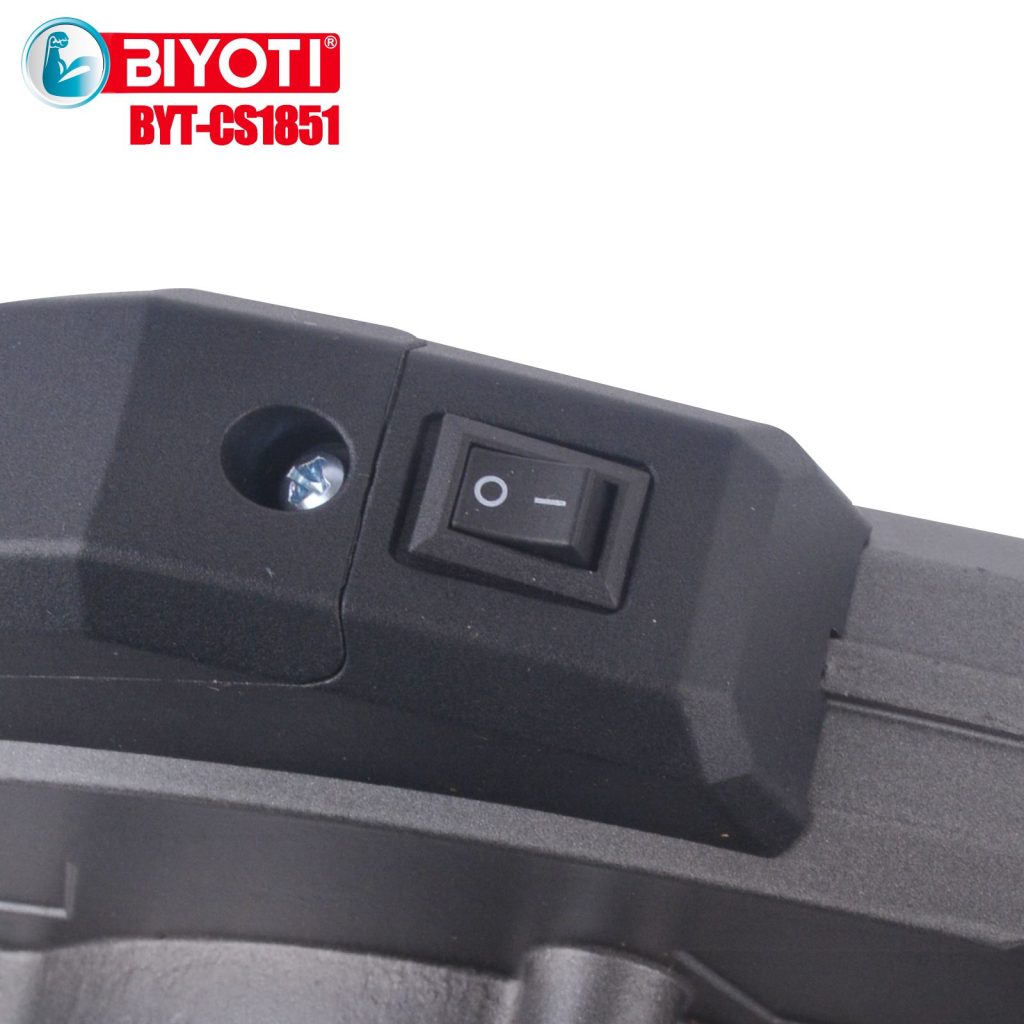
The lower guard is your main shield against the spinning teeth. Before you start your work, flick the guard to make sure it moves easily and snaps back into place. If it sticks because of dust or sap, you must clean it before using the tool.
A two-minute circular saw pre-use inspection checklist
Run through these points every time you pick up the tool:
- Confirm the blade is tight and has no broken teeth.
- Ensure the lower guard snaps shut quickly.
- Check that all adjustment knobs are tight.
- Inspect the power cord for any cuts or exposed wires.
- Test the trigger to see if it moves smoothly.
- Scan your cut path for any metal or stones.
- Put on your safety glasses and ear protection.
When you finish a cut, wait for the blade to stop completely before you put the saw down on the ground or bench.
The BYT-CS1851 Circular Saw provides a reliable 185mm platform for any job site. Its 4800r/min no-load speed and sturdy guard system are designed for users who value a safe and controlled work routine.
A Brief Look at the BYT-CS1851 Circular Saw
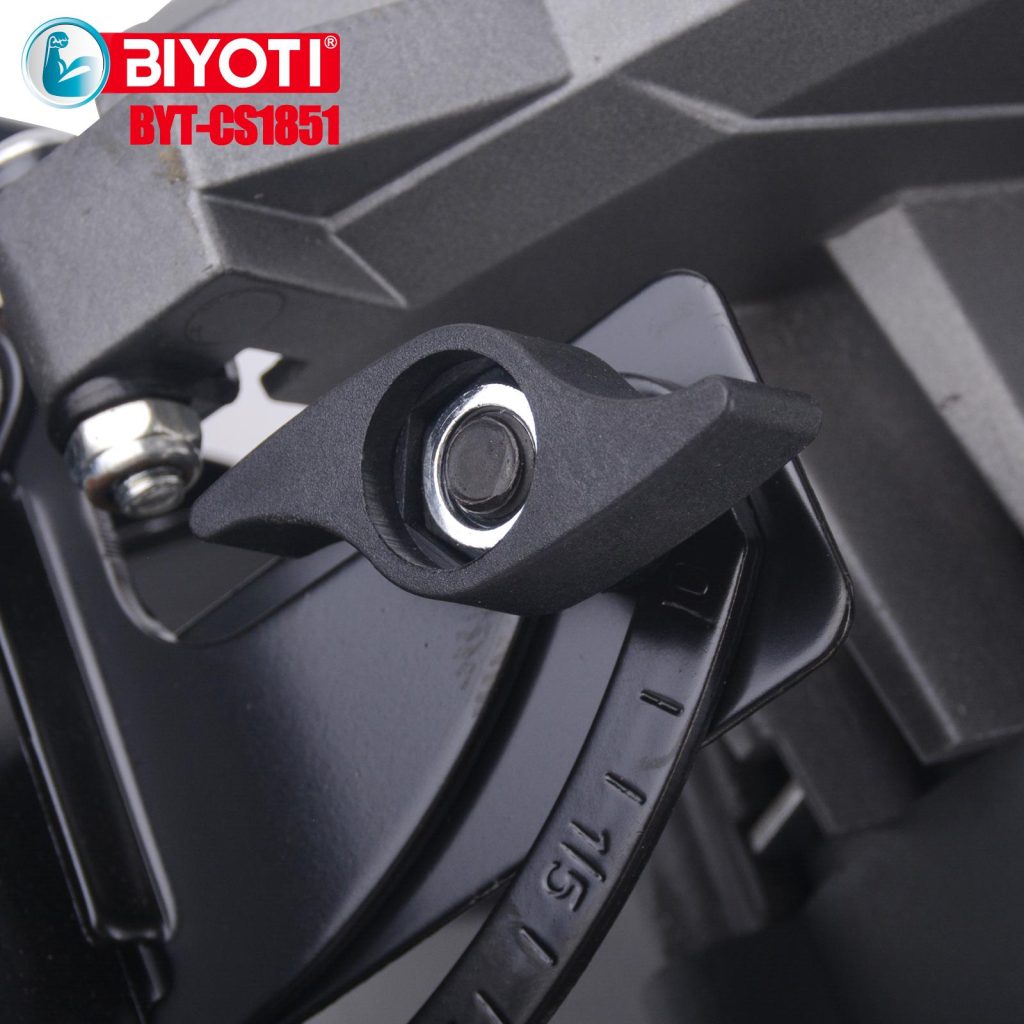
The BYT-CS1851 is a 220V~50Hz electric circular saw. It features a 1350W input motor and a 185mm blade that reaches a 4800r/min no-load speed. Key details include a 0–45° bevel range, easy depth adjustment, and a reinforced base plate. It also uses a specific airflow design to keep the motor cool. For trade orders, the standard packaging is 4PCS/CTN.
For professional buyers looking for a 185mm circular saw, the BYT-CS1851 provides the right balance of power and adjustable settings for daily workshop use.
Yongkang Jiakai Industry and Trade Co., Ltd. as a Supplier
Yongkang Jiakai Industry and Trade Co., Ltd. makes BIYOTI brand products and distributes to the international markets which include Europe, South-East Asia, and the Americas. The company manufactures BIYOTI branded products and supplies them worldwide, including Europe, South-East Asia, and the Americas. The company is well-cooperated with wholesalers and international agents, offering equipment of good quality.
Being the main supplier of the BYT-CS1851 Circular Saw, the company offers to discuss the terms of cooperation. Prospective buyers can contact the company in order to discuss issues of sample supply, shipping times, and bulk orders.
Conclusion
Staying safe with a circular saw comes down to good habits. Always support your wood, keep the cut open, and use a sharp blade. Stand to the side of the tool and let go of the trigger the moment you feel a bind. You should never pull a moving saw out of a stalled cut.
The BYT-CS1851 Circular Saw delivers 1350W of power and a 4800r/min speed for serious woodworking. When you combine this performance with careful circular saw kickback prevention, you get a tool that is both efficient and safe to use.
FAQs
What causes circular saw kickback?
Circular saw kickback usually happens when the blade is pinched, stalled, or twisted out of line. Poor support, a closing kerf, a dull blade, or contact with a hidden hard object can create the conditions for kickback. The sudden stop of the blade transfers force back toward the operator. Standing in the right position and using steady feed help lower the chance of this event.
How do you keep a circular saw from binding?
Kickback occurs where the blade is trapped by the wood or strikes any hard objects. Kickback may also happen if you rotate the saw during the cutting process, making the blade’s teeth grab the sides of the timber.
What do you do if a circular saw blade is jammed?
The very first thing that you need to do is to let go of the trigger and hold the saw stationary until the blade stops. Find out what made the blade jam, and resolve the issue.
Is 185 mm circular saw appropriate for regular woodworking cuts?
Yes, 185mm (7-1/4 inches) is the standard size for most construction and woodworking tasks. The BYT-CS1851 Circular Saw uses this size along with a 1350W motor to handle everything from plywood to thick boards.
For those looking for a dependable 185mm circular saw from an established manufacturer, the BYT-CS1851 offers the durability and power needed for professional results.