Variable speed angle grinders catch eyes in shops and work areas. Folks pick them up for jobs needing speed tweaks. They cut, grind, and shine surfaces without much fuss. This piece walks through the main points, plus upsides and real ways to use them. It pulls from everyday stuff like shaping metal, carving rocks, and smoothing finishes. No matter if you fix welds or rub down coats, knowing these helps finish tasks well.
Understanding the Basics
Kick off with the main thought. A variable speed angle grinder tweaks its turns per minute, called RPM, to match various works. Single-speed kinds stick to one rate, often near 10,000 RPM. Yet variable ones let you twist a knob for low to high paces. This counts a lot for stuff like steel, timber, or rocks. Slow turns keep soft spots from getting too hot. Fast ones slice hard things quick.
Think about disc types. Cutting discs need high RPM for clean slices. Polishing pads work best at slower turns to avoid burns. The grinder’s motor powers a spinning disc at the end of a right-angled head. Handles provide grip, and guards shield from sparks. Sizes vary, but 4.5-inch or 5-inch discs are common for most tasks.
Power comes from electric cords or batteries. Corded versions deliver steady output without recharge breaks. Battery models offer freedom in tight spots. Safety features include triggers that lock off and handles that reduce shakes.
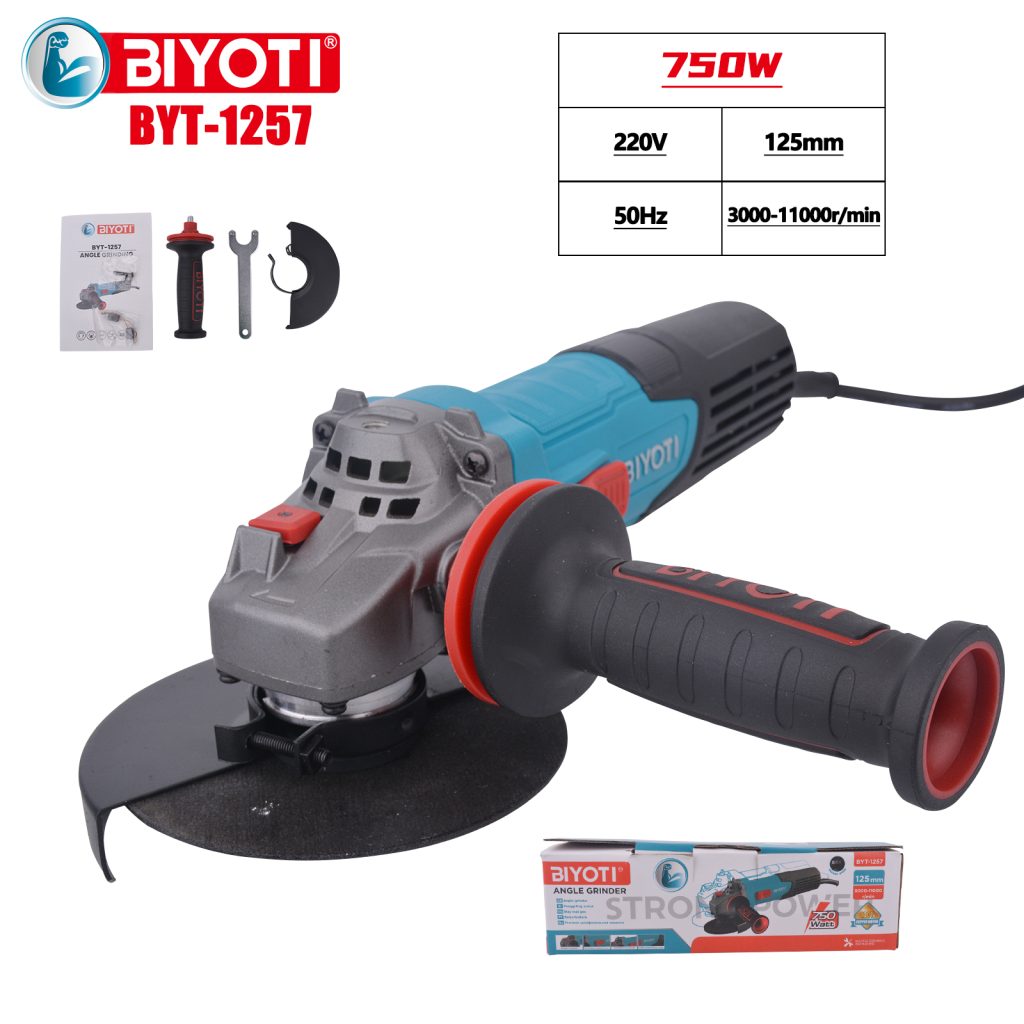
The BYT-1257 variable speed angle grinder brings these basics to life with its 750W motor and 3,000 to 11,000 RPM range. It fits standard 125mm accessories, making it ready for cutting steel or polishing marble without switching tools.
Moving from basics to why these tools shine, consider how speed control changes workflows.
Key Benefits for Everyday Tasks
Speed adjustments make a big difference. High speeds tackle heavy removal, like stripping rust from pipes. Mid-range settings smooth edges on fabricated parts. Low speeds polish vehicles or countertops without marks.
Control reduces mistakes. Fixed speeds can scorch paint or shatter tiles. Variable options match the material’s needs. This saves time and cuts waste. In metal shops, workers switch from grinding welds to deburring without grabbing another grinder.
Durability plays a role too. Motors built for constant power hold up under load. Gears in metal housings last through daily use. Ergonomics help—slim bodies fit hands well, and side handles cut vibrations during long sessions.
Users report fewer accidents with proper speed. Sparks fly less wildly at controlled RPM. Dust stays manageable with the right attachments.
For those seeking reliability, the BYT-1257 variable speed angle grinder offers consistent torque across its speed dial. Its all-metal gear housing dissipates heat, ensuring it performs in demanding scenarios like rust removal or surface prep.
With benefits clear, let’s look at choosing the right model for specific needs.
How to Select the Right Model
Pick based on power and size. Motors from 500W to over 1,000W handle light or heavy work. A 750W unit suits most pros and hobbyists. Disc diameter affects reach—125mm covers general jobs without bulk.
Check speed range. 3,000 to 11,000 RPM covers polishing to cutting. Electronic dials hold settings steady. Look for soft starts to avoid jerks.
Handles and weight matter for comfort. Anti-vibration features ease strain on arms. Cord length or battery life impacts mobility.
Accessories expand use. Stock up on cutting wheels, flap discs, and brushes. Ensure the spindle locks for easy swaps.
Price ties to features. Entry models start low, but pros invest in builds that endure job sites.
The BYT-1257 variable speed angle grinder stands as a solid choice with its 750W constant power motor and ergonomic slim body. It accommodates a wide array of 125mm discs, from wire brushes to polishing pads, for versatile project handling.
Beyond selection, proper techniques keep tools running smooth.
Essential Usage Tips
Secure the workpiece first. Clamp it down to stop slips. Sparks or debris can fly, so clear the area.
Match speed to the job. High RPM for masonry cuts. Mid for grinding stone. Low for buffing stainless.
Inspect discs before spinning up. Cracks lead to breaks. Tighten them firm but not over.
Hold with both hands. One on the body, one on the side handle. This steadies the tool and absorbs kicks.
Wear gear: glasses, gloves, masks. Noise protection too, as grinders roar.
Cool the tool between runs. Heat builds in motors during extended use.
- Start slow on new materials.
- Angle the disc at 15-30 degrees for best contact.
- Move in steady passes, not presses.
These steps cut risks and boost results.
In practice, the BYT-1257 variable speed angle grinder excels with its positionable anti-vibration handle and robust construction. It supports two-handed operation for safe, controlled work on clamped materials.
Shifting focus, explore how these grinders apply in real fields.
Common Applications Across Industries
Metal fabrication relies on them. Cut rebar at high speeds. Grind welds smooth in mid-range. Deburr edges without gouges.
In auto shops, polish clear coats low and slow. Strip paint fast up top.
Stone workers shape marble or granite. Low speeds prevent cracks. High for rough outs.
Woodworkers sand curves or remove finishes. Attachments like flap discs refine surfaces.
Construction crews cut tiles or bricks. Variable control handles varied densities.
Home fixes include rust cleanup on gates or sharpening blades.
| Application | Recommended Speed Range | Example Tasks |
| Metal Cutting | 8,000-11,000 RPM | Slicing steel, rebar |
| Grinding Welds | 5,000-8,000 RPM | Smoothing joints, deburring |
| Polishing Surfaces | 3,000-5,000 RPM | Buffing paint, stainless |
| Masonry Work | High RPM | Cutting bricks, stones |
| Rust Removal | Mid to High RPM | Stripping with wire wheels |
This table shows speed-task matches.
The BYT-1257 variable speed angle grinder fits these applications seamlessly, from aggressive metal cuts to delicate polishing, thanks to its wide RPM dial and powerful motor.
To maintain peak performance, regular care is key.
Maintenance and Safety Guidelines
Clean after each use. Blow out dust from vents. Wipe handles.
Store dry, away from moisture. Check cords for frays.
Lubricate moving parts as needed. Replace worn brushes in motors.
Safety first: Never override guards. Unplug before changes.
Test run without load. Listen for odd sounds.
Follow maker guides for part swaps.
These habits extend tool life.
For dependable upkeep, the BYT-1257 variable speed angle grinder features a die-cast aluminum gear case that resists wear and aids heat release, supporting long-term use with minimal downtime.
Now, a closer look at the supplier behind quality tools.
Meet the Supplier: Yongkang Jiakai Industry and Trade Co., Ltd.
Based in Yongkang City, Zhejiang Province, Yongkang Jiakai Industry and Trade Co., Ltd. produces power tools under the BIYOTI brand. They focus on items like angle grinders and electric drills. Exports reach Europe, America, and Southeast Asia. The company stresses innovation, such as brushless motors, and rigorous testing for reliability. Their approach puts customers first, with quick delivery and support. Learn more on their about page.
Spotlight on the BYT-1257 Model
This grinder packs a 750W motor for steady power. Speed dials from 3,000 to 11,000 RPM. It takes 125mm discs for broad compatibility. Ergonomics include a slim grip and side handle. Built tough with metal gears. Ideal for pros handling varied tasks.
Conclusion
Variable speed angle grinders transform how people approach cutting, grinding, and polishing. They offer control that fixed models lack, fitting diverse materials and jobs. From workshops to sites, these tools boost efficiency and safety. With proper selection and care, they deliver lasting value. For more insights, visit BIYOTI’s home or reach out via contact.
FAQs
What makes a variable speed angle grinder better than a fixed-speed one?
It allows RPM adjustments for different tasks, like low speeds for polishing to avoid damage or high for quick cuts. This versatility means one tool covers multiple needs without swaps.
How do I choose the best speed setting on a variable speed angle grinder?
Base it on the material and accessory. Use 3,000-5,000 RPM for buffing pads on paint. Go 5,000-8,000 for grinding edges. Hit 8,000-11,000 for cutting metal. Always check accessory ratings.
Can a variable speed angle grinder handle polishing and cutting in the same project?
Yes, dial changes make it simple. Start high for cuts, then drop low for finishes. This saves time on jobs like auto restoration or metal fab.
What safety tips apply to using a variable speed angle grinder?
Wear PPE like glasses and gloves. Secure workpieces. Inspect discs. Use both hands. Match speeds to avoid hazards.
Where can I find more on variable speed angle grinder models?
Explore supplier sites for specs and support. They often list compatible accessories too.