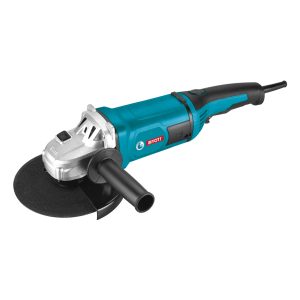
Your Essential Angle Grinder Buying Guide
Picture this: You’re knee-deep in a home project, smoothing out rough edges on metal or cutting through tile. Without the right tool, it turns into a hassle. Angle grinders fix that. They handle grinding, cutting, polishing, and more. For DIY fans or full-time tradespeople, they’re game-changers. This guide breaks it down step by step. You’ll learn what to look for, so you pick one that fits your work without regrets, like the BYT-AG1256 with its 900 W power and 11,300 r/min no-load speed for fast, efficient tasks. These tools pack power in a compact body. They spin discs fast to tackle tough jobs. But not all are the same. Size, power, and extras matter. Get it right, and you’ll work smarter. Skip the trial and error. Let’s dive in, highlighting models like the BYT-AG1256 that offer stable 900 W output with optimized airflow for lower heat in continuous duty. Common Jobs for Angle Grinders From rust removal on old gates to sharpening lawnmower blades, angle grinders shine. In workshops, they deburr welds or polish surfaces. On sites, they cut rebar or grind concrete. Even simple sanding becomes quick. Versatility keeps them busy. Think about your main tasks. That guides your choice.