A reliable heat gun temperature guide answers two questions: what temperature should a heat gun be set to, and which nozzle gives the safest heat pattern? The answer changes with material, airflow, distance, and time. Heat that lifts paint from steel can warp plastic.
This guide covers the best heat gun temperature for different materials, heat gun nozzle types, and the BYT-HG01 Heat Gun in workshop jobs.
Balance Temperature, Airflow, and Distance
Temperature never works alone. Check the material, thickness, nearby parts, and heated area.
Read the Surface, Not Only the Dial
Outlet temperature is not the same as workpiece temperature. Start low, keep moving, and test scrap. Darkening, smoke, bubbling, gloss change, or a sharp smell means too much heat.
Let the Nozzle Shape the Job
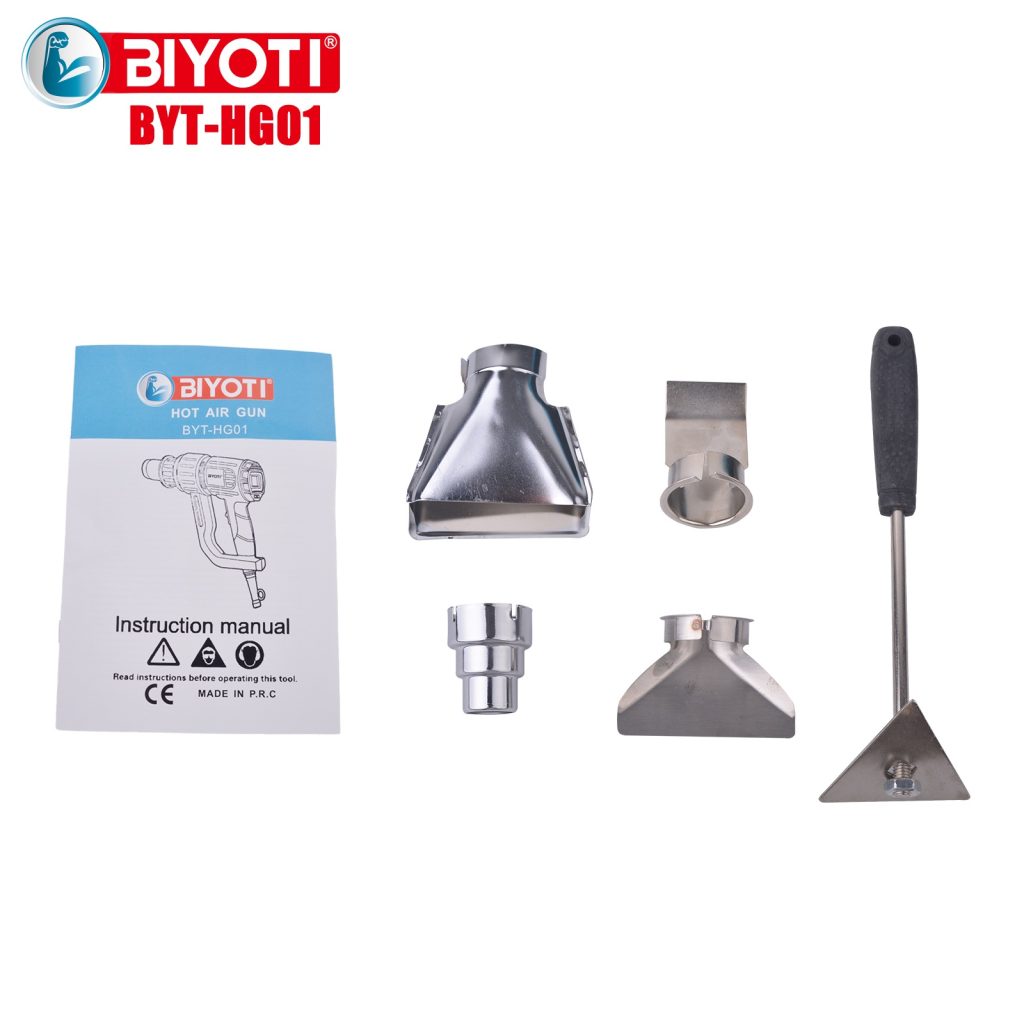
A round nozzle concentrates heat. A flat nozzle spreads it across a strip. A reflector sends air around tubing, while a glass-protection nozzle directs heat away from a fragile edge. Concentrated airflow also scorches quickly.
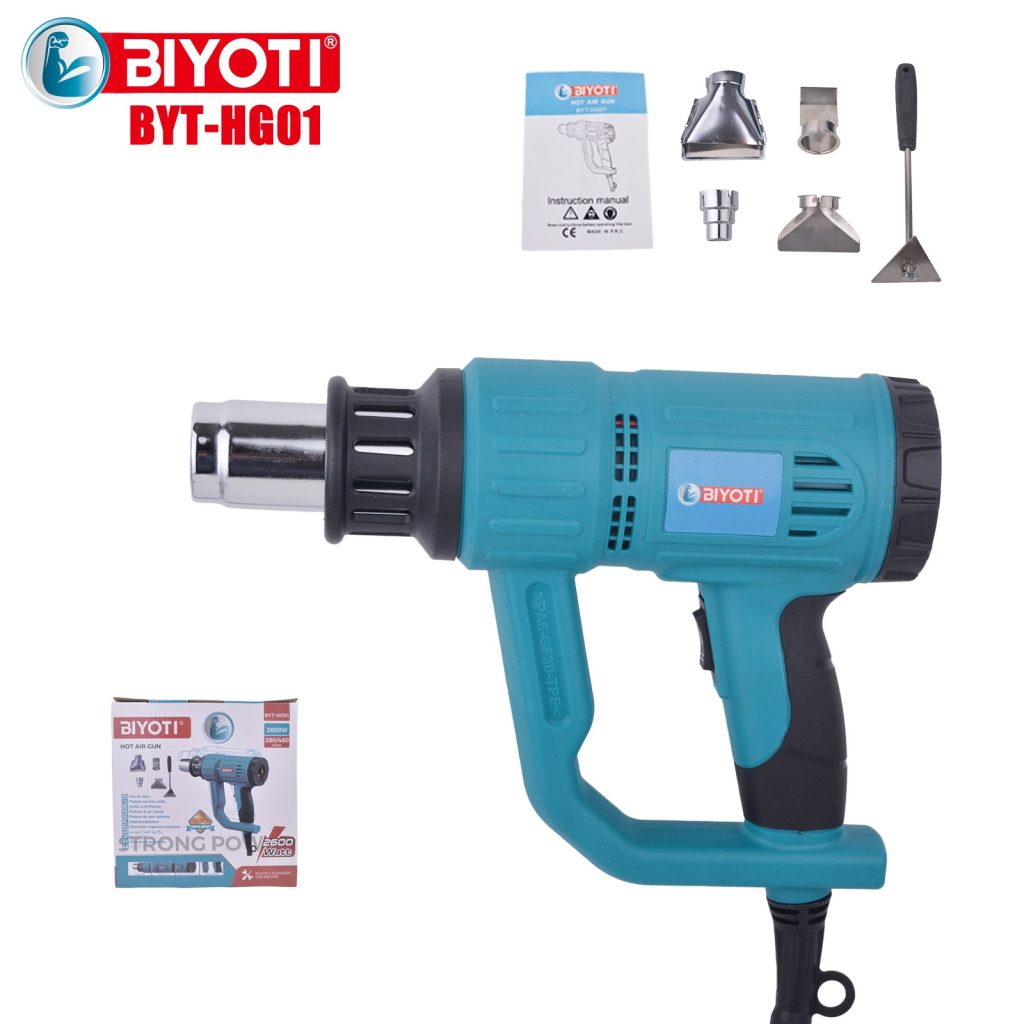
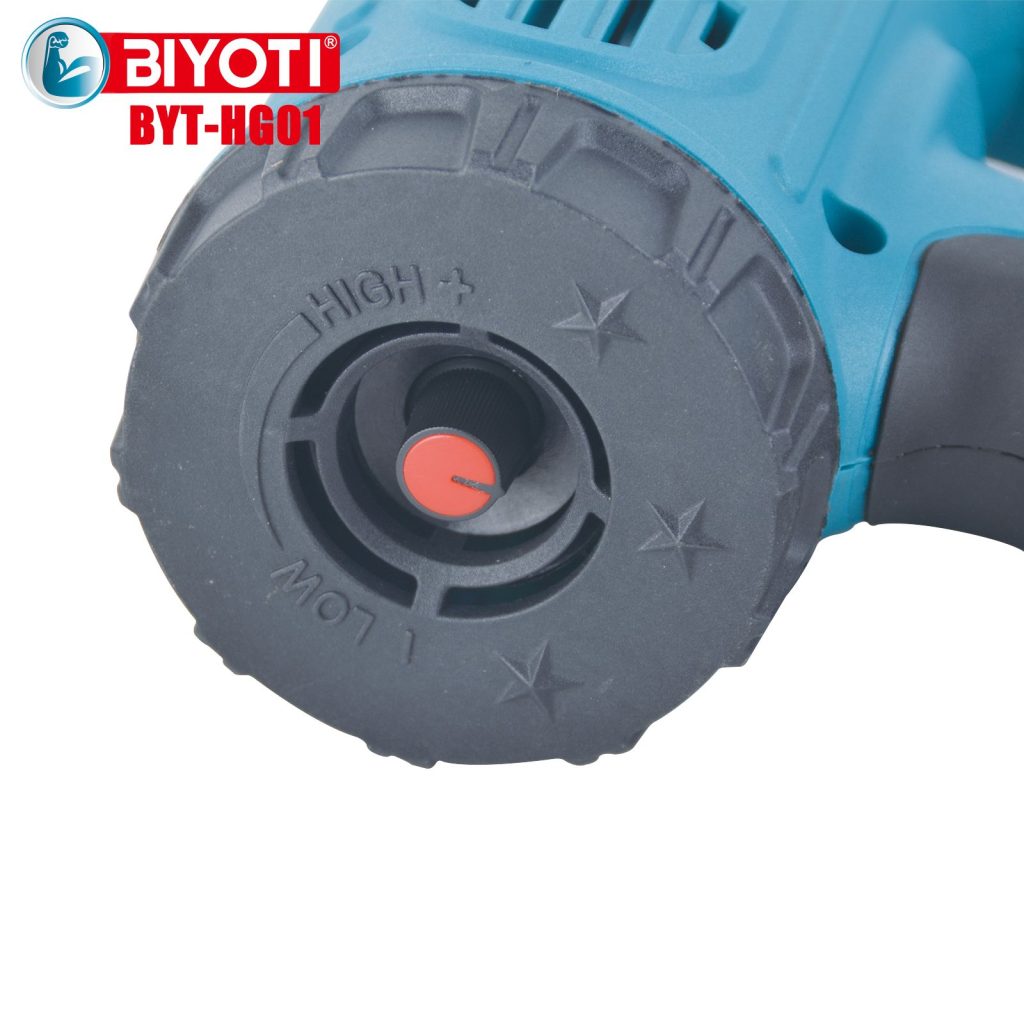
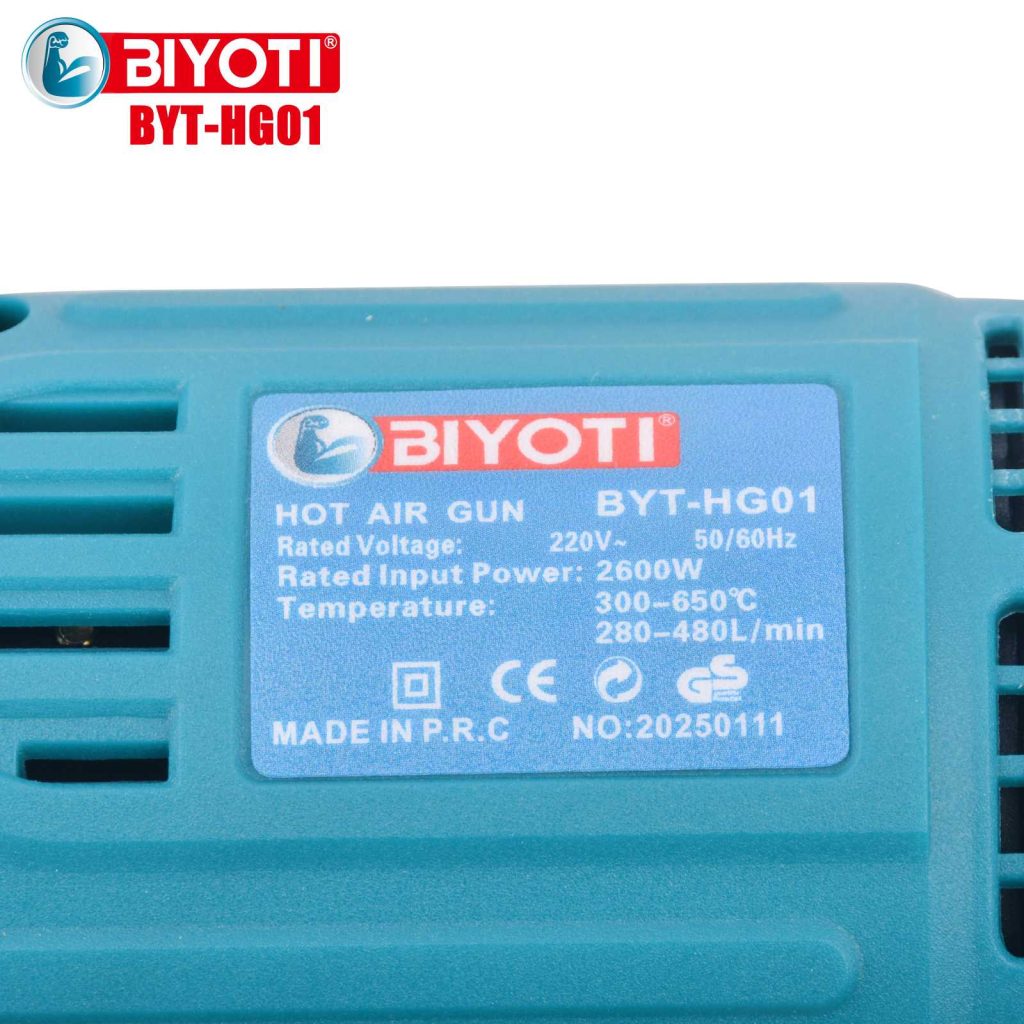
The BYT-HG01 Heat Gun pairs a 300–650°C adjustable range with 280–480 L/min airflow. Its 2600W input supports fast heating and steady output for focused metal work and broad coating removal.
Heat Gun Temperature Chart by Material
Use this heat gun temperature chart as a starting point. Check the material maker’s instructions because type and thickness change the result.
| Material or task | Starting range | Suggested nozzle | Basic method |
| Heat-shrink tubing | 120–200°C | Round or reflector | Hold about 10 cm away; sweep evenly |
| Plastic pipe bending | 205–230°C | Round or wide-slot | Heat a long section before bending |
| Labels and adhesive | 230–290°C | Flat | Warm an edge and peel slowly |
| PCB preheating or desoldering | 250–350°C | Reduction | Use low airflow and moving passes |
| Solder softening | 400–455°C | Round | Heat the joint, not nearby insulation |
| Rusted bolts | 480–510°C | Round | Heat around the fastener |
| Heavy paint removal | 520–550°C | Flat or wide | Soften the coating, then scrape |
Heat-Shrink Tubing and Plastic
For heat gun temperature for heat shrink tubing, read the sleeve specification first. A reflector nozzle for heat shrink guides air around the cable. Move from the center toward both ends so trapped air can escape.
A common heat gun temperature for bending plastic is 205–230°C. Warm a wider section than the bend, rotate round pipe, and stop if the surface becomes glossy or starts collapsing.
Labels, Paint, and Adhesive
For heat gun temperature for removing stickers, begin around 230–290°C. Use a flat nozzle, lift one corner, and peel while the adhesive is soft. A typical paint removal heat gun temperature is 520–550°C. Work in short lanes and follow with a scraper.
Electronics and Metal
A heat gun temperature for PCB soldering is often listed around 250–350°C. A full-size gun can move too much air for tiny parts, so use a reduction nozzle, low airflow, and short passes for broad preheating or non-critical desoldering. Precision rework needs purpose-built equipment.
For rusted fasteners, 480–510°C may help. Aim at surrounding metal, away from fuel lines, batteries, containers, and solvent residue.
The BYT-HG01 begins at 300°C, so it cannot be dialed to lower chart ranges. For compatible low-temperature work, use its lowest setting, lower airflow, extra distance, and quick passes. Do not use it where the material specification sets a lower maximum.
Choose the Right Heat Gun Nozzle
How to choose a heat gun nozzle? Match the air pattern to the target and avoid heating nearby parts.
Round, Reduction, and Reflector Nozzles
A round nozzle suits fasteners, joints, and spot heating. A reduction nozzle reaches tight areas, but its concentrated stream calls for more distance. A reflector curves heat around cable or pipe for even shrink work.
Flat, Wide, and Glass-Protection Nozzles
A flat or wide nozzle is the usual heat gun nozzle for paint removal, film lifting, and sticker removal. It creates a horizontal band for steady lanes. A glass-protection nozzle shields one edge near windows, although indirect heat still reaches the glass.
Before fitting a nozzle:
- Check compatibility and seat it firmly.
- Change it only after the metal cools.
- Increase distance with a narrow outlet.
- Keep the air inlet clear.
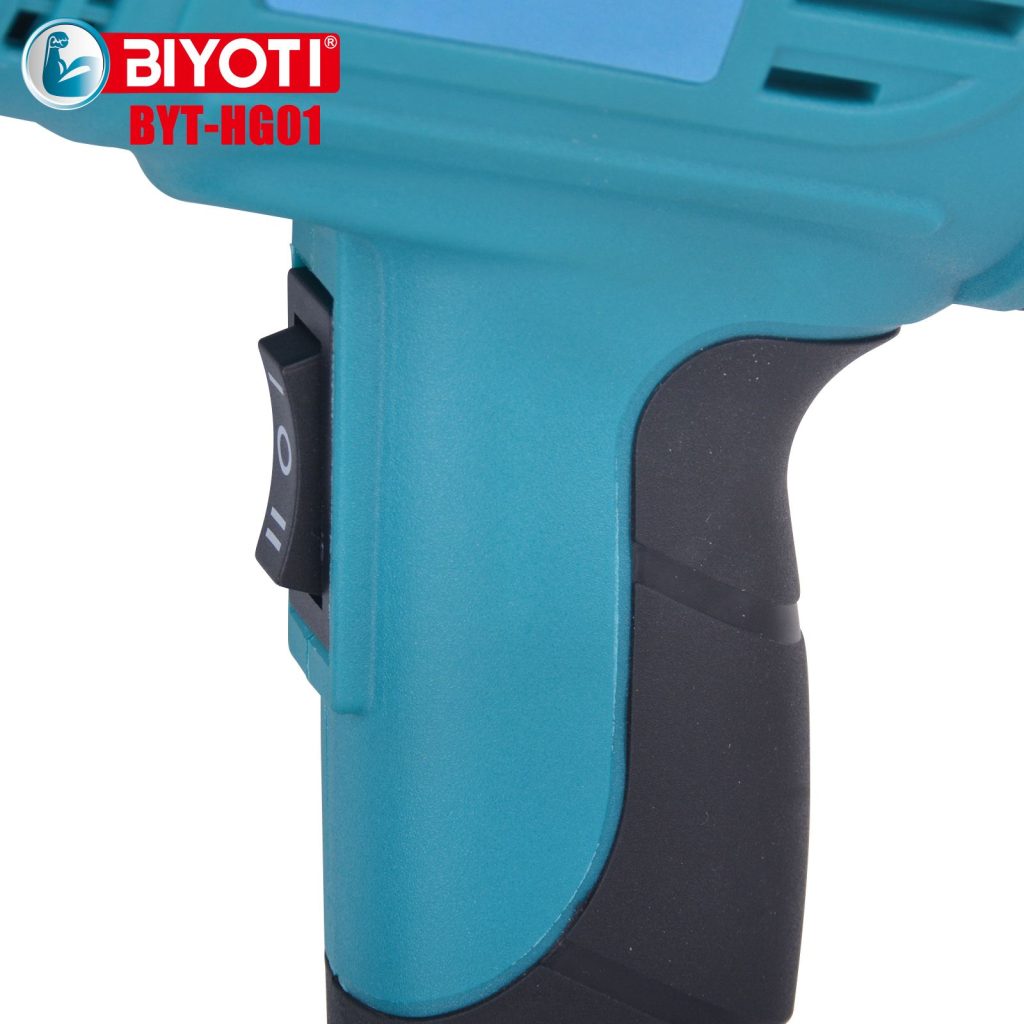
The BYT-HG01’s 280–480 L/min airflow can suit focused or wide nozzle coverage. Its D-grip and flat rear support also help controlled handling and stable cooling.
Work Safely From Start to Cool-Down
Heat gun safety tips are basic for a reason. Prepare the area before switching on.
Before and During Heating
Remove paper, fuel, solvent, loose plastic, and heavy dust. Wear eye protection and heat-resistant gloves. Check behind paint or trim for wiring, and ventilate when heating coatings, adhesives, or plastics.
How far to hold a heat gun depends on the task, but 5–10 cm is a useful start. Sweep continuously. If progress is slow, move closer or raise the setting in small steps instead of holding still.
Cooling and Storage
After work, switch off heat and keep airflow running for three to five minutes when instructions permit it. Set the gun on a stable, non-combustible surface. Do not touch the nozzle or remove an attachment until cold.
BYT-HG01 specifications list heat-resistant housing, overload protection, a front nozzle guard, and rapid cooling. These features support safety, while ventilation, distance, movement, and cool-down remain the operator’s responsibility.
BYT-HG01 Heat Gun at a Glance
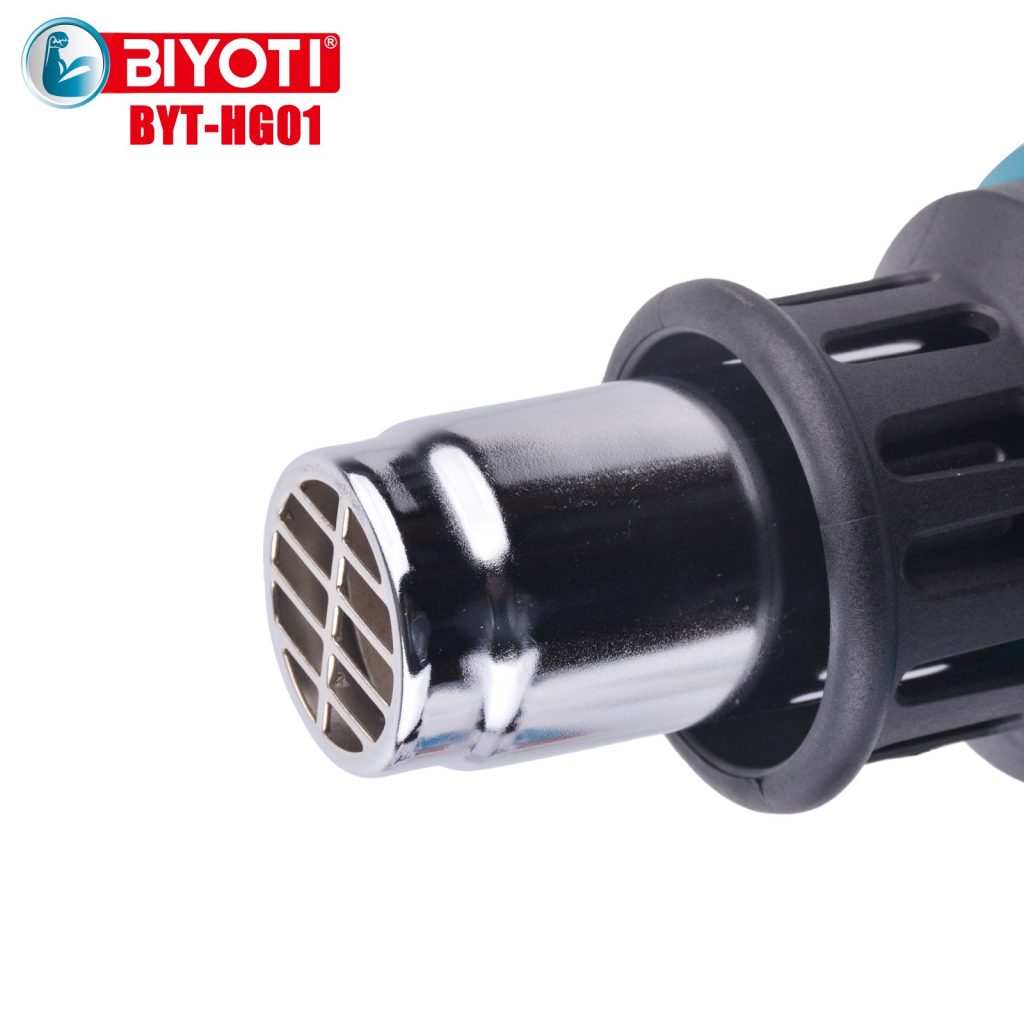
The BYT-HG01 is a corded industrial heat gun rated at 2600W, with a 300–650°C adjustable range and 280–480 L/min airflow. It operates at 220V, 50/60Hz, and is packed 10 pieces per carton. The upper range suits paint stripping, adhesive softening, plastic-welding support, shrink wrapping, and metal-fastener heating where material limits permit.
For buyers comparing a variable temperature heat gun, the BYT-HG01 brings high input power, adjustable airflow, a D-grip, upright support, overload protection, and fast cooling into one professional format.
Yongkang Jiakai Industry and Trade Co., Ltd.
Yongkang Jiakai Industry and Trade Co., Ltd. manufactures power tools and supplies the BIYOTI range. The company reports more than 50,000 square metres of production space, over 300 employees, more than 400 tool products, and annual capacity of six million units. Its products serve Europe, the Americas, Southeast Asia, and other regions.
As a BYT-HG01 Heat Gun supplier, the company handles product selection, technical communication, bulk purchasing, and dealer enquiries. Buyers can discuss voltage, packaging, quantity, application, and nozzle needs before ordering.
Conclusion
Good results come from matching temperature, airflow, nozzle, distance, and movement. Use broad airflow on large surfaces, concentrated nozzles only where needed, and the lowest effective heat. Test first and stop at the first sign of damage.
For users seeking a heat gun temperature guide across repair and workshop jobs, the BYT-HG01 Heat Gun offers 2600W input, 300–650°C adjustment, and 280–480 L/min airflow. Contact the supplier with your material, duty cycle, voltage, and packaging needs.
FAQs
What temperature should a heat gun be set to?
Use the lowest temperature that changes the material at a practical speed. Follow the material specification, then adjust airflow and distance.
What is the best heat gun for shrink tubing?
A heat gun for shrink tubing needs controlled heat and a round or reflector nozzle. Because the BYT-HG01 starts at 300°C, check compatibility and use greater distance with quick, moving passes.
Which nozzle is best for removing paint?
A flat or wide nozzle covers a larger strip and softens paint evenly. Keep it moving, scrape as the coating bubbles, and shield glass and combustible material.
Can the BYT-HG01 be used on electronics?
It can support broad PCB preheating or non-critical desoldering at low airflow with a reduction nozzle. Delicate work needs specialized equipment. The BYT-HG01 is strongest on mixed workshop tasks that benefit from its 2600W power and 300–650°C range.