A cordless die grinder for automotive repair is useful when a full-size grinder is too bulky and hand tools are too slow. In an engine bay, beneath a chassis, or beside an exhaust joint, it provides controlled material removal in tight spaces. With the right accessory, a mechanic can clean, shape, deburr, and prepare metal without dragging a hose or cord across the vehicle.
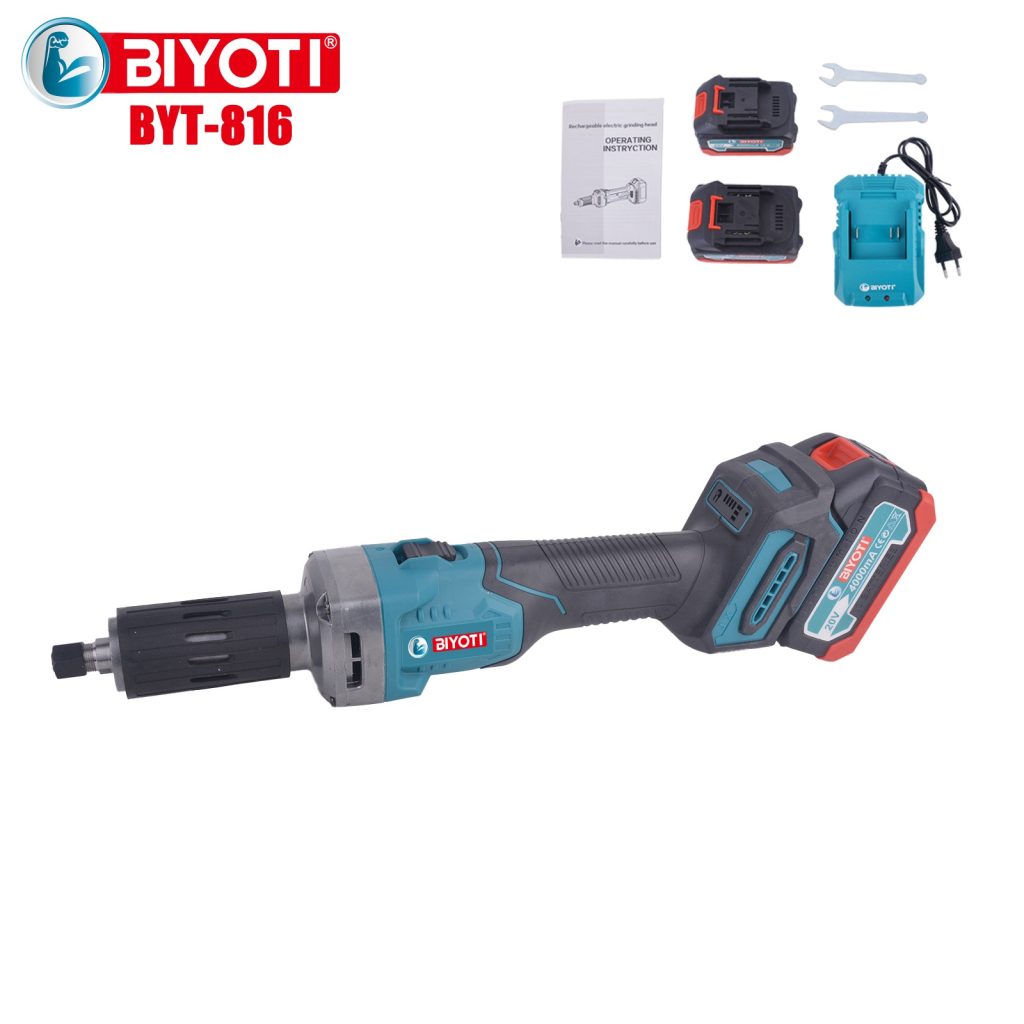
BYT-816 die grinder supports this work with cordless lithium power, a brushless motor, 8,500 r/min no-load speed, and a stated collet diameter of 25 mm.
Why Cordless Die Grinders Fit Auto Repair
Automotive work rarely happens on a clear bench. A bracket may sit behind a suspension arm, while a weld needs dressing above an exhaust pipe. A cordless die grinder for tight spaces cuts setup time and improves access.
| Workshop need | Cordless advantage |
| Engine-bay access | No cable catches on hoses or wiring |
| Underbody work | No air hose drags across the floor |
| Roadside service | Work starts away from mains power |
Cordless mobility does not make it a heavy cutting machine. It suits focused work on small areas. The BYT-816 die grinder gives shops and distributors a brushless platform for controlled grinding and finishing.
Four Automotive Die Grinder Uses
The best automotive die grinder uses share one rule: remove a small amount of material with the correct accessory.
Cylinder Head Porting and Casting Cleanup
During cylinder head porting, a mechanic may remove casting flash or smooth a rough intake or exhaust port. A ball or tapered rotary burr reaches curves that a file cannot. Correct restrictions rather than enlarging every passage.
At 8,500 r/min, use short passes, two-hand control, and frequent inspection.
Gasket Surface Preparation
Old gasket material, sealant, and corrosion can stop a new gasket from sealing. A die grinder may assist on approved parts with a nylon brush or fine cleaning accessory. Keep it moving and apply light pressure.
Critical aluminum sealing faces need extra care. Follow the vehicle maker’s procedure. Some surfaces should be cleaned by hand because an abrasive disc can round an edge, remove base metal, or leave debris inside an engine. Block oil and coolant passages, then remove all residue.
Weld Cleanup in Tight Areas
Exhaust repairs, floor-pan patches, body brackets, and chassis reinforcement can leave spatter or a raised bead in a narrow location. A small mounted stone or rotary burr can clean the edge without sweeping across a large panel.
A cordless weld cleanup tool is useful under a vehicle because no air line pulls it sideways. Grind only enough to remove sharp peaks or interference. Never thin a structural weld to make it look flat.
Rust, Coating, and Burr Removal
A die grinder for rust removal works well on brake brackets, suspension tabs, fastener seats, battery trays, and small underbody zones. A wire brush wheel can lift loose rust, while a suitable abrasive can remove old coating before welding or refinishing.
It can also break sharp edges on drilled holes, brackets, tabs, and exhaust parts. Measure first. A few extra seconds can create an oversized hole. Heavy scale across a full floor pan needs another process.
Across these applications, the BYT-816 die grinder combines cordless access with a brushless motor and 8,500 r/min no-load speed. Its stated 25 mm maximum collet diameter supports accessory flexibility, while 6-piece-per-carton packing suits distributors and multi-bay workshops.
When Not to Use a Die Grinder
A die grinder is a precision removal tool, not a universal answer. Choose another method when the job exceeds its safe role.
- Do not cut thick structural steel, frame sections, or large body panels with an oversized wheel.
- Do not grind near fuel vapor, open solvents, or an unsealed fuel system.
- Do not work beneath a vehicle supported only by a hydraulic jack.
- Do not use cracked, loose, or under-rated accessories.
- Do not grind soft plastic or rubber unless approved; heat can melt it.
- Do not work near fuel lines, wiring, airbag parts, or pressure vessels without isolation.
- Do not power-grind a critical sealing face when the manual calls for hand cleaning or machining.
Inspect accessories before mounting, and never exceed their marked maximum speed. Eye and face protection are basic requirements for grinding work.
Clear limits keep BYT-816 grinding, deburring, weld dressing, and surface cleaning focused.
Safer Technique for Better Results
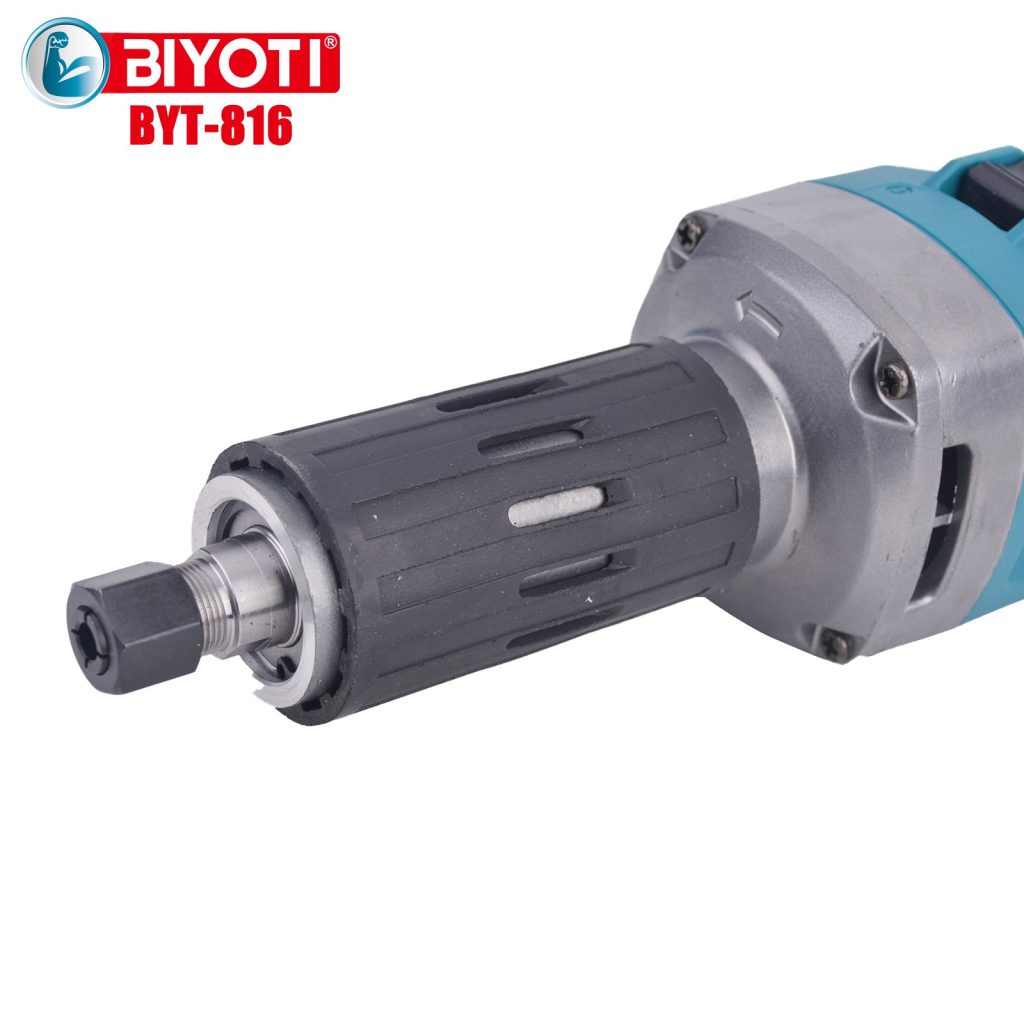
Remove the battery before changing an accessory. Check each burr, stone, brush, or disc for damage and secure mounting. After installation, run the tool unloaded for about 30 seconds in a safe direction. Stop if vibration appears.
Use these habits:
- Support the vehicle with rated stands or a lift, chock the wheels, and confirm stability.
- Wear eye or face protection, hearing protection, and suitable respiratory protection.
- Secure loose hair and clothing, and keep hands away from the rotating accessory.
- Hold the tool firmly, use light pressure, and let the accessory cut.
- Pause to inspect heat, shape, and material removal.
- Stop when sound, vibration, or tool temperature changes.
The BYT-816 die grinder removes cables and air hoses from the work area, but technique controls the finish. Its cordless layout helps the operator reach the job while maintaining deliberate contact.
BYT-816 Die Grinder at a Glance
The BYT-816 is a cordless lithium die grinder with a brushless motor. Product information lists an 8,500 r/min no-load speed, a maximum collet diameter of 25 mm, and 6 pieces per carton. These specifications suit detailed finishing, localized rust removal, weld cleanup, port work, and purchasing for several service bays.
For buyers comparing a brushless die grinder for automotive work, the BYT-816 offers mobility, controlled speed, and accessory flexibility. It is a focused repair tool, not a large cutting machine.
Yongkang Jiakai Industry and Trade Co., Ltd.
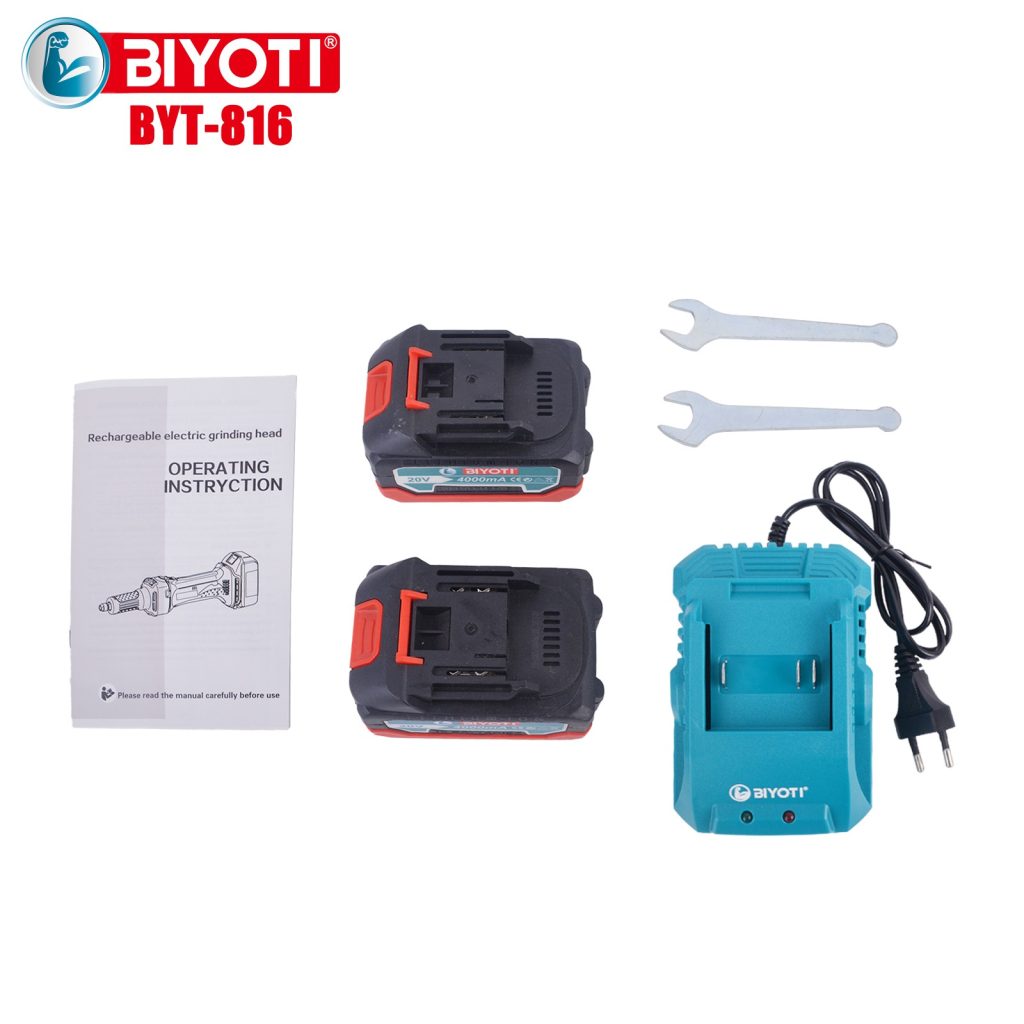
Yongkang Jiakai Industry and Trade Co., Ltd. manufactures power tools under the BIYOTI brand. Its range includes drills, grinders, levels, and other workshop products exported to Europe, the Americas, Southeast Asia, and other regions. It also presents one-stop procurement and distributor support.
As a BYT-816 die grinders supplier, the company serves importers, wholesalers, automotive tool distributors, and repair-equipment sellers seeking defined specifications and commercial packing.
Conclusion
A cordless die grinder for automotive repair is most useful when work is small, awkward, and exact. Port cleanup, approved gasket preparation, weld blending, localized rust removal, and deburring benefit from compact access. It is wrong for heavy cutting, unstable vehicles, flammable areas, or mismatched accessories.
The BYT-816 die grinder combines cordless lithium power, a brushless motor, 8,500 r/min no-load speed, and a stated 25 mm maximum collet diameter. Used within its intended range, it helps workshops complete detail work with less setup and better access. Buyers can contact the supplier for product details and quotation terms.
FAQs
What is a cordless die grinder used for in automotive repair?
It handles metal shaping, deburring, weld cleanup, small-area rust removal, approved gasket cleaning, and work in tight vehicle spaces.
Can a die grinder remove rust from car parts?
Yes. A die grinder for rust removal works on brackets, tabs, fastener seats, and small underbody zones with the correct accessory.
Can I use a die grinder to clean a head gasket surface?
Only when the repair procedure permits it. Use a surface-safe accessory, light pressure, blocked passages, and complete debris cleanup. Hand scraping or machining may be required.
Is a cordless die grinder suitable for cutting car frames?
No. Frame sections and thick structural metal need equipment designed for heavy cutting. An oversized wheel can overload a die grinder and create a breakage risk.
Why consider the BYT-816 die grinder?
The BYT-816 die grinder offers cordless mobility, a brushless motor, 8,500 r/min no-load speed, a stated 25 mm maximum collet diameter, and packing of 6 pieces per carton.