A car jack is not “best” by itself. The right choice depends on where you lift, work frequency, vehicle size, and storage. A trunk tool may feel slow in a repair bay, while an upright jack may not fit under a sedan.
This floor jack vs bottle jack vs scissor jack guide compares three designs for a home garage, roadside tire change, and workshop. It also explains where the BYT-J4T Horizontal Jack, a 4 ton hydraulic floor jack with dual pumps, fits for repeated lifting.
Quick Comparison for Garage, Roadside, and Workshop Use
Start with the job, not the largest capacity number. Home mechanics value stability and speed. Drivers need compact storage. Technicians need predictable operation across vehicles.
| Use case | Recommended jack | Main advantage | Main limitation |
| Home garage | Floor jack | Stable, quick, easy to position | Bulky |
| Roadside tire change | Scissor jack | Compact and light | Slow, narrow base |
| High-clearance vehicle | Bottle jack | Strong lift in a small body | High starting height |
| Workshop | Floor jack | Fast repeated service | Needs floor space |
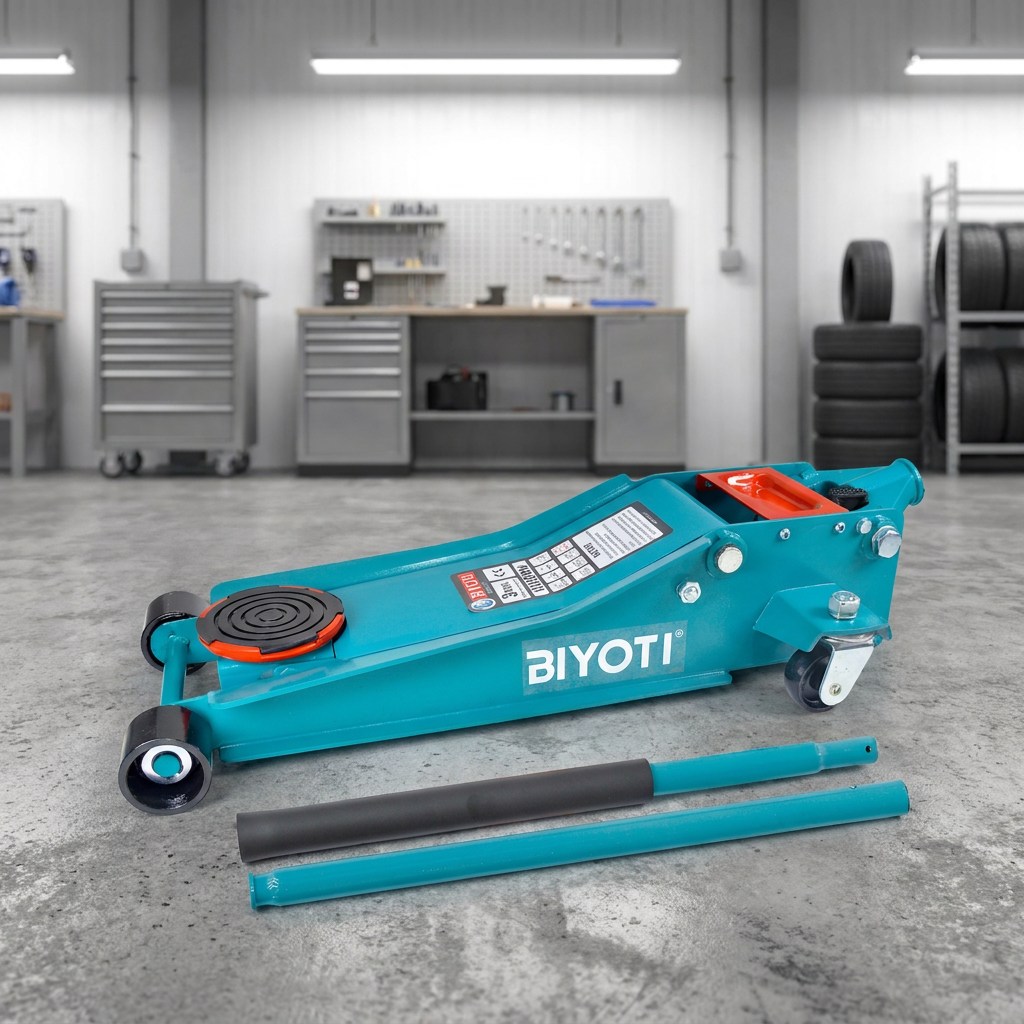
For garages handling cars, SUVs, off-road vehicles, vans, and light trucks, the BYT-J4T Horizontal Jack offers a 4-ton rating and dual-pump operation. Its horizontal layout provides the settled stance expected from a workshop floor jack.
Floor Jack: Best Jack for a Home Garage
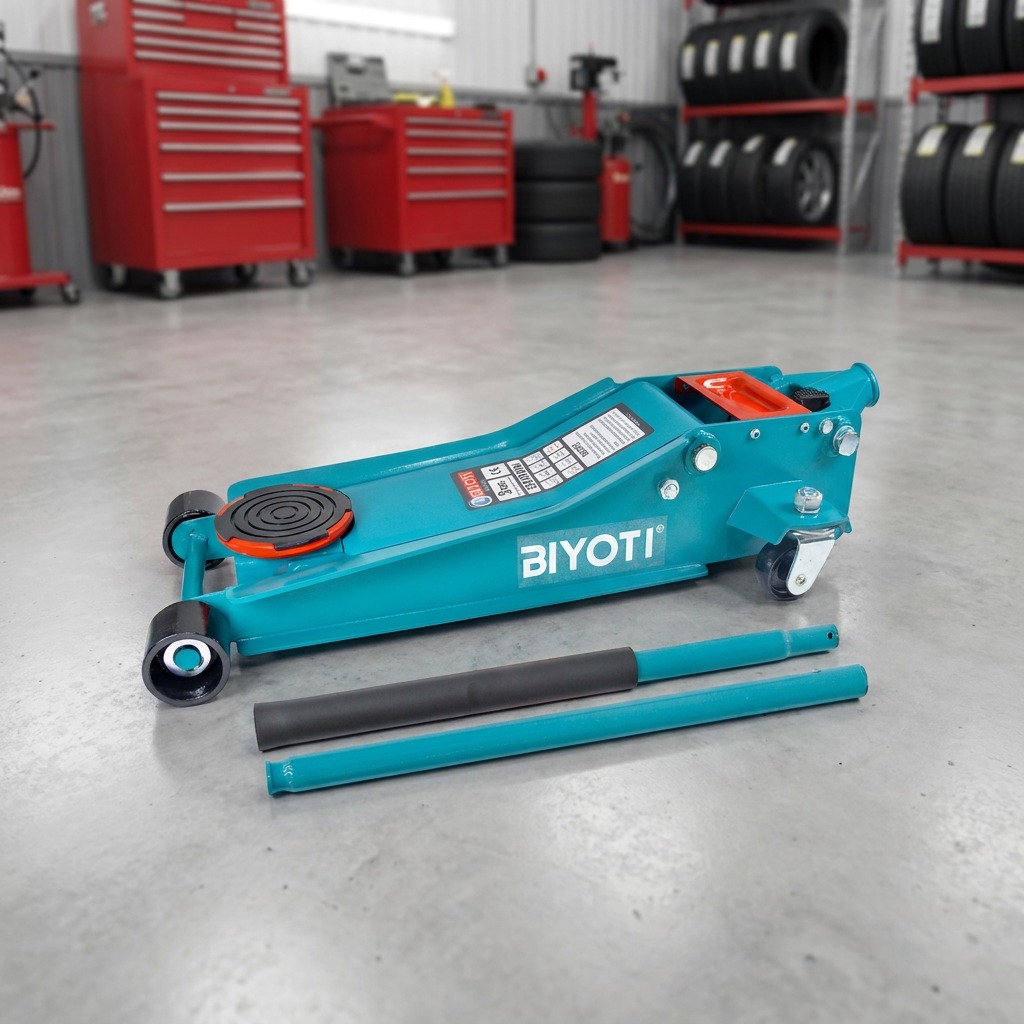
A floor jack uses hydraulic force through a low body and lifting arm. Casters guide the saddle toward the approved lifting point as the arm rises. That makes tire rotation, brake service, and wheel changes faster than hand cranking.
Why frequent users prefer it
A wide chassis and low center of gravity create a steadier platform than a tall jack. The long handle gives reach and control. On smooth concrete, the jack rolls between axles instead of being carried.
Capacity is only part of the decision. The saddle must reach the correct point, the jack must fit beneath the vehicle, and the floor must be hard and level. Jack stands remain necessary before underbody work.
The BYT-J4T Horizontal Jack is a strong best jack for home garage use with larger vehicles. Its 4-ton capacity broadens coverage, while dual pumps raise the unloaded saddle up to about 2.5 times faster than a typical single-pump system.
Bottle Jack: Compact Lift for High-Clearance Vehicles
A bottle jack places its hydraulic cylinder upright. This shape delivers high capacity from a compact body, useful for trucks, machinery, and high-clearance vehicles.
Where it works well
Storage is the main benefit. A bottle jack fits on a shelf, in a service vehicle, or inside a small compartment. It works as a portable car jack when the lift point is high enough and the ground is solid.
The upright body creates a higher minimum height, so it may not reach beneath a low sedan. Its narrow base also resists side movement less effectively. Alignment matters, and hydraulic pressure must never replace rated stands.
For passenger and light commercial service, the BYT-J4T Horizontal Jack avoids the bottle jack’s tall profile and narrow stance. It is a versatile 4 ton floor jack for SUV, van, off-road vehicle, and workshop maintenance.
Scissor Jack: Built for a Roadside Tire Change
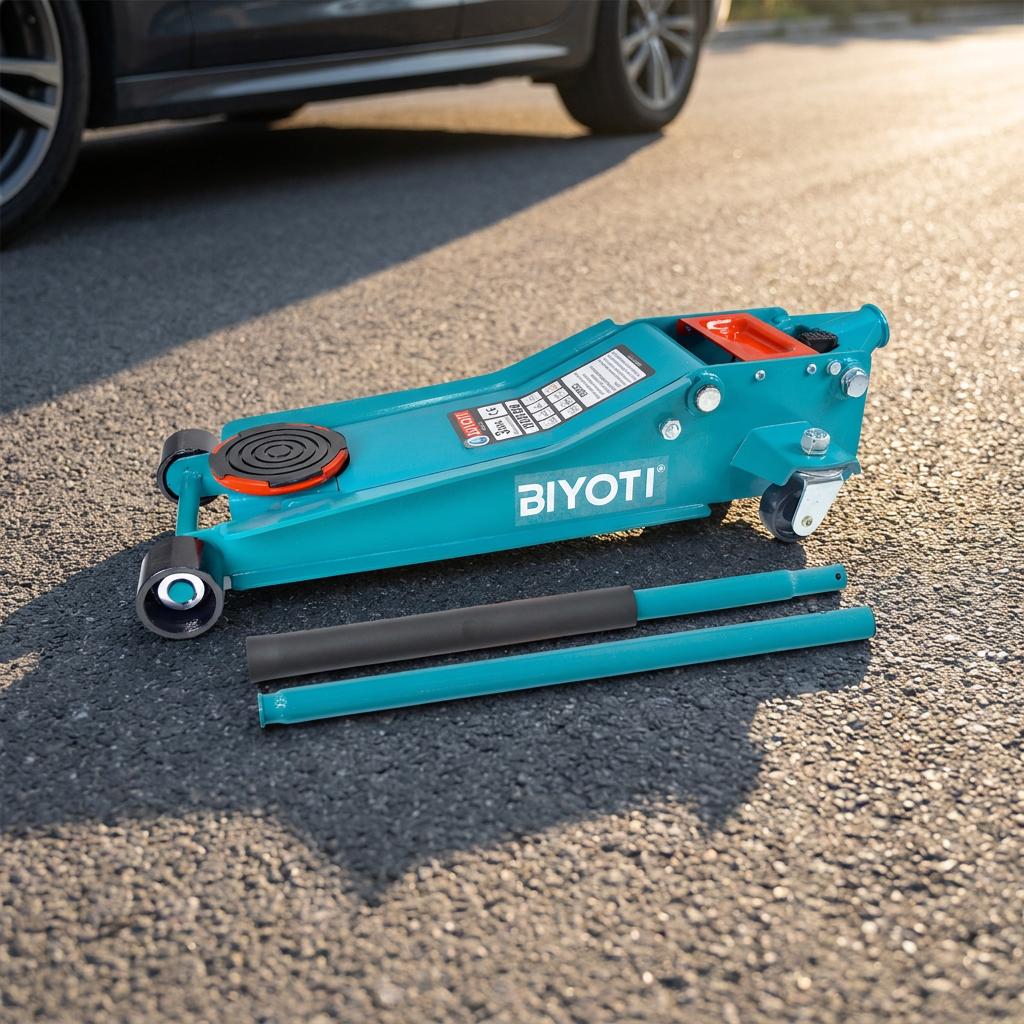
A scissor jack uses crossed arms and a threaded screw. Turning the handle pushes the vehicle upward. The folded unit is light, compact, and non-hydraulic.
Its proper role
For an occasional roadside tire change on firm, level ground, a vehicle-matched scissor jack can be enough. It stores beside the spare wheel and takes little space.
Limits appear quickly. Cranking takes effort, the base is small, and sideways force matters. A scissor jack is not sensible for repeated brake work, tire rotation, underbody inspection, or workshop cycles. Use it only at stated points and within its rating.
The BYT-J4T Horizontal Jack serves a different roadside role. It is not a trunk jack, but its 4-ton capacity, horizontal body, and dual-pump action suit equipped roadside teams carrying tools in a service van and working on hard, level ground.
How to Choose the Right Car Jack
The best car jack for DIY maintenance should match the vehicle, floor, frequency, and task. Check lifting points, note ground clearance, and consider whether the tool serves one car twice yearly or several vehicles weekly.
Five checks before buying
- Match capacity to the intended vehicle range.
- Confirm the saddle reaches the approved lift point.
- Choose a broad design for frequent garage work.
- Favor compact storage for a trunk kit.
- Add jack stands and wheel chocks.
A driver preparing for a flat has different needs from someone rotating SUV tires each season. A workshop needs faster setup because extra pumping cycles become lost labor.
For buyers seeking a car jack for home garage and workshop use, the BYT-J4T Horizontal Jack combines a 4-ton rating with dual-pump operation. It delivers rapid approach, controlled lifting, and coverage across passenger and light commercial vehicles.
BYT-J4T Horizontal Jack at a Glance
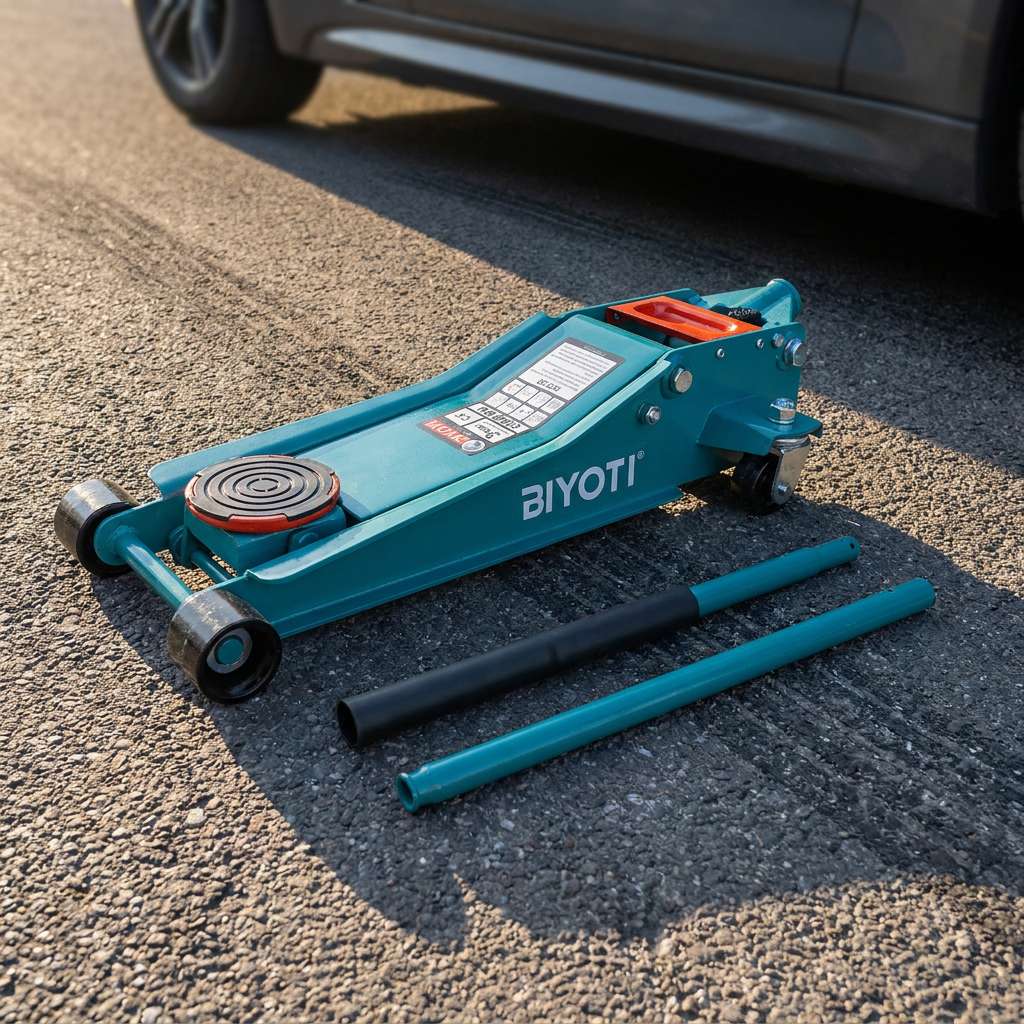
The BYT-J4T Horizontal Jack is a 4-ton dual-pump hydraulic floor jack. The small pump supports quick travel; the larger pump carries the load steadily. During no-load travel, the saddle can rise up to about 2.5 times faster than a single-pump design.
Its rated capacity covers cars, SUVs, off-road vehicles, vans, and light trucks. The horizontal arrangement keeps the center of gravity low and supports stable positioning on a firm, level floor. Packaging is one piece per carton. Operators should chock wheels, use specified lift points, and set jack stands before underbody work.
For customers comparing a dual pump floor jack for workshop use, the BYT-J4T offers broad coverage, faster approach, hydraulic control, and a structure suited to garages, repair bays, and professional roadside vehicles.
Yongkang Jiakai Industry and Trade Co., Ltd.
Yongkang Jiakai Industry and Trade Co., Ltd., based in Yongkang, Zhejiang, is behind the BIYOTI range. It supplies tools for professional users, dealers, and international buyers. Their products are sold in global markets, including Europe, the Americas, and Southeast Asia.
As a BYT-J4T Horizontal Jack supplier, the company supports distributors, automotive tool buyers, and service businesses seeking product details or purchasing discussions. The BYT-J4T adds a focused 4-ton lifting product with a time-saving dual-pump design.
Conclusion
There is no universal winner in the floor jack vs bottle jack vs scissor jack comparison. A scissor jack earns trunk space through portability. A bottle jack suits high-clearance loads where compact hydraulic power matters. A floor jack is usually best for garage and workshop service because it is easier to position, quicker, and steadier during repeated lifts.
For buyers needing a workshop floor jack rather than an emergency tool, the BYT-J4T Horizontal Jack is the most complete fit here. Its 4-ton capacity and dual-pump system support passenger and light commercial vehicles, making it a strong option for garage use, distribution, and service-tool inquiries.
FAQs
Is a floor jack better than a bottle jack for a home garage?
Usually. A floor jack rolls into position, has a broader stance, and suits repeated maintenance. A bottle jack saves space but may be too tall. The BYT-J4T adds 4-ton capacity for larger vehicles.
Which jack is best for a roadside tire change?
A matched scissor jack is easiest to store in a trunk. Professional roadside teams may carry the BYT-J4T in a service van for faster hydraulic lifting.
Do I need jack stands with a hydraulic jack?
Yes. A jack lifts; stands support. Use wheel chocks, work on hard, level ground, and never go beneath a vehicle held only by the BYT-J4T or any jack.