What seems to be a simple room can turn out to be very complicated: Tapes bend around pieces of furniture, walls are longer than one arm can reach, a customer asks for a flooring quote while you are still on the site. For painters, tilers, decorators and fitters, the wrong number can lead to additional materials, delayed quotes or a return visit.
How to measure room area and wall area using a laser distance meter? In this guide we will explain how to use the BYT-4P Laser Distance Meter to measure surfaces in your home. Measuring surfaces using a laser distance meter is simple when you have the correct dimensions, split up difficult areas into more manageable parts and then just apply the correct formula.
Why a Laser Distance Meter Helps Area Measurement
Using a tape to measure a room can work if the room is empty but it is very slow when the room is furnished as in an apartment, a shop with display racks or a high ceiling such as in a lobby. A laser distance meter is used for room measurement. It requires one operator and a start point but a clear target surface is also required.
Before measuring, clear loose objects from the wall line and choose one corner as the start point. Decide whether you are measuring finished wall to finished wall or raw structural dimensions.
Use these habits on every job:
- Keep the Laser Level flat against the starting surface.
- Aim at a solid wall, target plate, or stable board.
- Avoid glass, mirrors, curtains, and moving targets.
- Take two readings for important dimensions.
- Record the unit beside every number.
| Task | Key measurements | Basic formula |
| Floor area | Length × width | L × W |
| Ceiling area | Room length × width | Same as floor |
| Paintable wall area | Perimeter × height minus openings | P × H – doors/windows |
| Skirting board length | Room perimeter minus door widths | P – door openings |
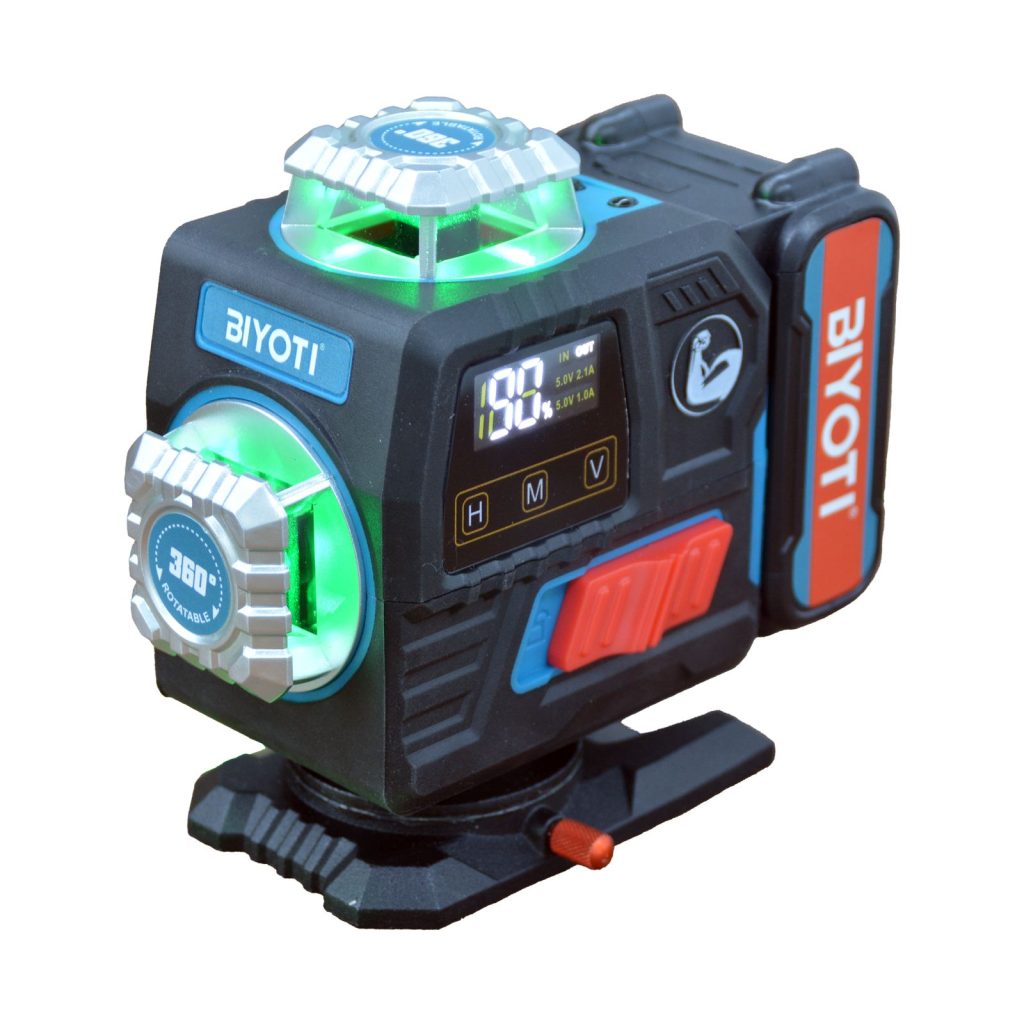
The BYT-4P Laser Distance Meter is a perfect tool for daily work. The BYT-4P has a measuring range of up to 40 m for most homes, offices, small shops and other spaces where you are working on a renovation. The 505–520 nm green laser projects a clear point, which makes it easy to aim and take measurements quickly and without any disturbance.
How to Measure Room Area with a Laser Distance Meter
Start from a corner in a rectangular room. First measure the longer side of the room and then the shorter side. Now multiply the two figures together. A living room of 5.6 m by 4.2 m equals a floor area of 23.52 m². This figure will be suitable for comparing between different floorcoverings, underlays and ceiling panels, as well as to get an rough estimate of the renovation cost.
Every room is not a simple rectangle. An L-shaped dining area, a hallway with a nook or cove, a bedroom with a bay or bulge can be calculated more clearly by dividing the total area of the room into simpler rectangles. You can then measure and calculate the total area of each simpler rectangle and add the together for the total area of the entire room. Simple and clear.
Example: Measuring Floor Area for Tiles
A small apartment of 4.8 m × 3.6 m in dimension includes a small entry recess of 1.2 m × 0.9 m. The main floor area of the room is therefore 17.28 m² and the recess adds a further 1.08 m². In total there is a floor area of 18.36 m². This must be increased by about 5% to allow for cutting losses by the installer, ie to approximately 19.28 m² for ordering purposes.
This method is useful for floor area measurement for tiles, where cut pieces through doorways and around cabinets can quickly add up to a lot of waste. Laser reading allows for fast measurement and re-measurement of the room prior to placing a material order.
The BYT-4P Laser Distance Meter saves time by enabling one person to measure long walls up to 40m in length. The green laser point together with the 4D line layout ensure that the user keeps the measuring path always correct. Measuring the width of a room with many cabinets, corners and also ceiling lines is made easy with this feature.
How to Calculate Wall Area for Painting or Tiling
Wall area is not the same as floor area. To quickly calculate the area of the walls, paint, wallpaper, acoustic panels or wall tiles use perimeter * height of the walls minus doors and windows.
To calculate the gross wall area of a room first calculate the perimeter of the room by adding up the lengths of all of the walls. Then measure the height from the floor to the top of the ceiling. In this example the room is 5 meters long and 4 meters wide, making the perimeter of the room 18 meters long. Using this measurement and the height to the ceiling of 2.8 meters the gross wall area would be 50.4 square meters. Subtracting the area of a 1.8 square meter door and a 2.4 square meter window from the gross wall area would give a paintable wall area of 46.2 square meters.
Single-Wall Method for Complex Rooms
Use single-wall measurement for walls with built-in wardrobes, half-height tile areas, alcoves, etc. that have several apertures. Measure width and height of the wall, and then subtract only the unfinished parts from this measurement.
In the above example a bathroom wall is 2.4 m wide and 2.6 m high, however due to a shelf etc the tiling will only extend to 2.1 m high. Using the above method we first calculate the full wall tile area, then apply the deductions to arrive at the final area of tiles required. In this case 2.4m x 2.1m = 5.04m² before any applicable deductions. This figure is more useful to the tiler than the full wall height as it relates only to the required partial wall.
The BYT-4P Laser Distance Meter is an ideal tool for measuring wall area as the vertical line can be used as a reference to the edge of the wall and the horizontal line can be used to check the height of your marks. With an accuracy of ±0.2 mm/m it will enable you to paint straighter lines, lay tiles perfectly and set up your cabinet reference points more accurately.
Accuracy Tips for Better Room Measurement Results
Measuring accuracy is not just down to the tool, it is also dependent on the person using it. Make sure you keep a straight line of sight to the end of the laser and use a flat wall or target board where the surface is dark, very glossy or uneven. In very bright rooms, make sure the area you are measuring is shaded as the laser point can be difficult to see.
Don’t mix and match centimeters and meters in one formula. Complete the calculations first and then round up to the nearest quantity to purchase building materials. The final quantity of paint, tiles and floorcoverings should also be determined by the pack sizes of the suppliers and the amounts of waste allowed by the installers.
For long rooms over 8m in length it is worth taking a further measurement between opposite points when the work is high value such as custom joinery, fitted wardrobes or expensive stone work surfaces. For cabinets and tile work a second check is cheap insurance.
BYT-4P Laser Distance Meter is an accuracy-first tool. It has a measuring range of up to 40 m, a 505–520 nm green laser, a high accuracy of ±0.2 mm/m and a self-leveling range of up to ±3°. With its green laser and dimensions it is the perfect tool for home renovation, interior measurement and daily site layout work.
Brief Introduction to the BYT-4P Laser Level
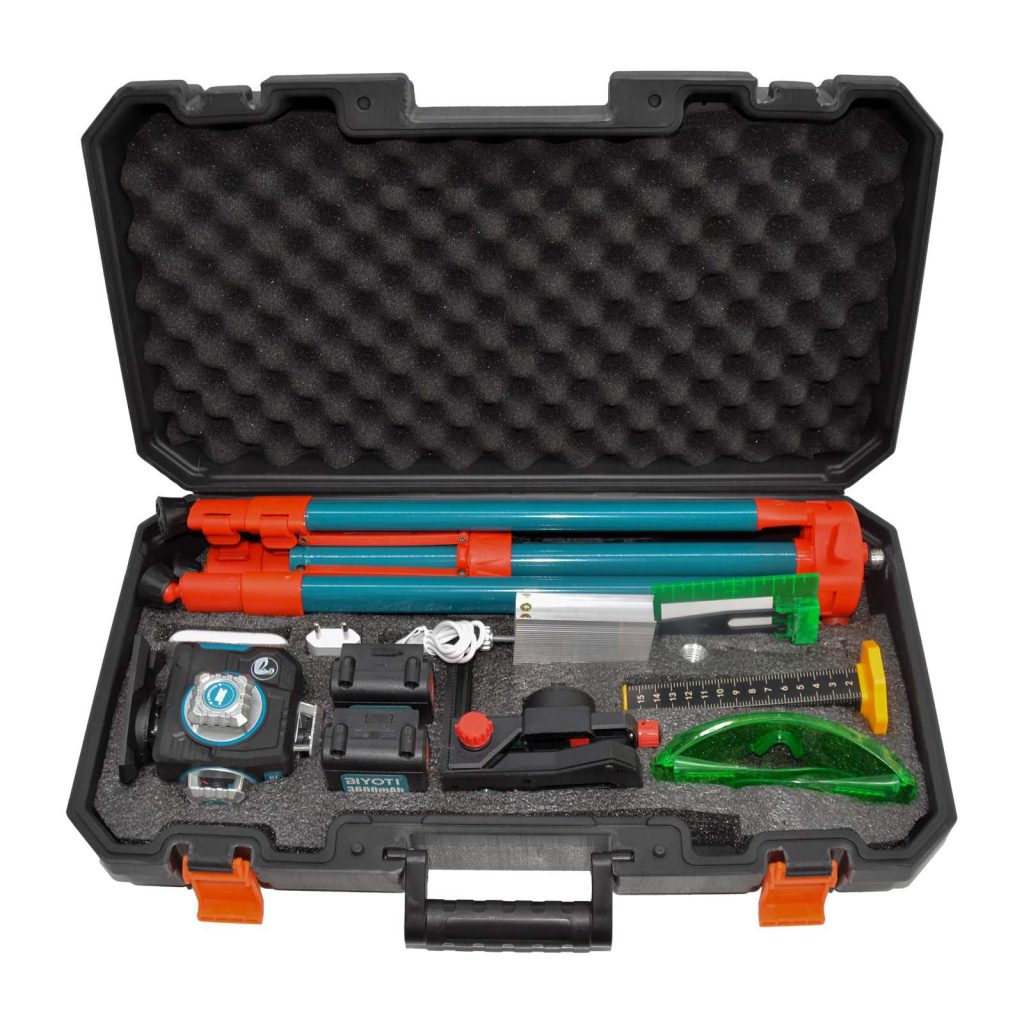
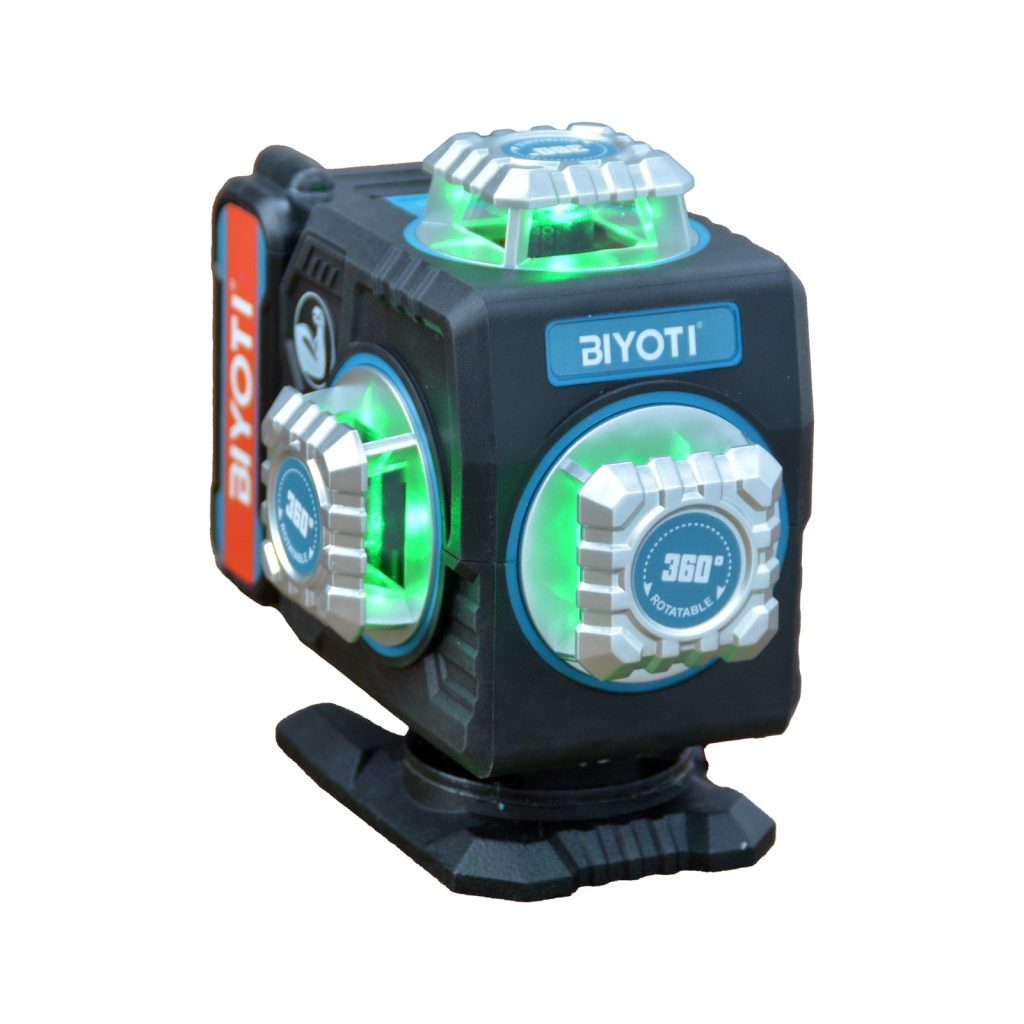
The BYT-4P Laser Distance Meter is a tool for quick measurement and visible layout lines. The BYT-4P 40 m laser distance meter has a green laser and a 4D multi-line function. The straight and diagonal lines are visible on walls, floors and ceilings. The BYT-4P is perfectly suited for calculating room areas, determining wall areas, aligning tiles, working on ceilings and general planning for renovations using the included software.
The product answers a common need in the market for wholesalers, contractors and tool retailers. The primary function of the product is a one person room measurement tool that can also be used for leveling and for making lines. Therefore it is easy to sell into decoration, construction, furniture installation, electrical installation and property maintenance.
Yongkang Jiakai Industry and Trade Co., Ltd. as Supplier
Yongkang Jiakai Industry and Trade Co., Ltd. is the BIYOTI tool supply’s manufacturer. We specialize in power tools and measuring tools like electric drill, angle grinder, level and other jobsite tools. Our products can be found by the buyers who are looking for one-stop procurement, stable tool categories and supplier support for wholesale or agency business.
The BIYOTI BYT-4P Laser Distance Meter is a great product for the buyers who consider supplier strength equally important to the product features. With BIYOTI tool lineup and factory support, you can have better experience for selecting right tool for your needs, for making inquiry and for repeat buying.
Conclusion
Learning how to measure room area with a laser distance meter is one of the easiest ways to reduce mistakes in renovation planning. Measure length and width for floors. Use perimeter and height for walls. Split irregular rooms into rectangles. Deduct doors and windows only after you get the gross wall area.
The BYT-4P Laser Distance Meter is a powerful tool that consolidates all the functions necessary to take quick and accurate measurements in order to provide quotes, to calculate materials needed and to organize site work in an efficient manner. A 40 m range, a visible green laser, 4D layout lines and a ±0.2 mm/m accuracy are some of the key functions. The self-leveling function allows a ±3° deviation. The BYT-4P is ideal for contractors, decorators, installers and for anyone who is looking for a reliable tool.
FAQs
How do you measure room area with a laser distance meter?
Measure the length of the room, and then measure the width from the adjacent wall. Length times width = area. For extremely irregularly shaped rooms you may end up calculating the area of multiple rectangles that, together, equal the room’s entire area.
How do you calculate wall area for painting?
Start by measuring around the perimeter of the room. Then multiply this number by the height of the ceiling in the room. Now, start subtracting from that number for things like doors and windows, as well as any built-in cabinets or sections of walls that you won’t be painting.
Can one person measure floor area for tiles?
A laser distance meter is a great tool to enable a single person to work out the area of a room for tiling without the hassle of holding two ends of a tape measure. Measure each dimension twice, take the average reading and add a % for waste, before ordering your tiles.
Is the BYT-4P Laser Distance Meter only for room area?
No it can be used to calculate room area & wall area as well as other checks including ceiling height. Skirting board length around rooms. Outlay of tiles for ordering. Check that surfaces are level. Also used as a reference for leveling and checking verticals. The 4D horizontal & vertical laser lines are also very usefull for many jobs.