Large format tile installation looks simple after the floor is finished. Before that moment, it is one of the most unforgiving jobs on a site. A 750×1500mm floor tile, a 900×1800mm porcelain panel, or a 1200×2400mm slab can make a hotel lobby, villa bathroom, or showroom wall look clean and expensive. But the same tile can also expose every weak point in the installation process: trapped air, uneven mortar, corner lift, lippage, hollow sounds, and tired workers.
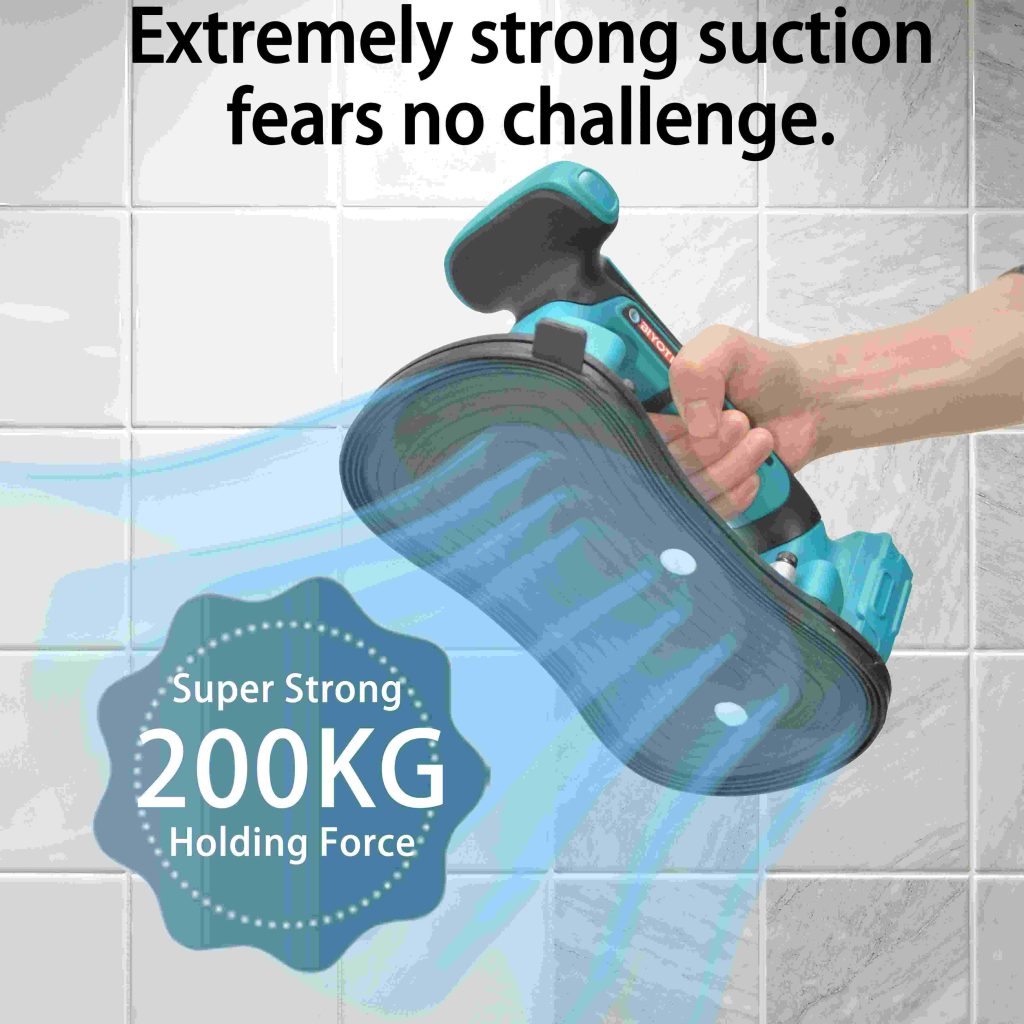
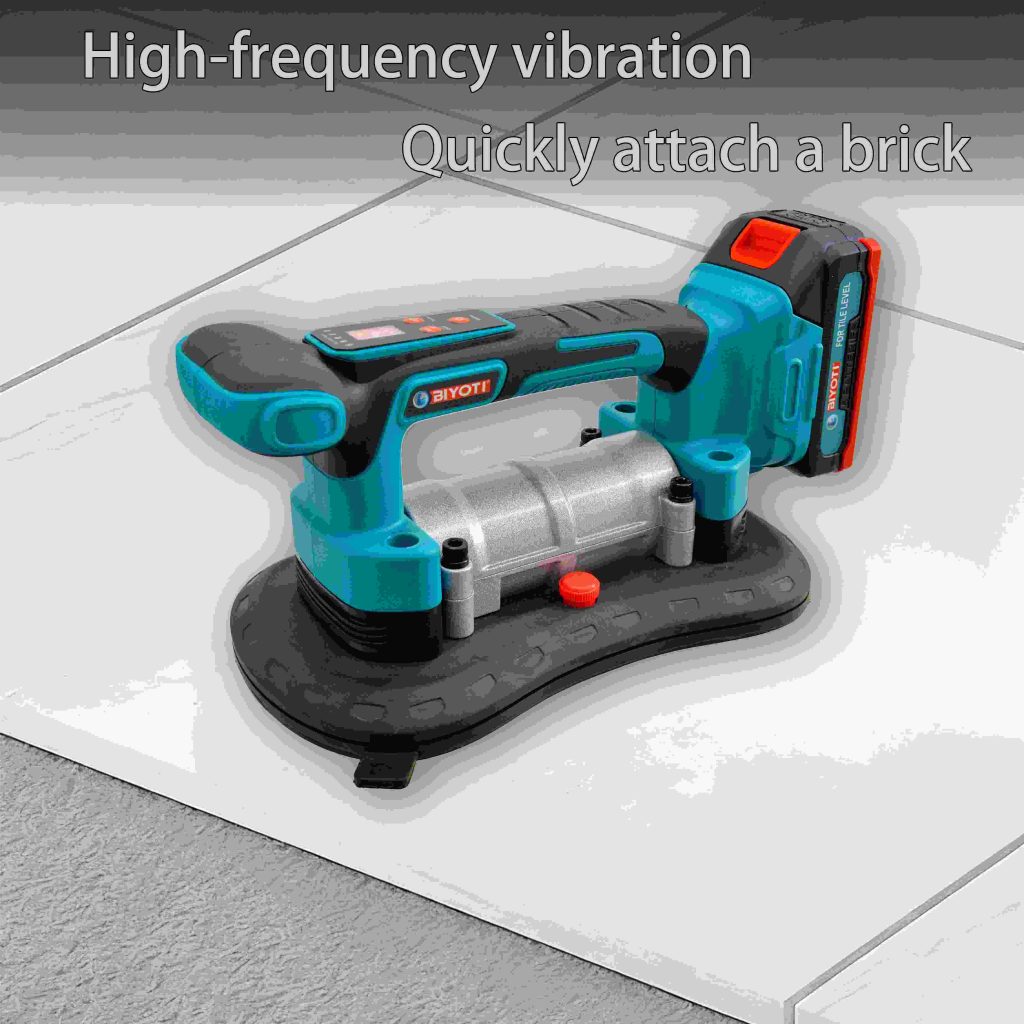
That is why the tiling machine is becoming a serious jobsite tool in 2026. Instead of relying only on a rubber mallet and installer feel, tile teams are moving toward controlled vibration. The BYT-LT01 Tiling machine is built around this shift, with a brushless motor, 1200W input power, 28000r/min vibration frequency, 9 adjustable speeds, and cordless lithium operation.
Why Large Format Tile Installation Is Changing in 2026
Large tiles are no longer used only in premium villas. Contractors now see them in apartment entrances, shopping spaces, hotel bathrooms, offices, restaurants, and feature walls. The demand is clear: fewer grout lines, a wider visual surface, and a more seamless finish.
Bigger tiles leave less room for small mistakes
With small tiles, a low spot in the substrate may affect one or two pieces. With large format tile installation, one slab can bridge over a low area and trap air beneath the center. Once the adhesive cures, that hidden void may turn into a hollow sound, a crack, or a callback.
Installers also face more pressure on speed. A crew may need to finish several rooms in one day while keeping the surface flat enough for strict visual inspection. Hammer tapping still has a place, but it is hard to keep the same pressure across every square inch of a large panel.
Hollow spots are now a cost issue
A hollow tile is not just an aesthetic problem. It may require drilling, injection repair, removal, or full replacement. On a large porcelain slab, that can mean wasted material, extra labor, delayed handover, and an unhappy client. For contractors and tile tool distributors, this is where a large tile installation machine becomes more than a convenience.
The BYT-LT01 Tiling machine gives crews a more repeatable way to vibrate and settle tiles. Its 28000r/min high-frequency vibration and 9-speed adjustment help installers match the tool output to tile thickness, adhesive condition, and working area.
What a Tiling Machine Actually Does Under the Tile
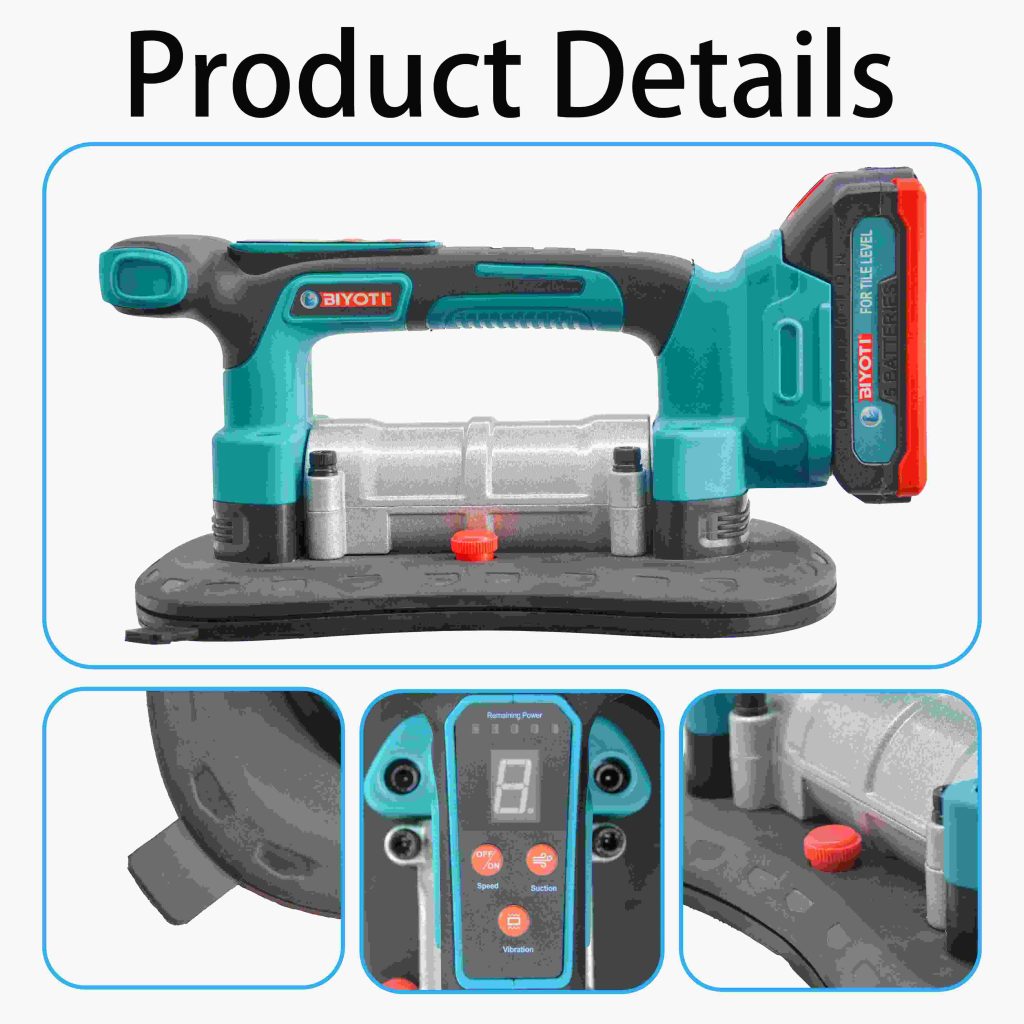
A tiling machine is not a shortcut for poor preparation. It does not replace a flat substrate, a suitable notched trowel, proper adhesive mixing, or back-buttering when needed. Its value comes after the tile is placed.
From hammer impact to controlled vibration
Traditional rubber mallet work is based on repeated impact. The worker taps the tile surface, listens, adjusts, and taps again. This can work on standard floor tiles, but large slabs react differently. Too much force near an edge may chip the tile. Too little force in the center may leave air behind.
A tile vibration tool uses fast micro-vibration instead of sharp impact. The vibration helps the adhesive bed flow, ridges collapse, and trapped air move out from beneath the tile. The result is a more even bedding process with less strain on the installer’s wrist, waist, and shoulders.
Better bonding starts before the surface looks flat
A tile can look flat from above while still having poor contact underneath. That is the risk. Professional crews usually check mortar transfer during the job by lifting sample pieces. A cordless tile vibrator helps reduce the gap between “looks good” and “is properly bedded.”
The BYT-LT01 Tiling machine supports this bedding process with cordless movement. On floors, walls, stairs, and areas where cables slow the team down, cordless operation keeps the work path cleaner and safer.
BYT-LT01 Tiling Machine: Key Specs for Real Jobsite Use
Buyers do not only need a tool that looks strong in photos. They need specs that matter in daily work: motor type, vibration rate, speed control, power supply, packaging, and tile compatibility. The BYT-LT01 is positioned for contractors, renovation teams, tile setters, and tool sellers who need a practical tiling machine for repeated use.
| BYT-LT01 Specification | Product Detail | Why It Matters on Site |
| Motor type | Brushless motor | Less carbon brush wear and steadier output during long work periods |
| Input power | 1200W | Strong power reserve for frequent vibration work |
| Vibration frequency | 28000r/min | Helps adhesive flow and air escape under tiles |
| Speed control | 9 adjustable speeds | Low settings for thinner or fragile materials, higher settings for heavier tiles |
| Power supply | Cordless lithium | No cable dragging across fresh adhesive or finished surfaces |
| Applicable tile size | 150–260mm marked specification | Buyers should confirm project fit with the supplier before bulk orders |
| Packing | 6PCS/CTN | Suitable for team purchasing, distributors, and multi-station crews |
The BYT-LT01 Tiling machine stands out because its key features match the real pain points of large tile setting: controlled vibration, cordless movement, and speed adjustment. For dealers, the 6PCS/CTN packing also makes it practical for inventory and wholesale supply.
How It Changes Large Tile Setting in Daily Work
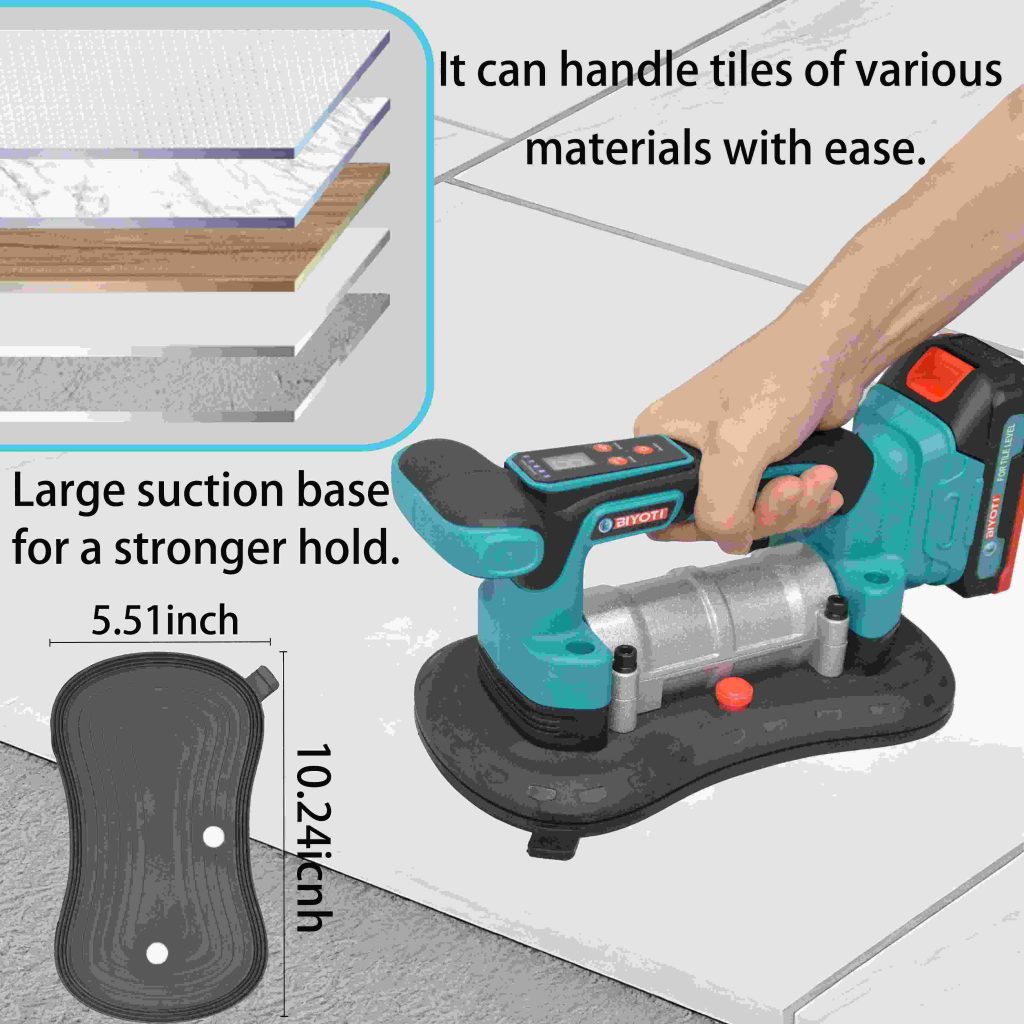
A tiling machine matters most when it makes a normal workday smoother. In 2026, tile crews are not only chasing a clean surface. They are also trying to shorten project cycles, reduce rework, and keep skilled workers from burning out.
Scenario 1: 900×1800mm floor tile in a living room
Picture a two-person crew installing large porcelain floor tiles in a high-end apartment. With a rubber mallet, one tile may need repeated tapping across the center, edges, and corners. The worker has to squat, reach, listen, and adjust. After hours of this, consistency drops.
With BYT-LT01, the installer can place the tile, align the joint, start with a suitable speed, and move the tool across the tile in a controlled path. The goal is simple: settle the tile into the adhesive while pushing air outward.
Scenario 2: Bathroom wall panels and porcelain slabs
Wall tile work brings another challenge. The installer must control the tile while also dealing with gravity, adhesive open time, and tight corners around niches or fixtures. A heavy impact tool can be risky on thinner panels. A tile adhesive air pocket removal tool with adjustable vibration gives the worker more control.
Scenario 3: Commercial projects with repeated layouts
In a showroom, corridor, or hotel room batch, repetition is everything. When each room has similar tile sizes and adhesive conditions, a crew can choose a working speed, train new workers faster, and reduce variation from one installer to another.
For these site conditions, the BYT-LT01 Tiling machine is a useful fit. Its 9-speed design lets the same tool handle different materials and work areas, while the cordless lithium setup keeps movement flexible across rooms, stairs, and large open floors.
Tiling Machine vs Manual Tile Installation
Manual tile setting has worked for decades, and skilled hands still matter. The point is not to remove the installer’s skill. The point is to give that skill a more stable tool, especially when tiles are larger, thinner, heavier, and more expensive.
| Workflow Factor | Rubber Mallet Method | Corded or Air-Hose Tool | BYT-LT01 Tiling Machine |
| Air removal on a 900×1800mm tile | Often 90–120 seconds | Often 30–40 seconds | About 12–18 seconds in suitable conditions |
| Worker fatigue after long use | High | Medium | Lower due to vibration-assisted bedding |
| Cable or hose restriction | None | Present | Cordless |
| Control on different materials | Based on hand feel | Limited by tool type | 9 adjustable speeds |
| Rework risk | Higher if air remains | Lower than manual | Lower when used with correct adhesive and prep |
The BYT-LT01 does not make poor workmanship acceptable. It makes good workmanship easier to repeat. Used with a proper trowel, clean tile backs, correct adhesive, and leveling accessories, it can help a crew reduce hollow spots under tiles and finish large format tile installation with better speed and confidence.
Practical Setup Tips for Better Results
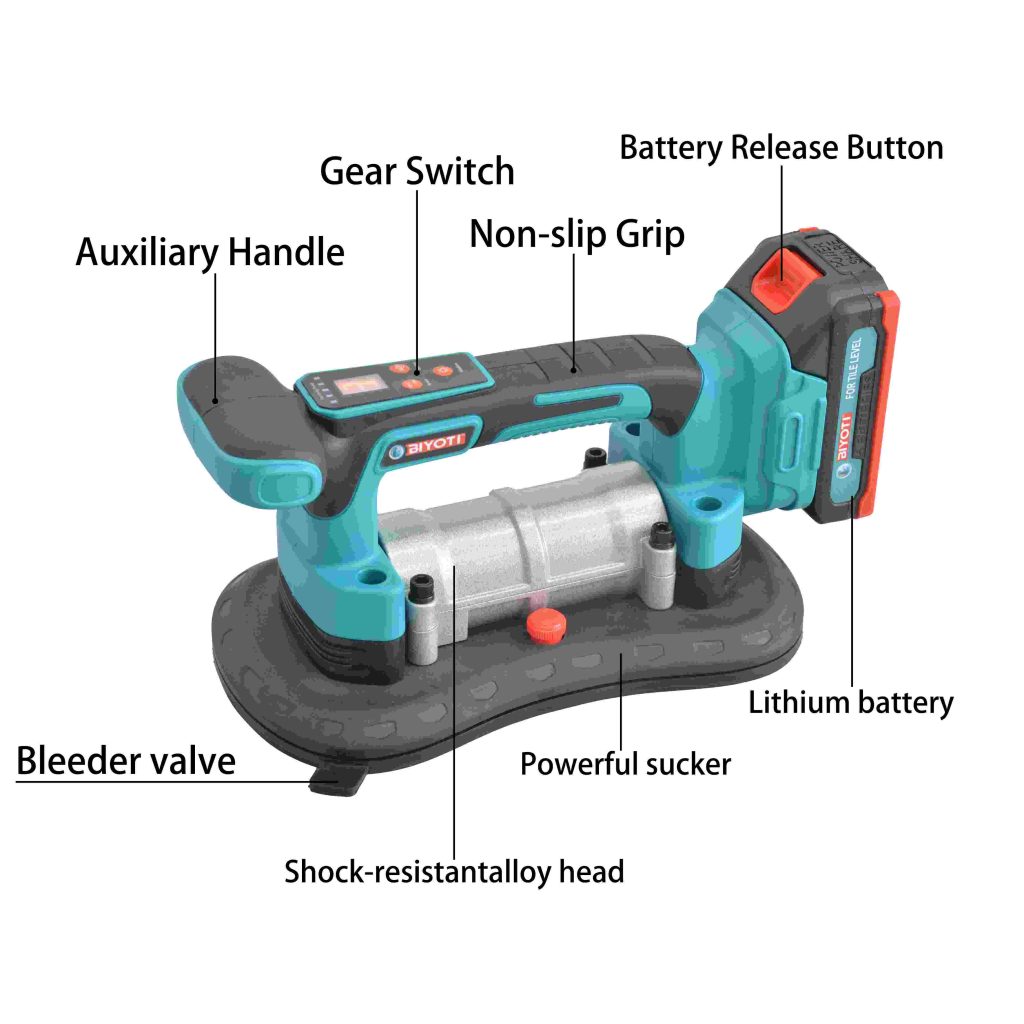
A brushless tiling machine works best when the whole setting method is right. On real jobs, most failures come from a chain of small misses: the adhesive is too dry, the ridges run in the wrong direction, the tile back is dusty, or the worker vibrates only the center.
A simple working method for large tiles
Use this workflow before judging the tool:
- Check substrate flatness before mixing adhesive.
- Use a notched trowel suitable for the tile size and adhesive type.
- Back-butter large tiles or slabs when the project requires it.
- Set the tile carefully, then start vibration at a lower speed.
- Move from the center toward the edges to help air escape.
- Use a cross-shaped or grid-like pass for larger pieces.
- Pair the machine with a tile leveling system to manage lippage.
- Clean the tool contact surface after use so dried mortar does not affect vibration transfer.
- Keep spare batteries ready for long work sessions.
Speed settings should match the material
For thin panels, soft stone, or glass tile, start low and increase only if needed. For standard porcelain tile, mid-range settings are often easier to control. For thicker slabs or high-viscosity mortar, higher speeds may help the adhesive settle faster. The BYT-LT01 product data describes 1–3 speeds for thinner or more fragile materials, 4–6 speeds for common porcelain tiles, and 7–9 speeds for thicker slabs or heavier adhesive conditions.
This is where BYT-LT01 becomes practical rather than flashy. Its 9 adjustable speeds let workers fine-tune the vibration instead of using one fixed setting for every tile, every room, and every adhesive mix.
A Brief Introduction to the BYT-LT01 Tiling Machine
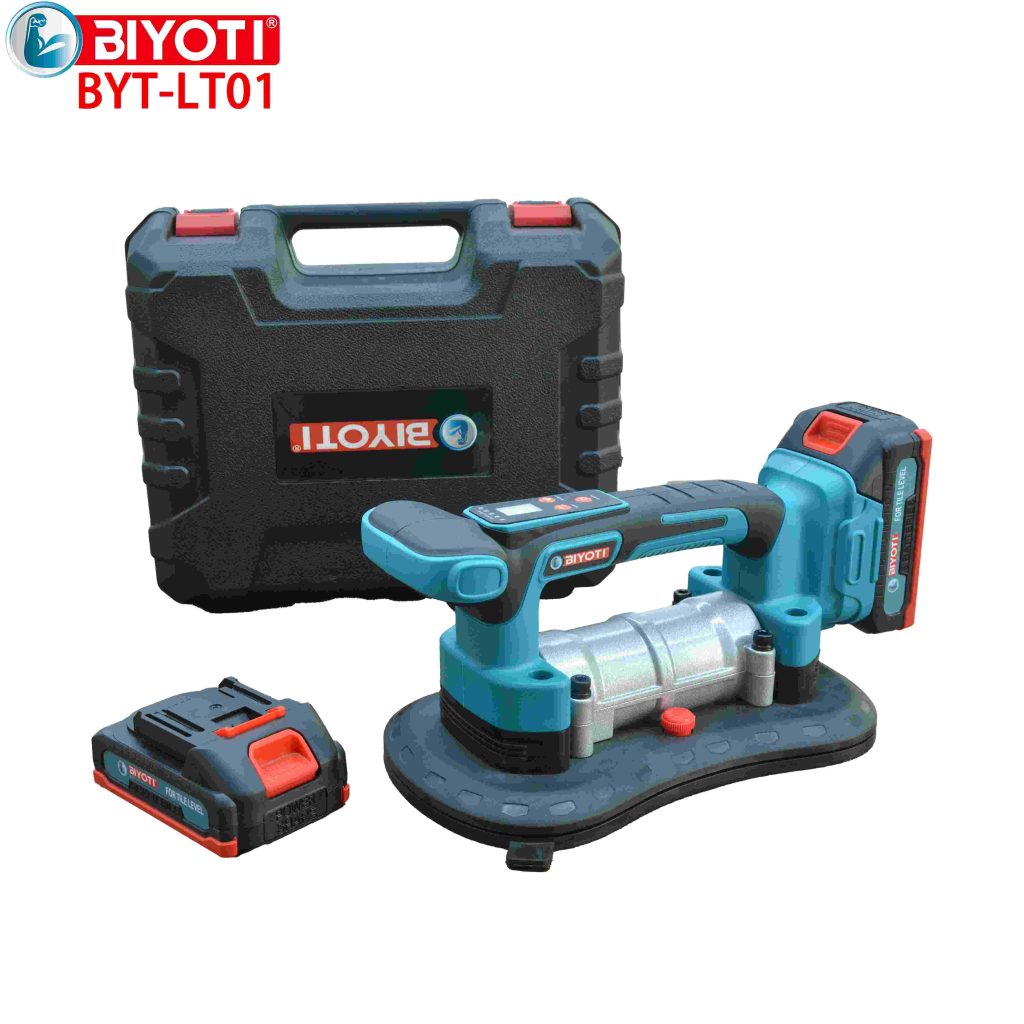
The BYT-LT01 Tiling machine is a cordless lithium tile vibration machine designed for tile setting, air removal, and bedding support. Its core configuration includes a brushless motor, 1200W input power, 28000r/min vibration frequency, 9-speed adjustment, and 6PCS/CTN packing. The product file also lists an applicable tile size of 150–260mm, so buyers working with oversized slabs should confirm the exact project fit, tile type, and usage method before ordering.
For contractors, the BYT-LT01 can help reduce the heavy tapping work that often comes with large tile installation. For distributors, it is a clear product for tile setters, renovation teams, flooring crews, and construction tool channels that need cordless tiling machine options.
Yongkang Jiakai Industry and Trade Co., Ltd. as Your Supplier
Yongkang Jiakai Industry and Trade Co., Ltd. is connected with the BIYOTI power tool product line and focuses on manufacturing power tools such as electric drills, angle grinders, levels, saws, and related jobsite equipment. The company presents itself as a professional power tool manufacturer with more than 12 years of experience, a broad product range, and one-stop procurement support for global customers.
For B2B buyers, the supplier profile matters as much as the tool. A tiling machine may be sold into rental stores, tile tool shops, contractor supply channels, building material markets, and e-commerce platforms. Buyers need stable product availability, practical packaging, dealer support, and responsive communication. BIYOTI’s website highlights large annual production capacity, 400+ tool categories, in-stock supply, and support for brand agents.
As a BYT-LT01 Tiling machine supplier, Yongkang Jiakai Industry and Trade Co., Ltd. gives buyers a route to source a cordless, brushless, adjustable-speed tiling machine from a power tool manufacturer rather than a single-item trader. That can be helpful for importers and wholesalers who want to build a broader tool catalog around tile installation, renovation, and construction work.
Conclusion
Large format tile will keep growing in 2026 because customers like the clean look, fewer grout joints, and premium feel. But bigger tiles demand better installation control. A tiling machine helps solve one of the hardest parts of the job: bedding the tile into adhesive without leaving trapped air or relying only on hammer impact.
The BYT-LT01 Tiling machine brings together the features tile crews now ask for: brushless motor, 1200W input power, 28000r/min high-frequency vibration, 9 adjustable speeds, and cordless lithium operation. For contractors, it can make large tile setting faster and less tiring. For tool dealers, it is a focused product with clear demand from renovation and tile installation markets.
FAQs
What is a tiling machine used for?
A tiling machine is used to vibrate tiles after placement so the adhesive spreads more evenly and trapped air can escape. It is especially useful in large format tile installation, porcelain tile setting, and jobs where hollow spots are a common risk.
Is the BYT-LT01 Tiling machine suitable for large format tile installation?
The BYT-LT01 Tiling machine is designed as a vibration-assisted tile setting tool and is promoted for modern large tile workflows. Its marked applicable tile size is 150–260mm, so buyers should confirm exact tile compatibility with the supplier when working on oversized slabs.
Why choose a cordless tile vibrator for floor and wall tile?
A cordless tile vibrator removes cable and hose restrictions. This helps when moving around fresh adhesive, finished floors, stairs, bathrooms, and large rooms. The BYT-LT01 Tiling machine uses cordless lithium operation for easier jobsite movement.
How many speed settings does the BYT-LT01 have?
The BYT-LT01 Tiling machine has 9 adjustable speeds. This helps installers choose lower vibration for thinner or fragile tiles and higher vibration for thicker tile, dense porcelain, or heavier adhesive conditions.