Wall channel cutting looks simple until the job moves from a red brick partition to a reinforced concrete wall, then to a marble or granite surface. Each material reacts differently. Brick throws out loose chips and dust. Concrete fights back with hard aggregate and sometimes small steel bars. Stone can crack or chip at the edge if the blade is wrong or the cut runs too hot.
That is why many contractors ask the same practical question before buying a wall slotting machine: can one slotting machine handle brick, concrete and stone wall channels? The answer is yes, but only when the machine has enough power, a stable cutting structure, adjustable blade capacity, and the right diamond blade for each wall material.
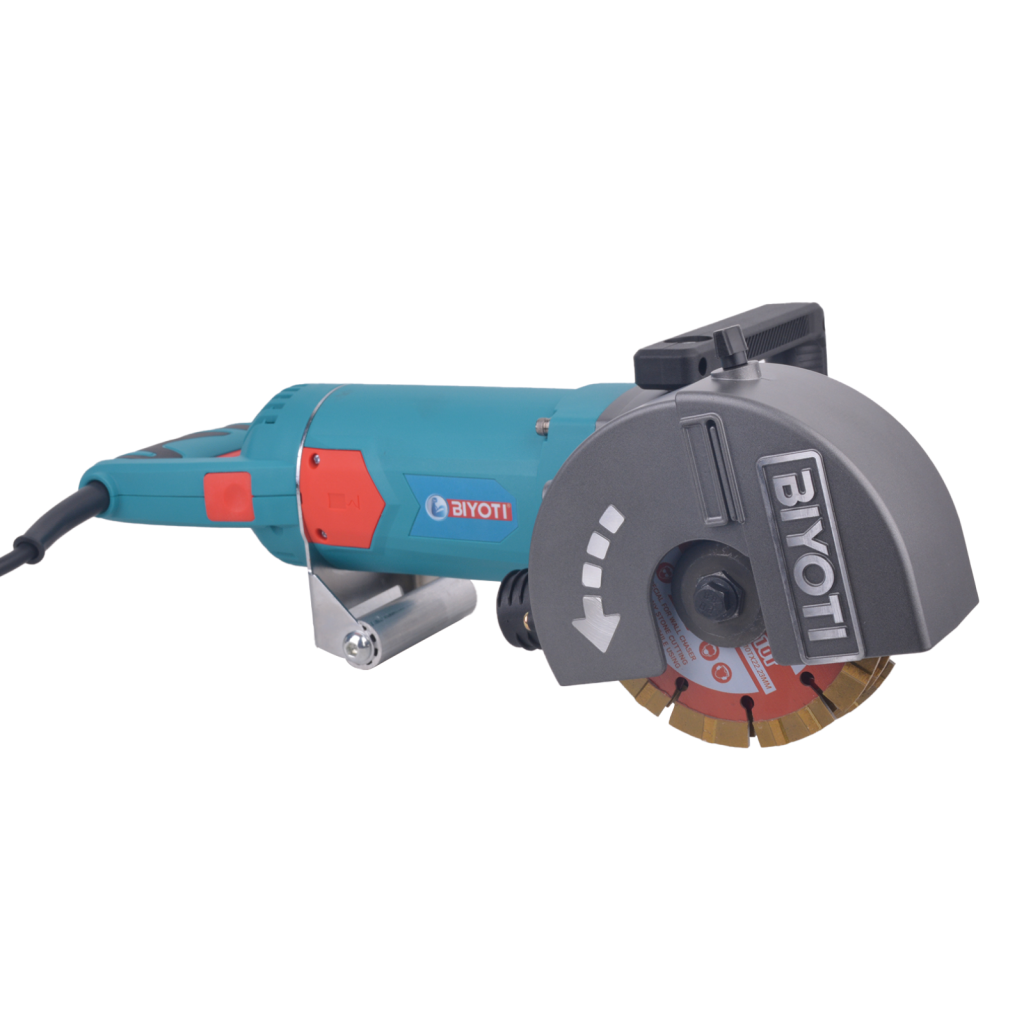
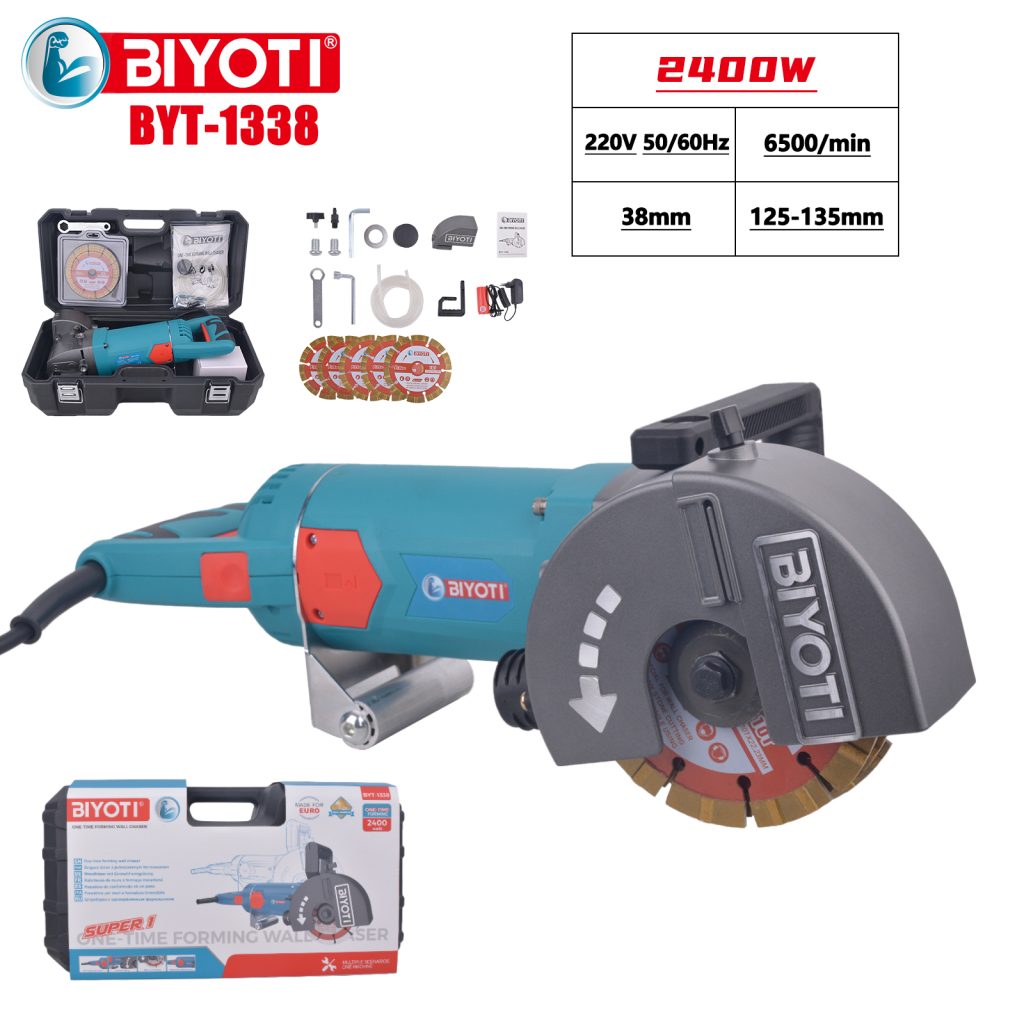
The BYT-1338 Slotting Machine is built for this kind of mixed renovation work. With a 2800W motor, 7300 r/min no-load speed, 133–195mm blade range, enclosed dust guard, dual-handle body, and adjustable base, it is designed for electricians, plumbing installers, renovation crews, and tool suppliers who need one wall chaser for several common wall types.
Can One Slotting Machine Handle Different Wall Materials?
One slotting machine can cut brick, concrete and stone wall channels when the machine body and blade setup match the job. The machine provides the power and control. The blade decides how cleanly the wall material is removed.
For a contractor, this matters on real sites. A home renovation may start with red brick bathroom walls, move to C25 or C30 concrete columns, then require short channels across marble-clad areas. Carrying three separate tools slows the crew down. A multi-material wall slotting machine reduces tool switching, but it still needs proper blade selection.
Brick wall channels
Red brick and hollow brick are easier to cut than concrete, but they create a lot of loose dust and debris. A wide-tooth dry-cut diamond blade helps clear chips quickly, so the blade does not clog. For shallow electrical conduit grooves around 25–30mm, a smaller blade setup is often enough.
Concrete wall channels
Concrete is harder because cement, sand, stone aggregate, and small embedded steel create heavy cutting resistance. Long wall chasing in concrete also heats the motor faster. This is where a high power wall chaser is different from a light cutter. Stable torque keeps the blade moving without forcing the operator to push too hard.
Stone wall channels
Marble and granite need a smoother cut. Granite is hard. Marble is more fragile at the edge. A dense continuous diamond blade and wet cutting help lower heat and reduce edge chipping. Using a rough concrete blade on marble can break the edge, while using a fine stone blade in concrete may clog and wear fast.
For BYT-1338 Slotting Machine buyers, the key point is clear: the machine can work across brick, concrete and stone, but the blade should change with the wall material. That makes the tool more useful for mixed renovation projects, dealer stock planning, and professional wall channel cutting jobs.
What Specs Matter for Multi-Material Wall Channel Cutting?
The best wall slotting machine for mixed materials is not judged by power alone. It also needs cutting depth range, blade compatibility, control, dust handling, and a body structure that stays steady when the wall gets hard.
| Specification | BYT-1338 Slotting Machine Detail | Job-Site Value |
| Rated power | 2800W | Better load capacity for brick, concrete and stone |
| No-load speed | 7300 r/min | Lower-speed, high-torque cutting feel for hard walls |
| Blade range | 133–195mm | Supports shallow and deeper wall channels |
| Max cutting depth | Up to 60mm with 195mm blade | Suitable for deeper conduit and pipe grooves |
| Voltage | 220V/50Hz | Fits common mains power use in many markets |
| Structure | Dual handle, adjustable floor base | Better control and more stable depth |
| Dust guard | Enclosed cover, water connection supported | Dry and wet cutting options |
Why does 2800W power matter?
A 2800W slotting machine has enough power reserve for longer cuts in hard walls. Brick does not usually need all that power, but the reserve helps the tool run smoothly without stalling. In concrete, the motor must fight aggregate and possible small steel. In stone, steady cutting helps reduce vibration and surface damage.
Why does the 133–195mm blade range matter?
The blade range gives contractors more room to match the channel depth. A 133mm blade can handle shallow grooves for light conduit work. A 195mm blade can reach up to 60mm cutting depth, which is useful when deeper cable pipes, water pipes, or thicker wall structures are involved.
Why does the enclosed dust guard matter?
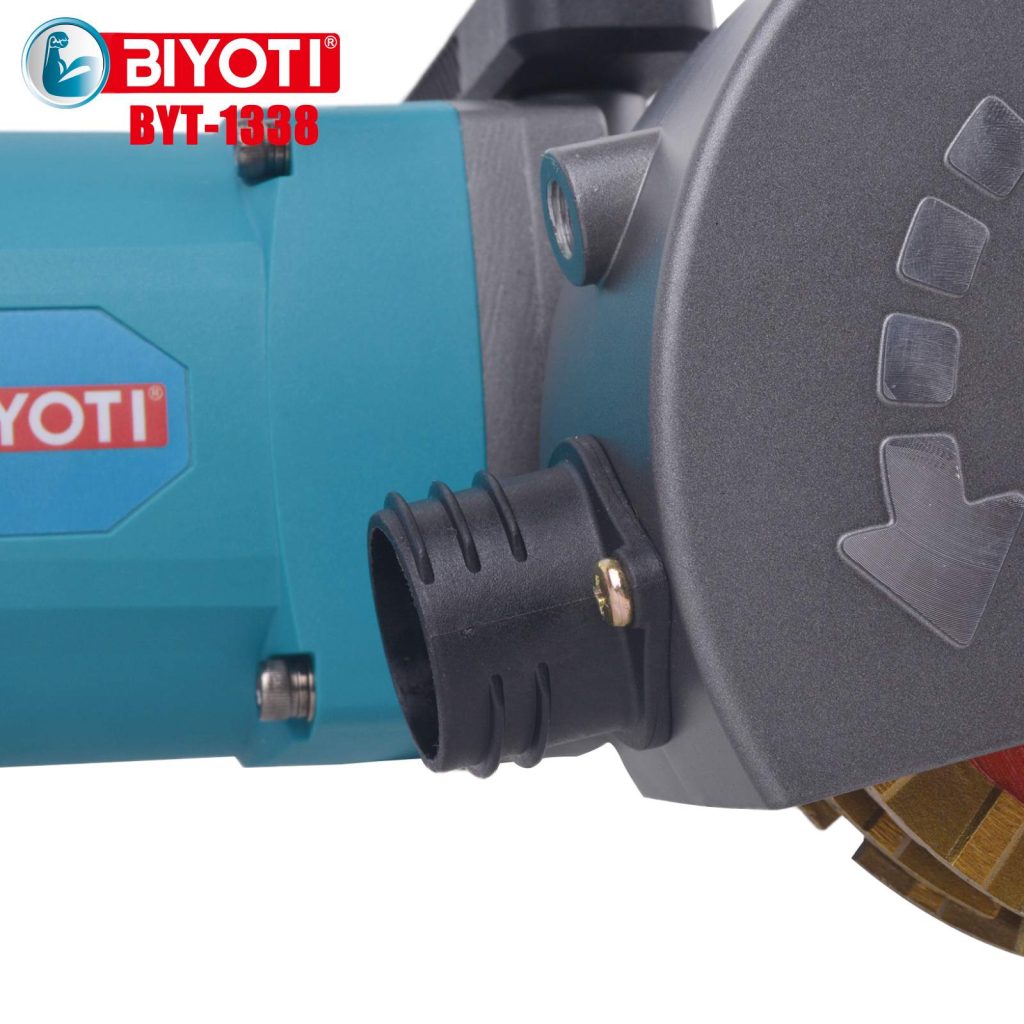
Wall chasing produces fine dust, especially in brick and concrete. The enclosed guard helps contain debris around the cutting area. When connected with water, the machine can support wet cutting, which is helpful for stone cutting and dust reduction in indoor renovation.
The BYT-1338 Slotting Machine brings these specs together in one body. Its 2800W motor, adjustable blade setup, dual-handle control, and wet/dry cutting structure make it a practical choice for buyers who need a brick wall slotting machine, concrete wall chaser, and stone channel cutting tool in one product line.
Which Blade Should Be Used for Brick, Concrete and Stone?
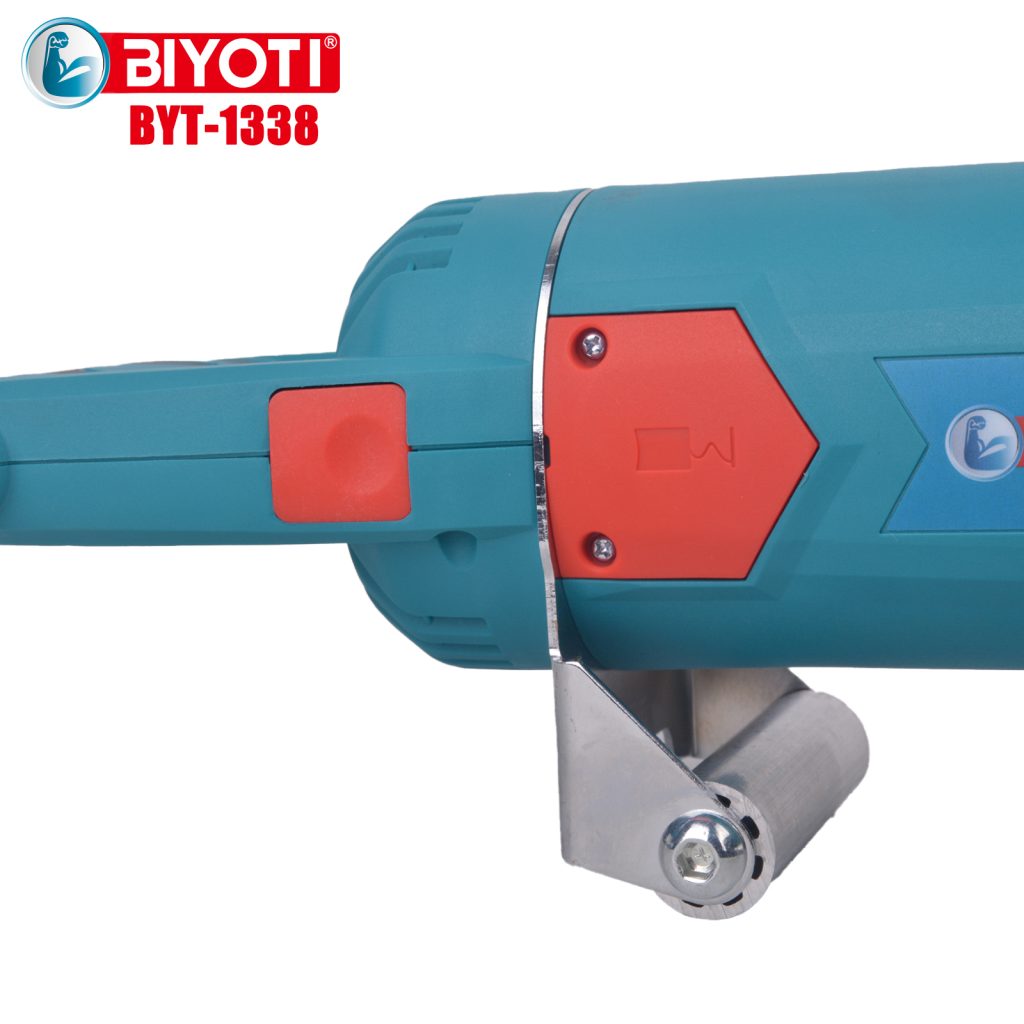
Blade choice is the biggest difference between a clean channel and a broken wall edge. Many tool problems on site are not caused by the machine itself. They happen because one blade is used for every material.
A simple rule works well: open-tooth blades for brick debris, reinforced dry cutting blades for concrete, and dense continuous blades for stone.
| Wall Material | Recommended Blade | Cutting Method | Practical Note |
| Red brick or hollow brick | Wide-tooth dry diamond blade | Dry cutting or light water support | Clears brick chips faster |
| Plain or light reinforced concrete | Thickened concrete diamond blade | Dry cutting, rest periods for long cuts | Not for bulk cutting thick steel bars |
| Marble | Dense continuous stone blade | Wet cutting preferred | Helps reduce edge chipping |
| Granite | Dense or reinforced stone blade | Wet cutting recommended for clean work | Cutting speed may be slower on hard stone |
Brick blade setup
Brick and hollow block are brittle. The blade needs good chip removal. A wide-tooth diamond blade reduces clogging and keeps the cutting line moving. For thick brick walls, cutting in two passes may give a cleaner result than forcing one deep cut.
Concrete blade setup
Concrete blades need stronger diamond segments because aggregate impact wears the blade faster. For scattered small steel bars up to about 8mm, the BYT-1338 can handle common renovation conditions. For thick steel bars around 10mm or larger, local drilling or another method should be used instead of forcing the slotting machine through heavy reinforcement.
Stone blade setup
Stone cutting should focus on smoothness, not only speed. A dense continuous diamond blade gives a calmer cutting edge. Marble should be cut with water first whenever possible. Granite can be cut dry in some cases, but wet cutting is better when the surface finish matters.
For BYT-1338 Slotting Machine users, changing blades is not a minor detail. It is the reason one machine can cover brick wall channel cutting, concrete grooving, and marble or granite wall slotting without changing the whole tool.
How Does BYT-1338 Work in Real Renovation Jobs?
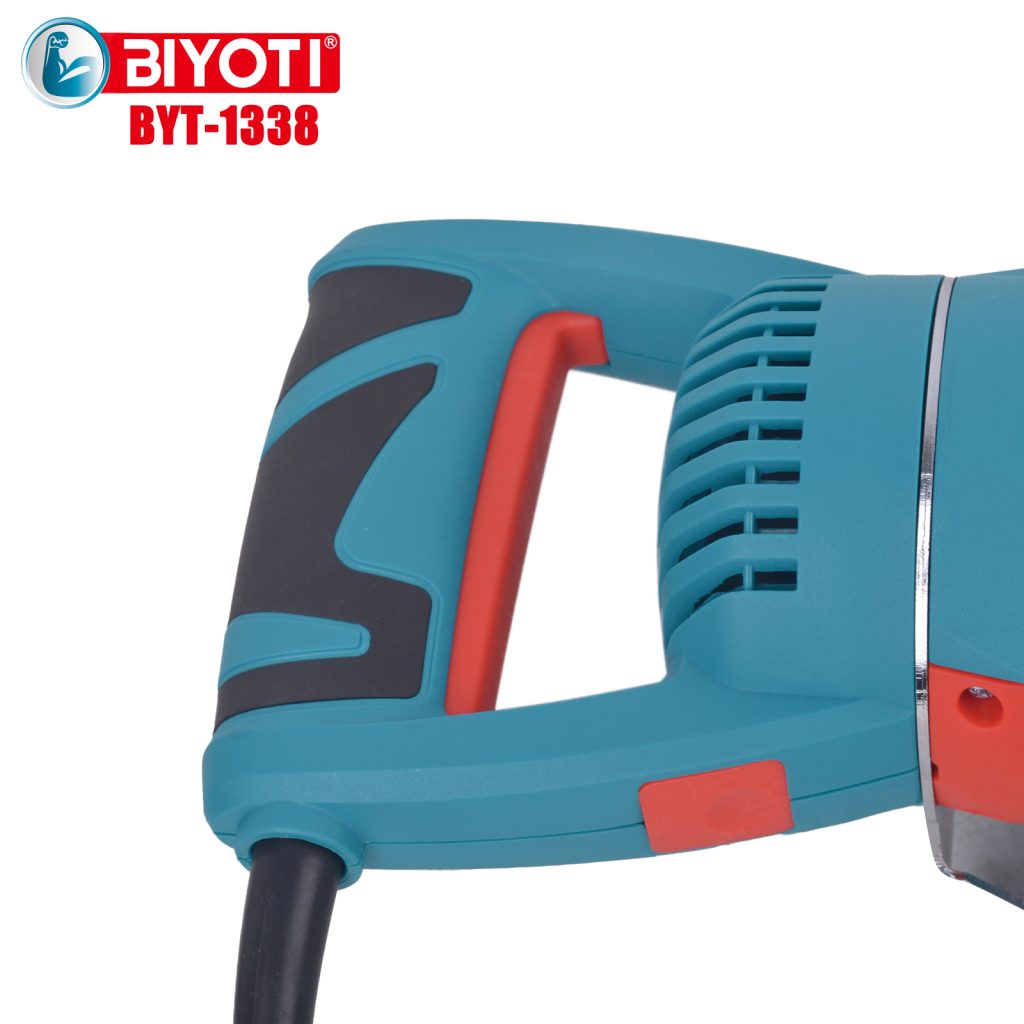
On a real project, wall channel cutting is rarely a single straight line. Crews cut vertical conduit grooves near switch boxes, horizontal pipe channels in bathrooms, and short connection grooves around corners. A useful wall chaser must save time without making the repair work harder later.
Electrical conduit installation
For electricians, straight channels help conduits sit flat. When the groove depth changes too much, the pipe can rise above the wall surface and create more patching work. BYT-1338 uses a multi-blade structure to cut double-line channels in one pass, which reduces repeated cutting on the same wall.
Plumbing and water pipe renovation
Bathroom and kitchen pipe channels often need more depth than light cable grooves. With a 195mm blade, BYT-1338 can reach up to 60mm cutting depth. That gives installers more room for deeper pipe placement in concrete or thicker masonry walls.
Commercial and apartment renovation
In apartments, shops, offices, and light commercial spaces, the crew may face several wall types in one day. A machine that only performs well on brick may struggle in concrete. A small cutter may run hot during long wall chasing. BYT-1338 is more suitable for contractors who need steady cutting across repeated jobs.
The BYT-1338 Slotting Machine is especially attractive for wholesalers and project tool suppliers because it answers a common buyer request: one electric grooving machine that can serve electricians, plumbers, renovation teams, and general contractors working with multiple wall materials.
What Limits Should Buyers Know Before Choosing a Slotting Machine?
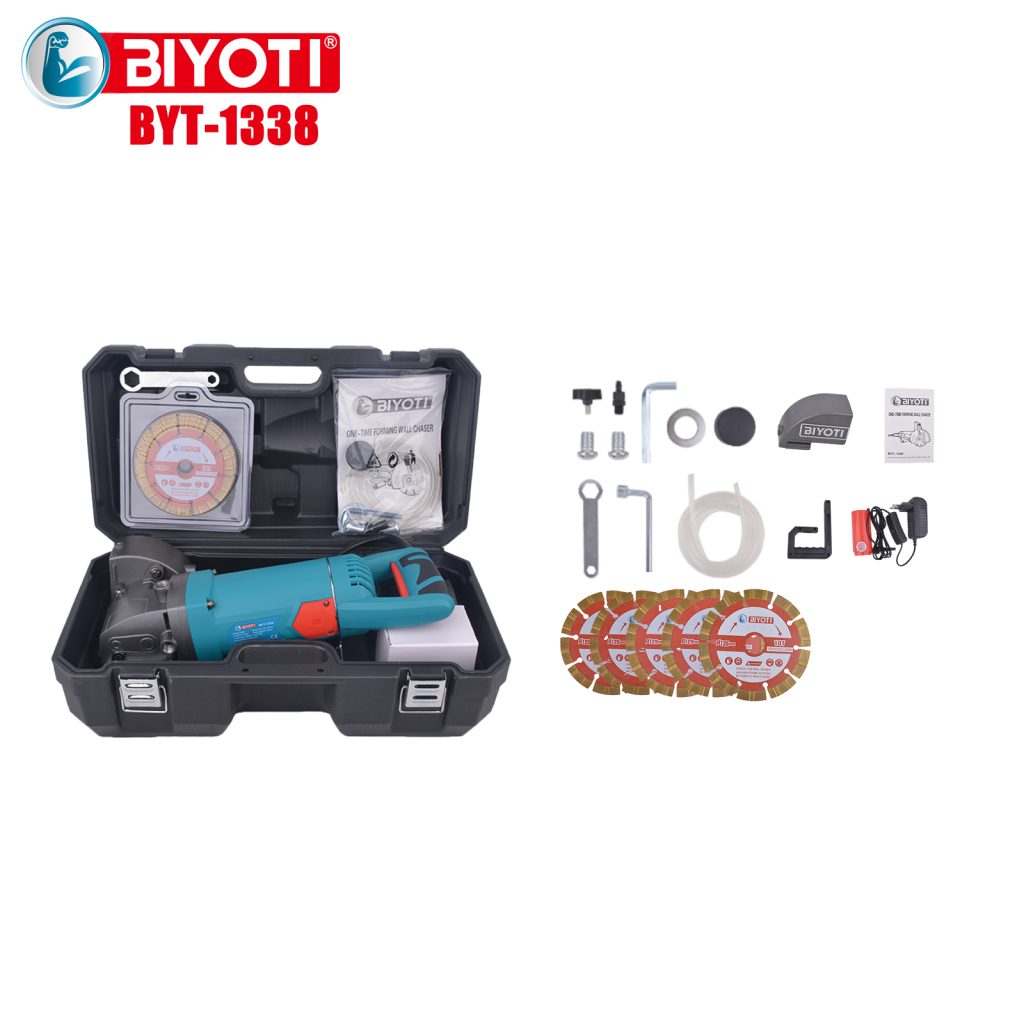
Every tool has limits. Clear limits make buying decisions easier and reduce after-sales disputes.
Thick steel bars
BYT-1338 can deal with common concrete channel cutting and scattered fine reinforcement in renovation conditions. However, it is not made for large-scale cutting of thick steel bars. When the wall contains heavy reinforcement, the operator should stop, check the area, and use a safer local cutting or drilling method.
Very deep wall grooves
The maximum cutting depth is linked to the 195mm blade size, with cutting depth up to 60mm. If the required groove is deeper than that, the cut should be planned in layers. Forcing the machine past its design range can damage the blade, motor, or wall structure.
Long overhead cutting
Because BYT-1338 uses a powerful motor and multi-blade cutting structure, the machine is heavier than a single-blade marble cutter. It is better for vertical wall work, floor-supported cutting, and controlled channel making. Long overhead work may tire the operator faster.
These limits do not weaken BYT-1338’s value. They make its best use case clearer: professional wall channel cutting in brick, concrete, marble, and granite surfaces where the operator selects the right blade and follows proper cutting depth.
How Can Contractors Cut Cleaner Wall Channels?
Clean channels come from planning, steady hands, correct blade choice, and tool care. The machine matters, but the operator’s method also changes the result.
Before cutting, the worker should mark the channel line, check for hidden wires or pipes, set the required depth, and test the blade on a small area when working with decorative stone. During cutting, the tool should move at a steady speed. Pushing too fast can burn the blade or break the wall edge.
Good daily practice includes:
- Use water when cutting marble or when dust control is important.
- Wear eye, ear, hand, and respiratory protection.
- Match the blade to brick, concrete, or stone before cutting.
- Stop for about 10 minutes after one hour of hard concrete cutting.
- Clean sand, stone chips, and slurry from the guard after use.
- Do not use one blade across all wall materials.
BYT-1338 supports cleaner wall channels through its enclosed dust cover, water connection, adjustable base, and dual-handle body. For professional users, these details help reduce dust, improve cutting depth control, and keep the channel edge more consistent.
Brief Introduction to BYT-1338 Slotting Machine
BYT-1338 Slotting Machine is a 2800W electric grooving machine designed for wall channel cutting in brick, concrete, marble, and granite when fitted with the proper diamond blade. It runs at 7300 r/min and supports 133–195mm saw blades, giving users flexibility for shallow and deeper grooves. The multi-blade arrangement can form double-line wall channels in one pass, which is useful for electrical conduit, water pipe, and renovation channel work. Its dual-handle structure, adjustable base, enclosed dust guard, and wet cutting support make it a practical choice for contractors who need stable wall chasing performance across different hard wall surfaces.
Yongkang Jiakai Industry and Trade Co., Ltd. as a BYT-1338 Slotting Machine Supplier
Yongkang Jiakai Industry and Trade Co., Ltd. is a power tool manufacturer based in Yongkang, Jinhua, Zhejiang Province. The company supplies a wide range of power tools, including electric drills, angle grinders, laser levels, grooving machines, reciprocation saws, and other job-site tools. Its BIYOTI product range is positioned for global customers who need in-stock tool supply, one-stop procurement, dealer cooperation, and practical support for retail and wholesale channels.
For buyers looking for a BYT-1338 Slotting Machine supplier, Yongkang Jiakai offers a product portfolio that fits construction decoration, renovation, electrical installation, plumbing, HVAC work, and tool distribution. The company highlights flexible support for partners, product availability, and communication channels for quotation and service requests, making it suitable for importers, dealers, and project-based buyers who want a wall slotting machine supplier with broader power tool sourcing ability.
Conclusion
One slotting machine can handle brick, concrete and stone wall channels, but only when the machine has enough power and the operator changes blades by material. BYT-1338 Slotting Machine fits this need well. Its 2800W power, 133–195mm blade compatibility, up to 60mm cutting depth, multi-blade channel cutting structure, enclosed dust guard, wet cutting support, dual handles, and adjustable base make it a strong option for mixed renovation work.
For contractors, the value is fewer tool changes and cleaner wall channels. For dealers and wholesalers, the value is a product that covers several buyer groups with one model: electricians, plumbers, renovation teams, stone installers, and general construction users. When promoted with the right blade guidance, BYT-1338 becomes more than a wall chaser. It becomes a practical multi-material wall channel cutting solution.
FAQs
Can BYT-1338 Slotting Machine cut brick and concrete?
Yes. BYT-1338 Slotting Machine can cut brick and concrete wall channels when fitted with the correct diamond blade. Brick usually needs a wide-tooth blade for chip removal, while concrete needs a stronger thickened diamond blade for aggregate impact.
Can one slotting machine cut marble and granite walls?
Yes, but stone cutting requires the right blade and better heat control. A dense continuous diamond blade is recommended for marble and granite. Wet cutting is preferred for marble to reduce chipping and cracking.
What is the maximum cutting depth of BYT-1338 Slotting Machine?
With a 195mm blade, BYT-1338 Slotting Machine can reach up to 60mm cutting depth. For deeper grooves, the cut should be made in layers rather than forcing the machine beyond its cutting range.
Is BYT-1338 suitable for reinforced concrete?
It is suitable for common concrete wall channel cutting and scattered fine reinforcement in renovation work. If the wall contains thick steel bars around 10mm or larger, local drilling or another cutting method is safer.
Why should different blades be used for brick, concrete and stone?
Each wall material breaks differently. Brick needs chip clearance, concrete needs impact resistance, and stone needs a smoother cutting edge. Using one blade for all materials can cause chipping, clogging, fast blade wear, and lower cutting speed.