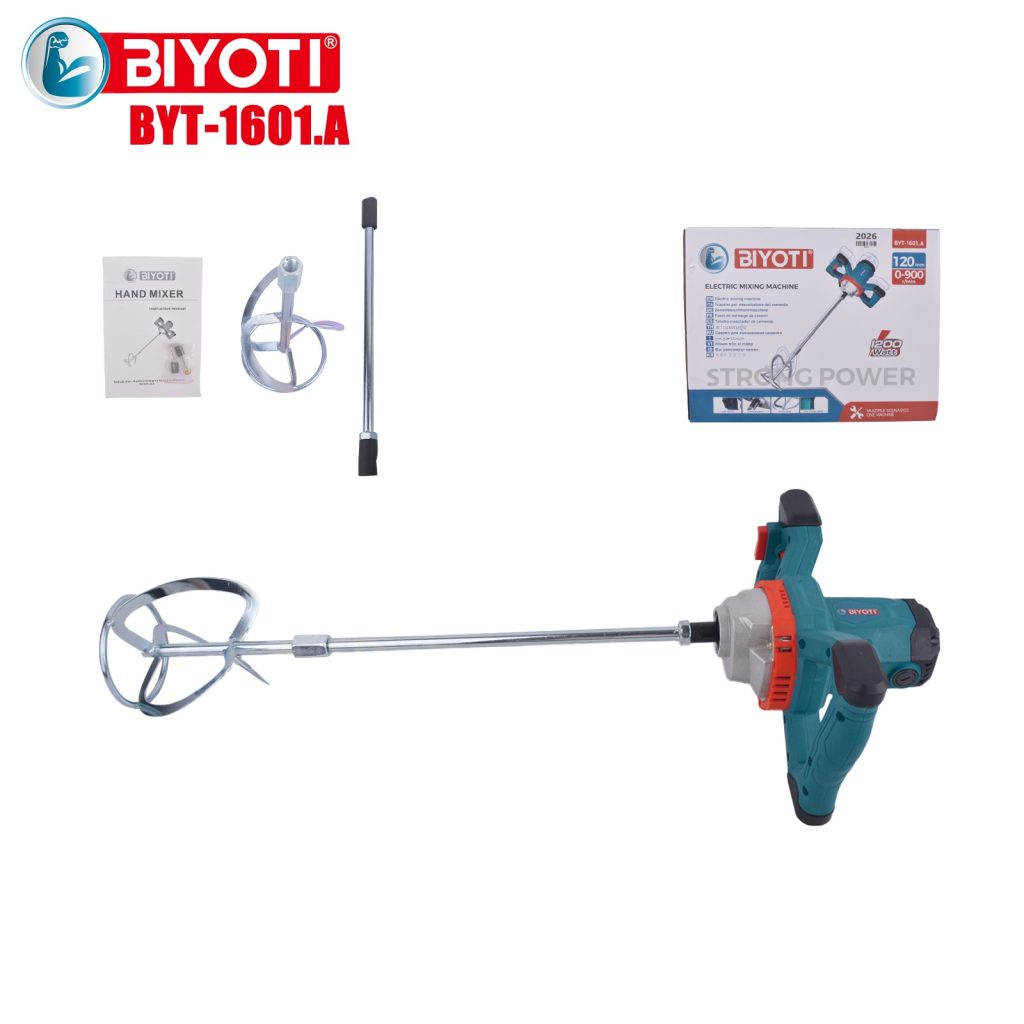
Electric mixer applications are no longer limited to cement, mortar, and jobsite buckets. In many small workshops, coating rooms, repair teams, farms, and DIY production spaces, a handheld electric mixer has become a practical tool for mixing paint, putty, glue, resin, feed, fertilizer, and other medium-to-thick materials.
The reason is simple. Many materials fail before they are applied. Paint separates in the pail. Putty powder forms dry pockets. Tile adhesive gets heavy at the bottom. Feed additives may not spread evenly through the batch. A steady electric mixer for paint and mortar can reduce these problems with controlled speed, stronger torque, and better paddle movement than manual stirring.
The BYT-1601.A ELECTRIC MIXER is built for this type of work. With a 1200W pure copper motor, 220V~50Hz power supply, 0–900r/min stepless speed control, dual-handle grip, and 120mm spiral mixing rod, it fits a wide range of coating, construction, chemical, DIY, feed, and fertilizer mixing jobs.
Why Are Electric Mixer Applications Moving Beyond Construction?
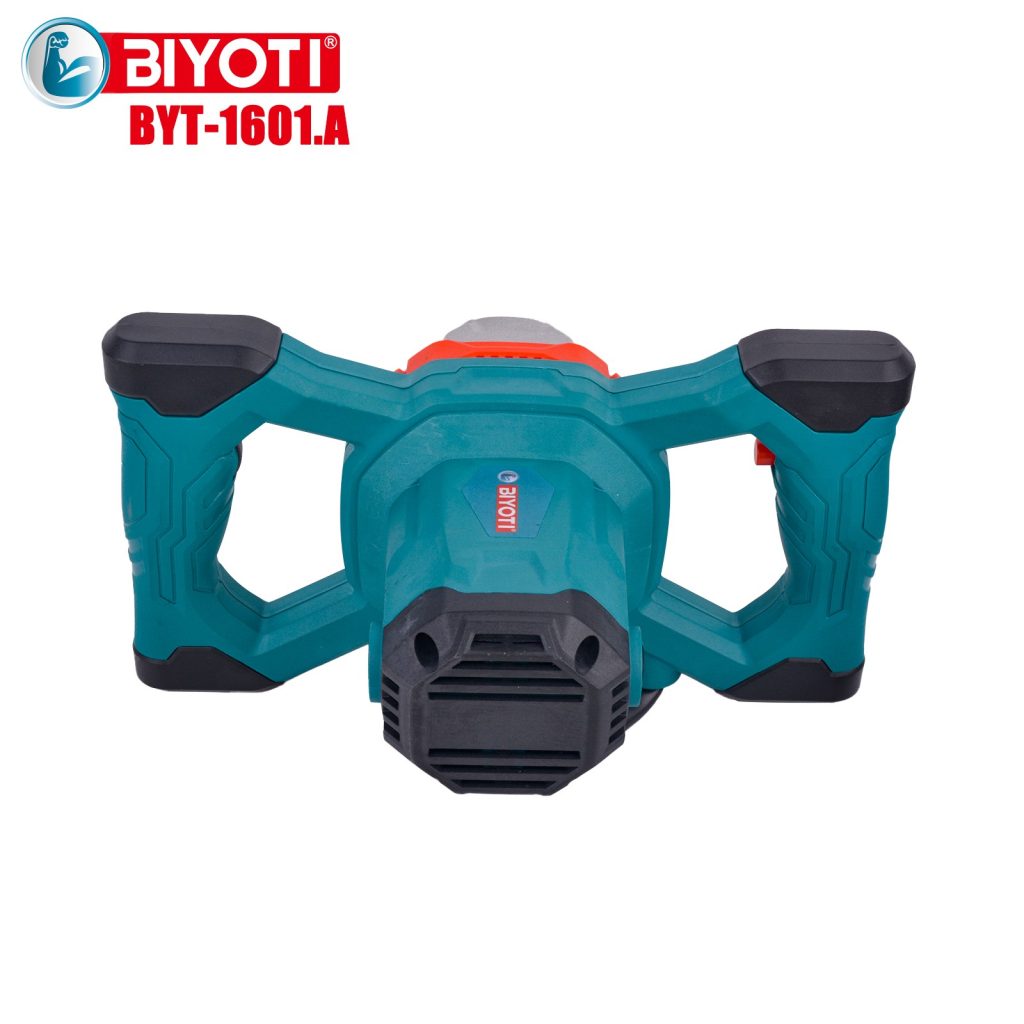
Construction remains the most common market for electric mixers. Contractors use them for cement mortar, tile adhesive, grout, waterproof coating, plaster, and wall putty. But the same mixing problems also appear in other industries: uneven solids, heavy bottom sediment, floating powder, air bubbles, clumps, and operator fatigue.
A handheld electric mixer solves three daily problems:
- It cuts down repetitive manual stirring.
- It gives better consistency from the top to the bottom of the container.
- It lets users adjust speed for different material thickness.
For buyers, this opens more sales channels. An electric mixer supplier can target decoration teams, coating distributors, farm supply shops, resin workshops, maintenance crews, and small manufacturers, not only bricklayers or contractors.
The BYT-1601.A ELECTRIC MIXER supports this wider use because its stepless speed range can start slowly for thick materials and move higher for lighter liquids. The dual-handle design also gives users better control when the paddle meets resistance in dense mixes.
Coatings and Paint Mixing Need More Than Fast Rotation
Paint looks easy to mix, but poor mixing creates visible problems after application. Pigments settle, fillers sink, resin-rich liquid rises, and some coatings trap bubbles when stirred too fast. For wall paint, waterproof coating, floor coating, and powder coating slurry, speed control matters more than raw speed.
Common coating mixing jobs
| Material | Suggested Speed Range | Typical Mixing Time | Field Note |
| Latex paint and wall coating | 300–600r/min | 2–5 minutes | Avoid excessive foam |
| Waterproof coating | 200–500r/min | 3–8 minutes | Start low to break lumps |
| Thick decorative coating | 200–500r/min | 3–8 minutes | Move the paddle up and down |
| Glue or resin-based coating | 400–800r/min | 1–3 minutes | Keep ventilation in place |
For coatings, the paddle should be fully under the liquid before startup. Starting above the surface can throw paint onto the floor or introduce too much air. A low-speed start is safer, then speed can rise after the coating begins moving as one body.
The BYT-1601.A ELECTRIC MIXER works well as an electric paint mixer because the 0–900r/min range lets users match the speed to the coating. Its spiral mixing head helps pull material into circulation, reducing bottom sediment and floating material on the surface.
Putty, Mortar, Tile Adhesive, and Grout Still Demand Torque
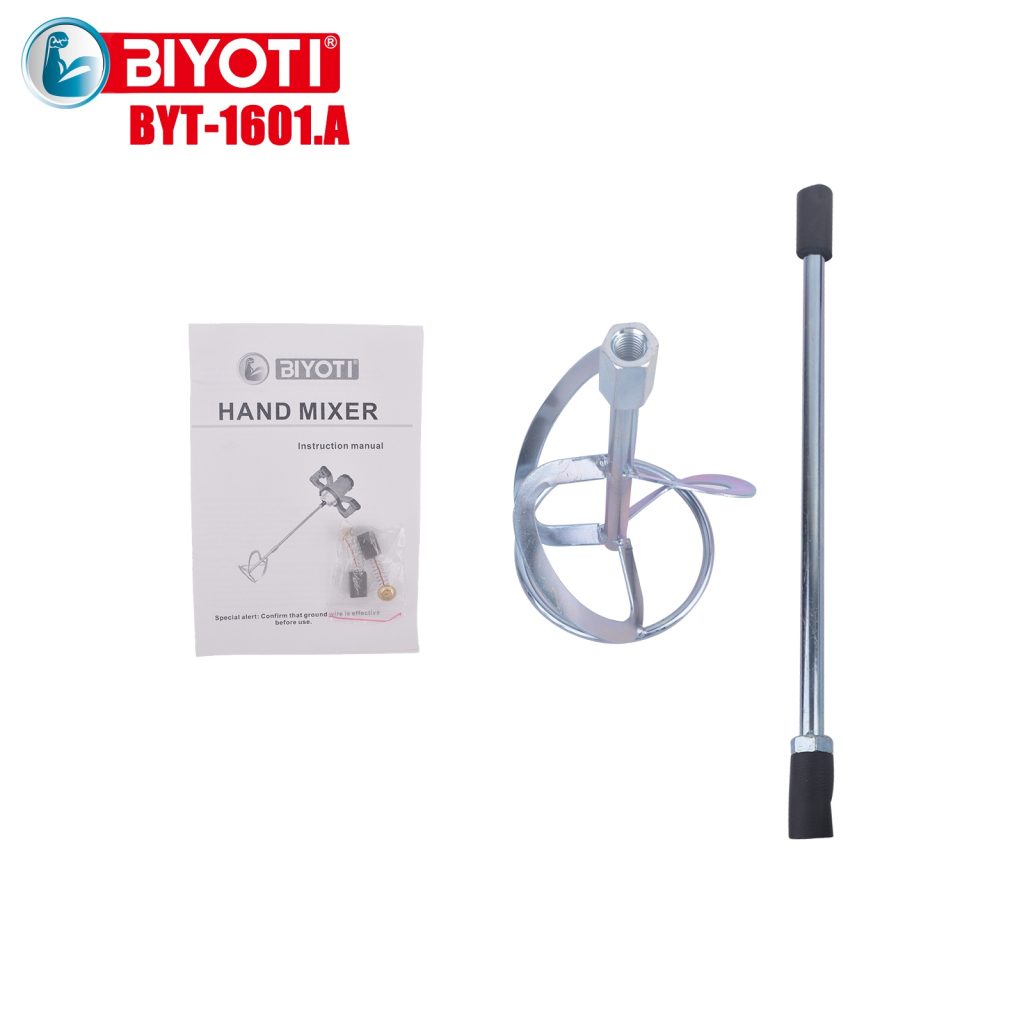
Heavy construction materials punish weak mixers. Putty powder absorbs water unevenly. Cement mortar creates high drag. Tile adhesive thickens as it stands. Grout can look smooth at the top while dry powder remains near the bottom edge of the bucket.
Better mixing method for thick materials
Start with the right order. Add part of the liquid first, then add powder gradually. Break large clumps by hand before the mixer starts. Keep the bucket no more than two-thirds full, especially when mixing putty powder or waterproof coating. This leaves room for material movement and reduces overflow.
A good mixing pattern is also important:
- Put the paddle near the bottom before switching on.
- Start at low speed.
- Move slowly from the center to the edge.
- Lift and lower the paddle to pull dry material from the bottom.
- Stop only after the texture is even and clump-free.
For high-viscosity material, a low speed of 100–300r/min is often better than running at full speed. High-speed startup can cause splashing, motor strain, and paddle kickback.
The BYT-1601.A ELECTRIC MIXER is a useful mortar mixing machine for site work because its 1200W pure copper motor gives stable power for thick batches. The dual-handle structure helps users hold the mixer steady when working with tile adhesive, cement mortar, putty powder, and grout.
Resin, Glue, and Chemical Slurry Require Controlled Mixing
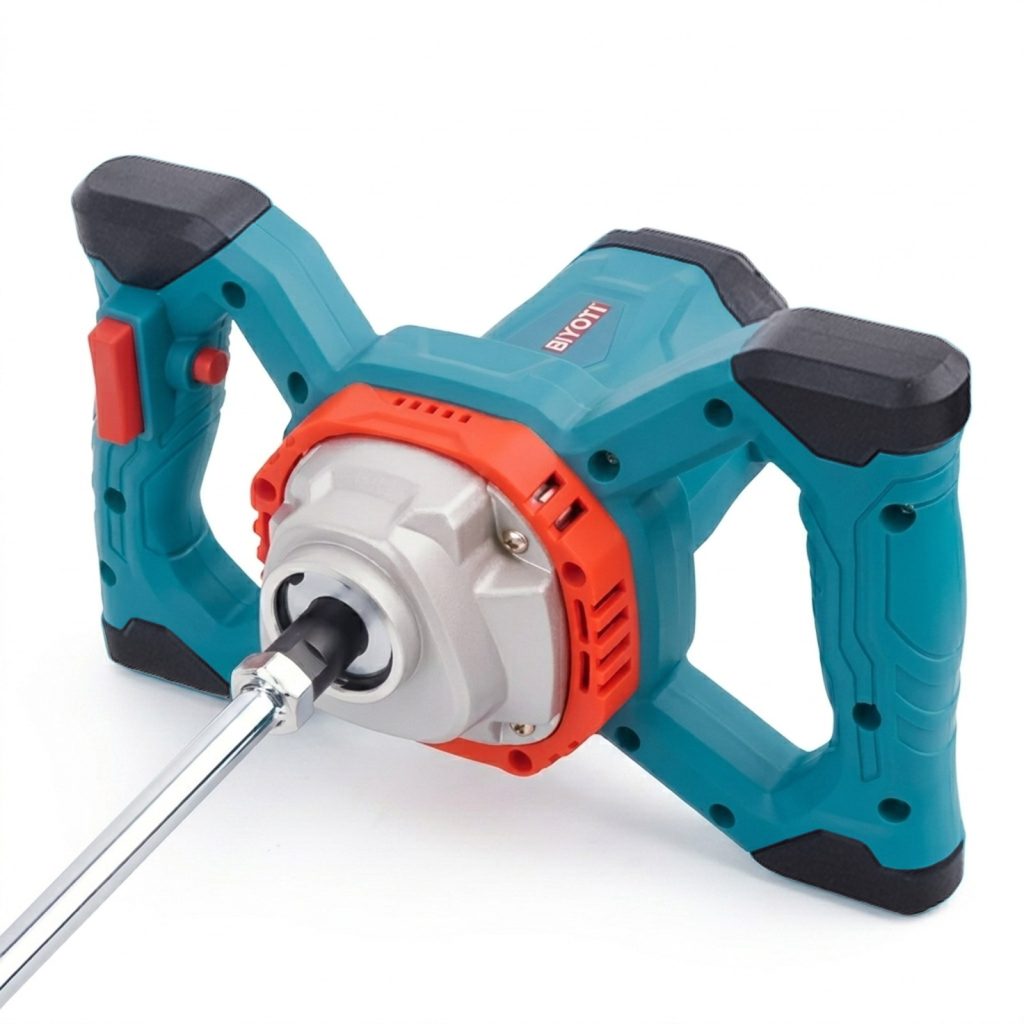
Small-batch industrial users often need a variable speed electric mixer for resin, glue, slurry, ink, and adhesive material. These jobs are different from mortar mixing. The goal is not only to break lumps but also to limit air, heat, and uneven curing.
Resin and glue usually need a short, steady mixing cycle. Too much speed may add bubbles. Too little speed may leave unmixed material on the container wall. Operators should scrape the sides when needed, but never put hands or tools into the container while the mixer is running.
Practical points for workshop mixing
Use a clean bucket for each material family. Solvent-based or chemical slurry should be mixed in a ventilated area. If the material is corrosive, irritating, or gives off fumes, goggles, gloves, and a mask are basic requirements. Strong acid, strong alkali, flammable liquid, and explosive material should not be mixed with this type of electric tool.
For resin, glue, and chemical slurry, the BYT-1601.A ELECTRIC MIXER gives users a controlled 400–800r/min working zone when faster blending is needed. Its speed adjustment helps reduce bubble formation compared with uncontrolled high-speed stirring.
Farm Feed, Fertilizer, and Powder Blending Are Growing Use Cases
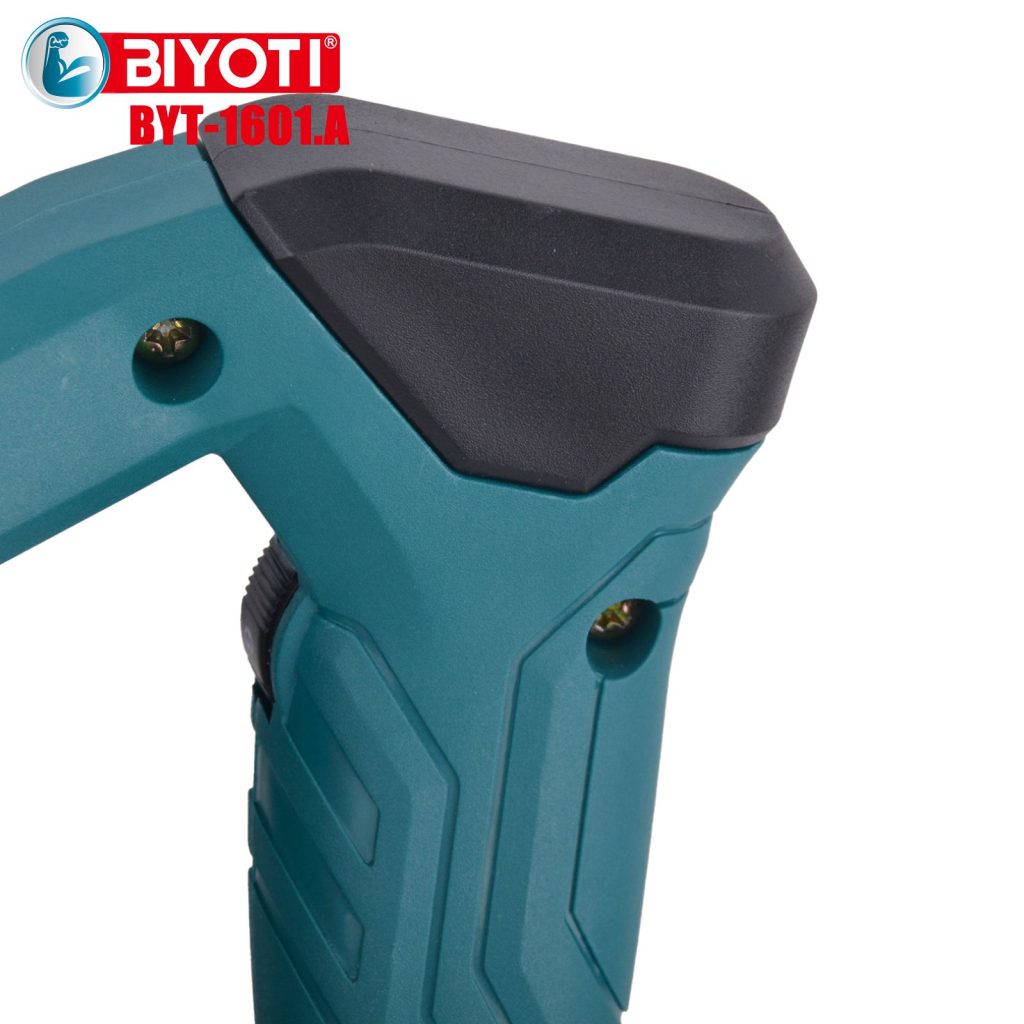
Farm and rural workshop users often need small-batch blending, not large fixed machinery. A feed mixing tool can help with poultry feed additives, mineral premixes, wet feed, fertilizer granules, and powder blends. The main value is batch consistency. When additives are not spread evenly, one part of the batch may be too rich while another part has almost none.
Electric mixer applications in farming are usually practical and direct:
- Mixing wet feed in small buckets.
- Blending powdered supplements before feeding.
- Combining fertilizer with fine additives.
- Mixing slurry for greenhouse or garden use.
- Preparing small test batches before scaling up.
Feed and fertilizer materials vary a lot. Dry powder needs a container with enough depth to keep dust down. Wet feed needs slower startup because it can splash. Fertilizer granules should not overload the paddle or jam the mixer.
For farm supply retailers, the BYT-1601.A ELECTRIC MIXER can be positioned as a compact feed mixing tool for small batches. Its 120mm spiral paddle supports circulation from bottom to top, helping reduce dead corners when mixing feed, fertilizer, and powder materials in suitable containers.
How Can Users Choose the Right Speed and Mixing Setup?
The best speed depends on viscosity, batch volume, and the final texture needed. Many users make one mistake: they start too fast. A better rule is to start low, let the material move, then raise speed only when the mix becomes stable.
| Application | Best Starting Speed | Main Risk | Better Practice |
| Cement mortar | 100–300r/min | Motor strain | Start low and avoid dry clumps |
| Putty powder | 200–500r/min | Lumps | Add powder slowly |
| Paint | 300–600r/min | Air bubbles | Keep paddle submerged |
| Resin or glue | 400–800r/min | Foam and heat | Use short cycles |
| Feed or fertilizer | 100–500r/min | Dust or uneven mix | Use a deep bucket |
Container size also matters. A bucket that is too shallow causes splashing. A bucket placed on an uneven floor can tip. The material should not exceed two-thirds of the container height. This gives the paddle space to pull material downward and push it back upward.
The BYT-1601.A ELECTRIC MIXER is designed around these real operating habits. Its stepless control lets users move from low-speed startup to medium-speed blending without changing tools, while the ergonomic double grip makes it easier to guide the paddle through the full bucket.
What Should Buyers Check Before Using a Handheld Electric Mixer?
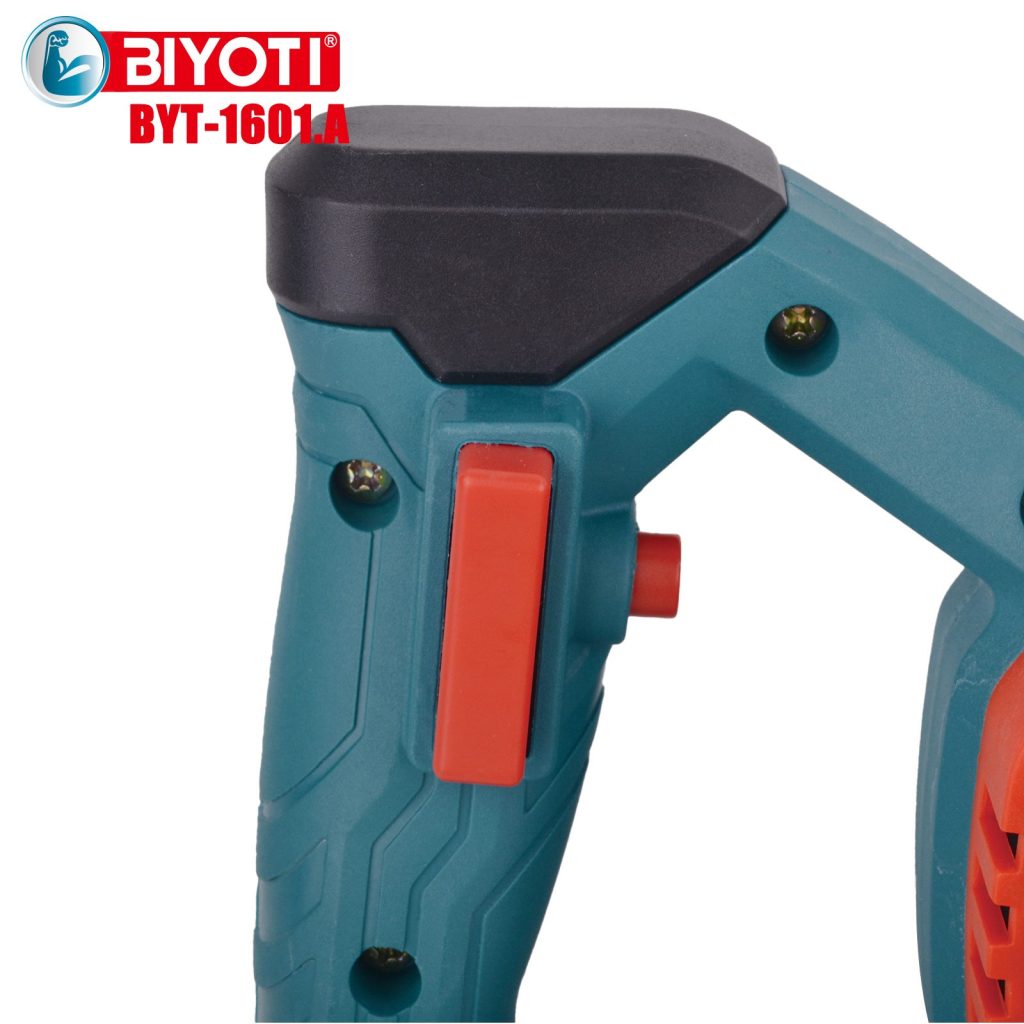
A good mixer also needs good operating habits. Before turning on the tool, users should check the paddle, cable, switch, bucket, and working area. Loose paddles cause vibration. Damaged cords create safety risks. Thin containers may flex or move during mixing.
Basic safety checklist
- Check that the mixing rod is tight and not bent.
- Set the speed to the lowest position before startup.
- Wear goggles, gloves, and non-slip shoes.
- Keep long hair and loose clothing away from the paddle.
- Place the bucket on flat ground.
- Keep the paddle fully inside the material before switching on.
- Stop work if the motor slows heavily or the mixer shakes.
After mixing, users should turn the speed down, switch off the tool, and wait until the paddle stops fully before lifting it out. Cleaning should be done soon after use. Dried mortar, coating, or resin can harden on the paddle and make the next job harder.
The BYT-1601.A ELECTRIC MIXER is easier to maintain when cleaned after every batch. The mixing rod can be washed with water or a suitable solvent depending on the material, while the machine body should be wiped with a damp cloth without letting liquid enter the motor vents.
A Brief Introduction to BYT-1601.A ELECTRIC MIXER
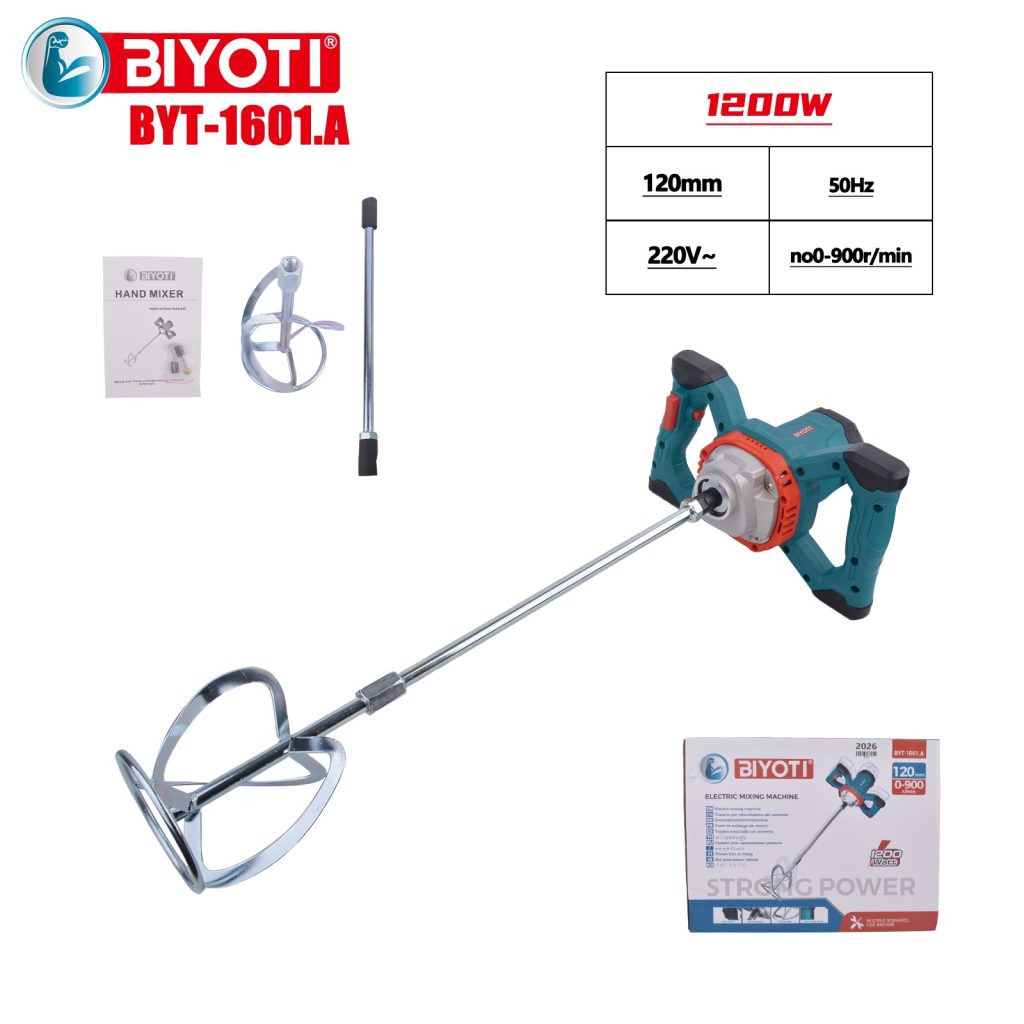
The BYT-1601.A ELECTRIC MIXER is a high quality handheld electric mixer which is suitable for paint, putty powder, cement, chemical slurry, feed, fertilizer and other similar thick or semi-thick materials. The BYT-1601.A ELECTRIC MIXER requires 220V~50Hz power supply and it is equipped with 1200W pure copper motor which is capable of generating sufficient torque and guarantee smooth operation under heavy duty application.
Its 0–900r/min stepless speed control gives users the freedom to choose low speed for mortar and putty, medium speed for coatings, and higher speed for glue, resin, and lower-viscosity liquid materials. The 120mm spiral mixing rod creates a strong vortex effect, helping material move from bottom to top instead of spinning only on the surface.
The double-handle body gives better grip and balance, especially when the paddle meets heavy resistance. For distributors and project buyers, the 6 units/carton packaging also makes it easier to plan stock, wholesale orders, and retail display.
Yongkang Jiakai Industry and Trade Co., Ltd. as a BYT-1601.A ELECTRIC MIXER Supplier
Yongkang Jiakai Industry and Trade Co., Ltd. is the company behind the power tools brand BIYOTI. Yongkang Jiakai Industry and Trade Co., Ltd. is a Chinese company. The company is situated in Yongkang, Zhejiang Province, China – a famous hardware and tool manufacturing city. Yongkang Jiakai Industry and Trade Co., Ltd. specializes in electric power tools, e.g. electric drills, angle grinders, laser levels, saws, welders and mixers.
For B2B buyers, the supplier value is not only one product model. Buyers also need category depth, repeat supply, contact response, flexible order discussion, and support for channel sales. BIYOTI presents itself as a professional power tool manufacturer with a broad product range and one-stop procurement service for global clients. Its website includes product categories, support information, contact channels, and updated product content, which makes supplier review easier for wholesalers, agents, and project buyers.
As a BYT-1601.A ELECTRIC MIXER supplier, Yongkang Jiakai Industry and Trade Co., Ltd. can serve buyers looking for practical mixing tools for coatings, building materials, workshop compounds, and farm-related mixing needs. The product is especially suitable for channels that sell to decorators, contractors, hardware shops, small industrial users, and farm supply customers.
Conclusion
Electric mixer applications have expanded because many industries face the same basic problem: materials must be blended evenly before they can perform well. Paint needs stable color and texture. Mortar needs a smooth workable body. Resin and glue need controlled mixing. Feed and fertilizer need even additive distribution. Manual stirring often cannot meet these needs for repeated daily work.
The BYT-1601.A ELECTRIC MIXER gives buyers a practical answer for these mixed-use markets. Its 1200W pure copper motor, 0–900r/min stepless speed range, dual-handle body, and 120mm spiral paddle make it suitable for coatings, putty powder, mortar, tile adhesive, chemical slurry, feed, fertilizer, and DIY batch mixing. For wholesalers, agents, and project suppliers, it is a useful product to add where customers need one compact mixer for many real jobs.
FAQs
What is the BYT-1601.A ELECTRIC MIXER mainly used for?
The BYT-1601.A ELECTRIC MIXER is mainly used for mixing paint, wall coating, putty powder, waterproof coating, cement mortar, tile adhesive, glue, resin, chemical slurry, feed, fertilizer, and similar materials. It works best for small to medium batches in suitable containers.
Can this handheld electric mixer be used for paint and coatings?
Yes. It can work as an electric paint mixer for latex paint, wall coating, waterproof coating, and other coating materials. For paint and coatings, users should keep the paddle under the liquid and avoid excessive speed to reduce bubbles.
Is the BYT-1601.A ELECTRIC MIXER suitable for thick mortar?
Yes. It can be used as a mortar mixing machine for cement mortar, grout, and tile adhesive. Thick materials should be started at low speed, usually around 100–300r/min, to reduce splashing and motor load.
Can it mix farm feed or fertilizer?
Yes, it can be used as a feed mixing tool or fertilizer blending tool for small batches. Users should choose a deep container, avoid overfilling, and match the speed to the material. Very hard, oversized, or overloaded batches should be avoided.
How long can the mixer run continuously?
For longer tool life, continuous work should be managed carefully. A good practice is to pause for about 5 minutes after 15–20 minutes of continuous mixing, especially with thick materials. This helps the motor cool and keeps the BYT-1601.A ELECTRIC MIXER stable for repeated use.