A good polisher is not brought to its knees in one dramatic fall from grace. Rather, most problems with polishers are of a gradual nature, i.e. the dust from the polish packs into the vents of the polisher, the polishing pad loses its grip on the surface being polished, the operator applies increasingly greater amounts of pressure with his arm, and the motor of the polisher begins to run hotter and hotter until it fails. These little habits of the operator can cause a polisher to go from a smooth running, long lasting tool to a noisy, weak, and difficult to control piece of equipment.
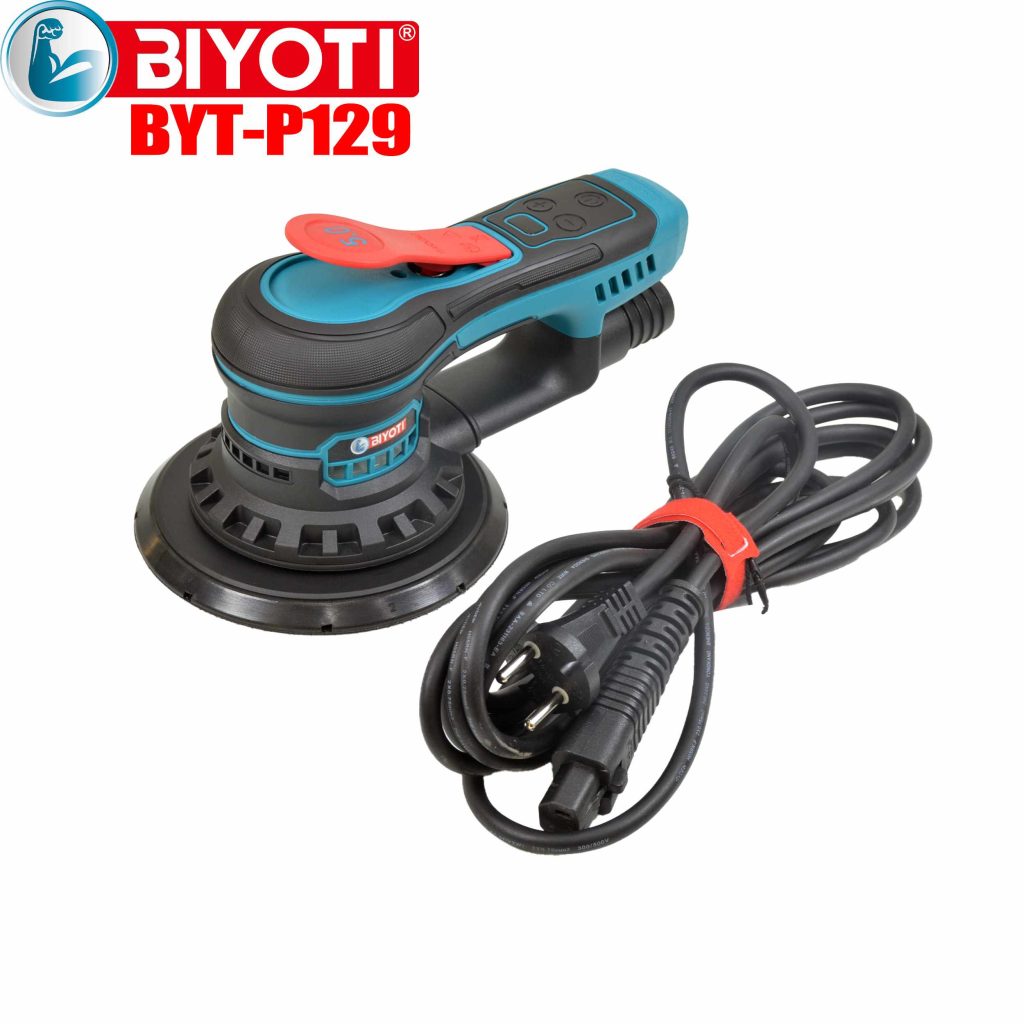
This polisher maintenance guide focuses on three parts that matter most in daily work: the motor, the drive or gear assembly, and the pad system. It also uses the BIYOTI BYT-P129 Polisher as a practical example because its 400W motor, 150mm pad size, 4000–10000 RPM speed range, 5.0mm orbit stroke, and dust extraction design fit many real sanding and polishing jobs.
Why Does Polisher Maintenance Matter?
A polisher handles heat, dust, pressure, vibration, and long working hours. During automotive body repair, old paint and filler dust can fill the air quickly. During wood sanding, fine particles can sit inside pad holes and dust ports. During paint correction, compound can dry on the pad face and create drag. None of this looks serious at first, but it adds load to the motor and shortens pad life.
For professional users, maintenance is not just about repair cost. It affects finish quality. A dirty pad can leave marks. A blocked dust path can cause scratches because debris stays between the disc and the surface. A tired backing plate can make the machine vibrate. Even a powerful variable speed polisher needs clean airflow and a flat pad to do clean work.
The BYT-P129 Polisher is built for dry sanding and polishing work where stable output and surface control matter. Its 150mm size works with common 6-inch sanding discs and polishing pads, helping workshops keep consumable costs practical while maintaining consistent finishing results.
How Should the Motor Be Protected?
The motor is the heart of any electric polisher. It suffers most when the tool is forced, clogged, or run at the wrong speed for the job. A 400W motor can give steady performance, but it still needs air movement and sensible pressure.
Keep the vents open
Dust-covered vents trap heat inside the tool. At the end of each shift, wipe the housing with a dry cloth and clear the air slots. Do not wash the tool with water or chemical cleaner. For dry sanding work, a quick clean after every job is better than a deep clean after the motor already smells hot.
Let the tool weight do the work
Heavy pressure is one of the fastest ways to shorten motor life. It slows the pad, raises heat, and can make the finish worse. On flat panels, the pad should sit parallel to the surface with light, even pressure. If more cutting power is needed, change grit or adjust speed instead of leaning harder.
Use the right speed range
| Work stage | Practical speed range | Reason |
| Fine polishing | 4000–6000 RPM | Better control and lower heat |
| Fine sanding | 4000–6000 RPM | Reduces deep marks |
| General dry sanding | 6000–8000 RPM | Balanced removal and control |
| Rough sanding | 8000–10000 RPM | Faster material removal |
| Painted surface work | Below 8000 RPM | Helps lower heat risk |
For motor care, the BYT-P129 gives operators a wide 4000–10000 RPM range, so the same machine can move from coarse sanding to finer polishing without forcing the motor outside a sensible working pattern.
How Can Gear and Drive Life Be Extended?
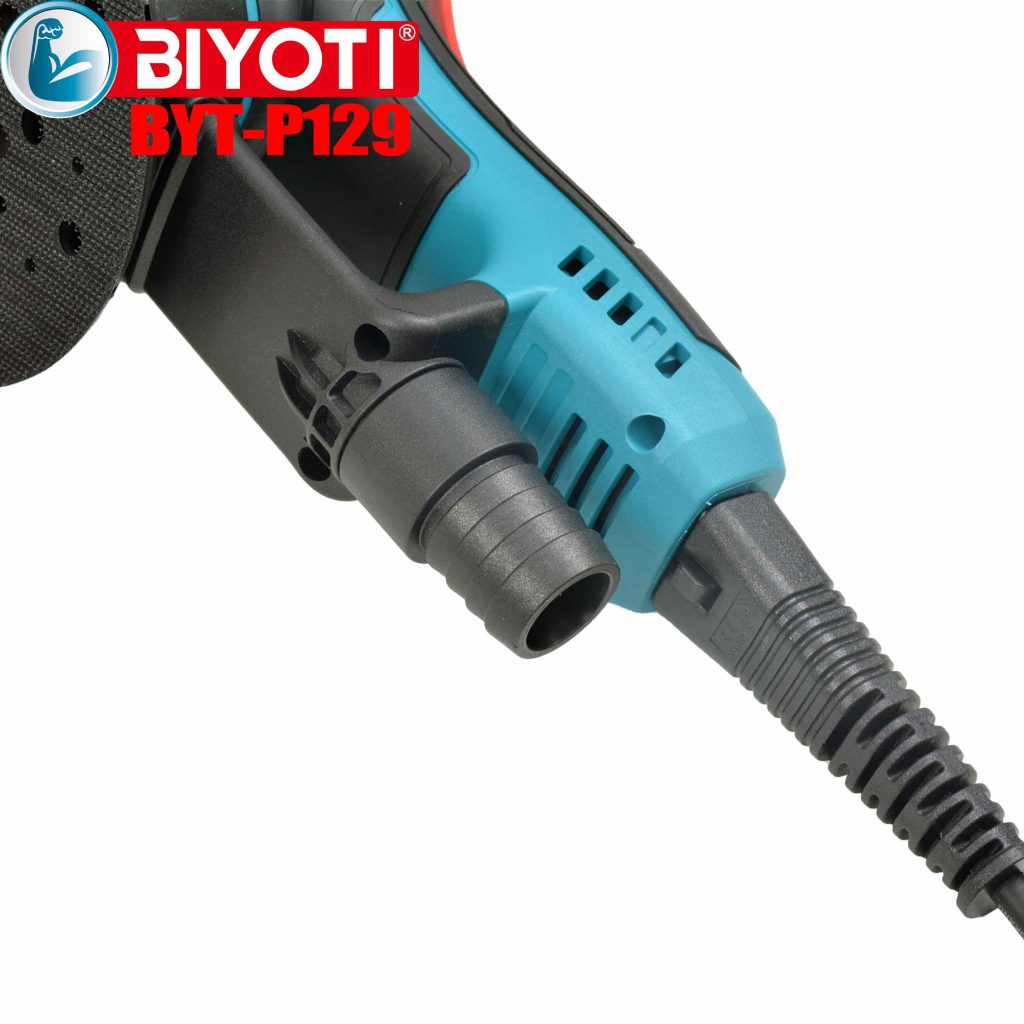
Many users talk about “gear life,” but in a random orbital sander or dual-action polisher, the more useful idea is the drive system: bearing support, eccentric movement, internal transmission parts, and pad rotation control. These parts live longer when vibration stays low and the pad runs freely.
Check for strange noise before the job
Before touching the workpiece, run the polisher in the air for about 10 seconds. Listen for grinding, rattling, uneven speed, or harsh vibration. A healthy tool should sound steady. If it shakes badly before contact, do not start sanding a customer panel or finished board.
Avoid angled pressure
Tilting the pad onto one edge may feel faster, but it loads one side of the drive system and can scar the surface. Edge pressure also wears the backing plate unevenly. Keep the 150mm pad flat whenever possible. For curves and edges, reduce speed and move slowly rather than forcing the machine.
Give the tool short breaks on long jobs
In a body shop, a full panel sanding task can run for a long time. A short pause between passes helps heat leave the housing and gives the operator time to check the disc. This is especially useful during rough sanding, where friction and dust are higher.
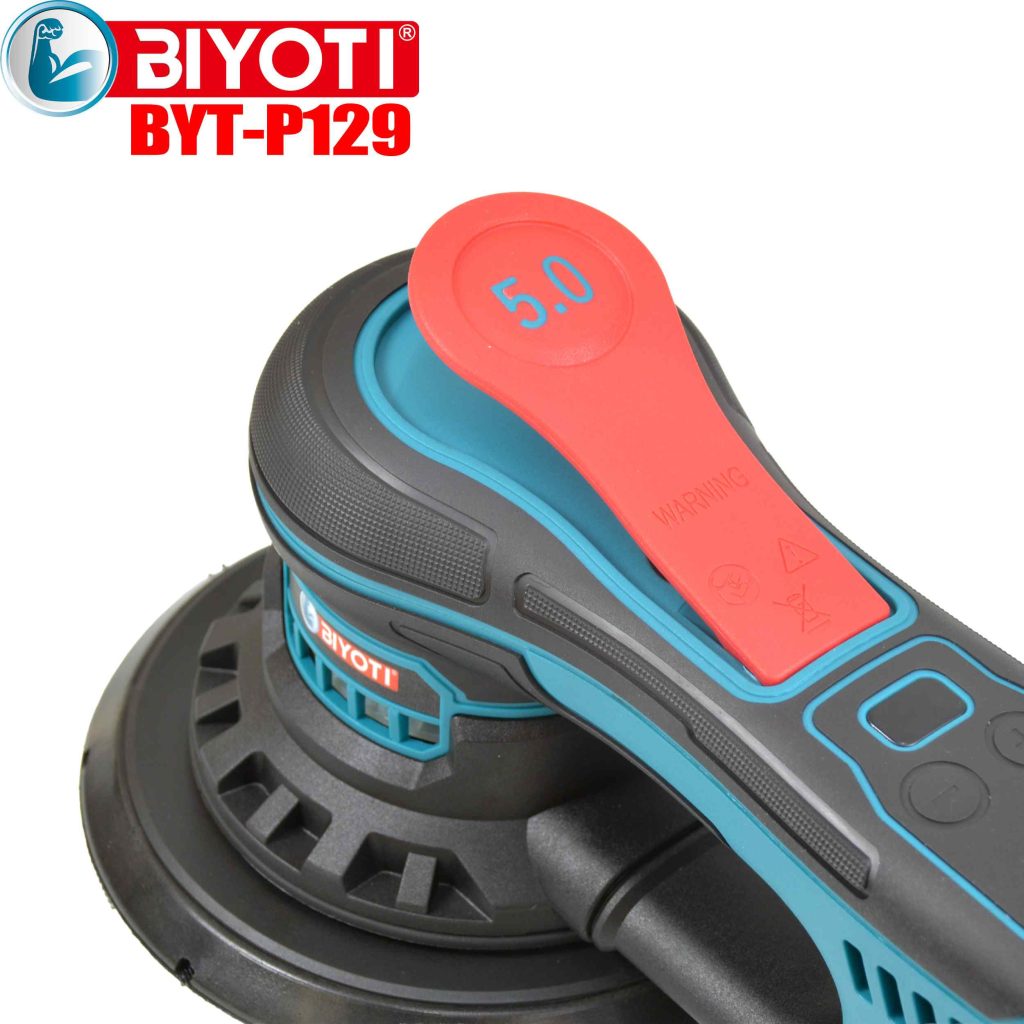
The BYT-P129 Polisher uses a 5.0mm orbit stroke for efficient sanding with lower swirl risk. That balance works best when the operator keeps the machine flat, avoids shock loading, and lets the orbit action cut instead of pushing the tool like a grinder.
What Makes Polishing Pad Life Shorter?
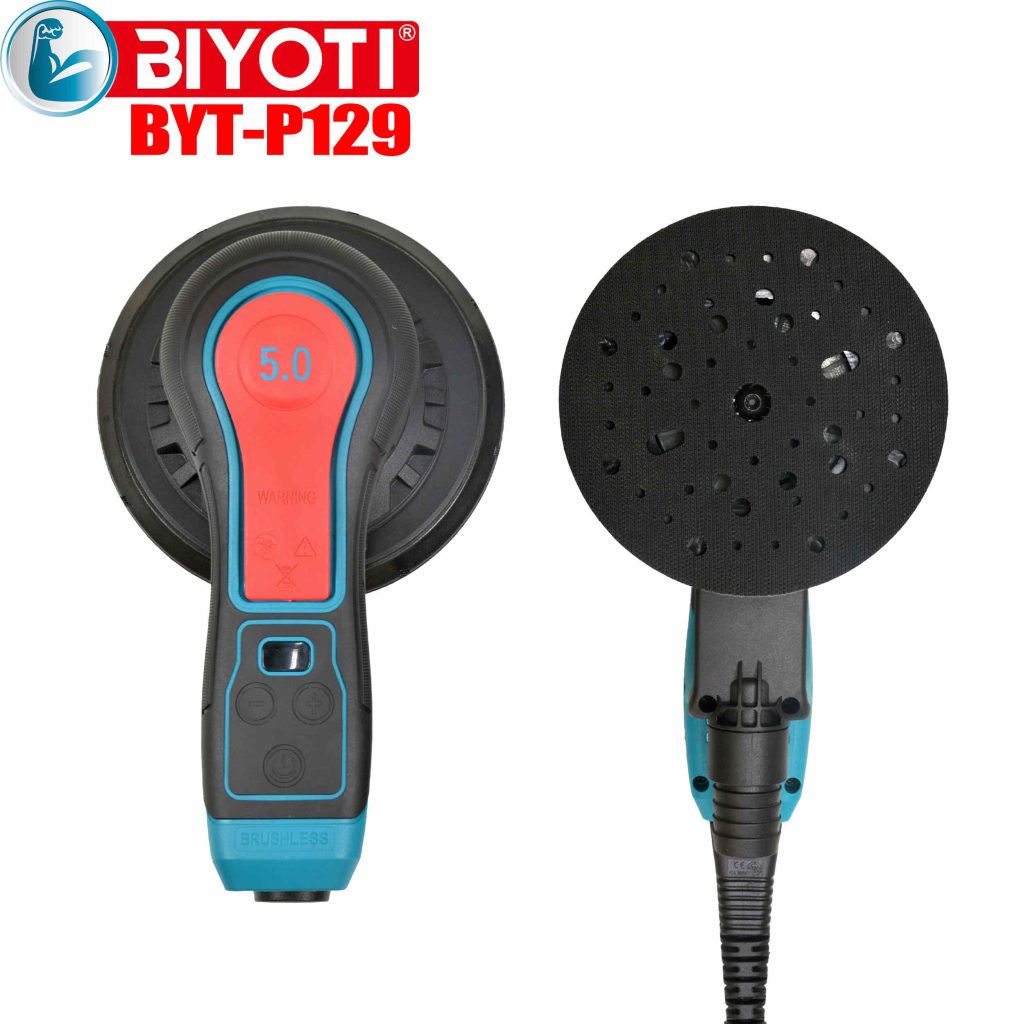
Pad life depends on heat, cleanliness, contact angle, and the surface being worked. A pad does not need to look destroyed to cause problems. Once the hook-and-loop grip weakens or the foam face hardens, the finish quality drops.
Common signs a pad needs attention
- The sanding disc or polishing pad no longer stays firmly attached
- The pad face feels glazed, hard, or uneven
- The machine starts to hop on flat surfaces
- Dust collection gets worse even with a clean hose
- Swirl marks appear after normal working speed and pressure
- The pad edge becomes rounded, torn, or burnt
Clean pads before buildup becomes hard
For polishing pads, remove compound before it dries deep into the foam. For sanding discs, replace worn paper early. A dull disc makes the operator push harder, which creates more heat and motor load. Between grit changes, brush or vacuum the work surface so loose abrasive grains do not scratch the next pass.
The BYT-P129 uses an industrial 150mm hook-and-loop backing plate that supports common 6-inch abrasive discs and polishing pads. This makes pad replacement simple for workshops that need fast changeovers and steady consumable availability.
How Should Dust Extraction Be Maintained?
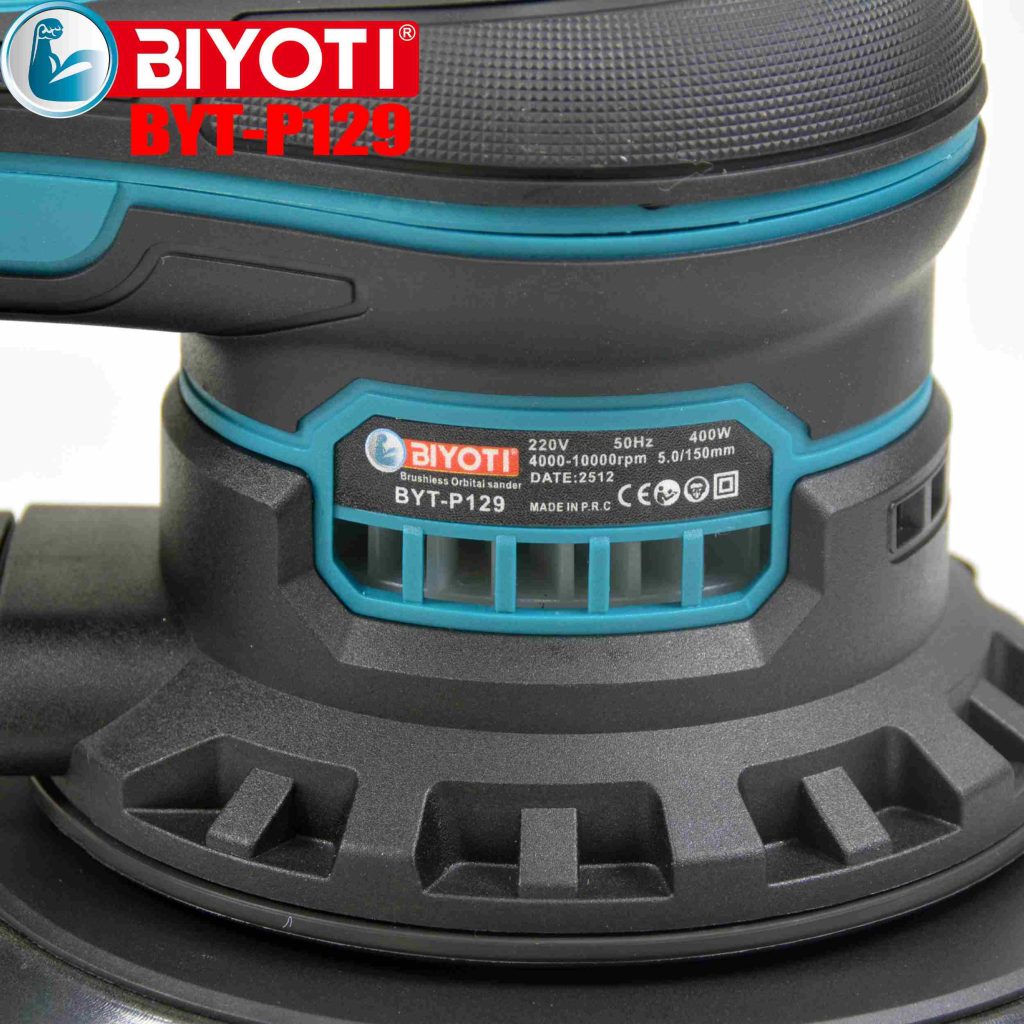
Dust control is not only about cleaner air. It also protects the motor, pad, and finish. A blocked dust port turns dry sanding into a heat and scratch problem. Fine dust stays under the disc, pads clog faster, and the tool may run hotter.
Check the full dust path
Start with the disc. The holes must line up with the pad. Then check the backing plate, dust port, hose, vacuum inlet, and filter. One blocked point can reduce the whole system. Empty the vacuum container before it is packed full. A full extractor pulls less air and leaves more dust under the pad.
Do not cover vents
Some users try to stop dust blowing from the tool body by covering vents. That is risky. Vents are there for cooling. If dust is coming out in the wrong place, check for a clogged dust path, leaking hose, wrong disc hole pattern, or blocked filter.
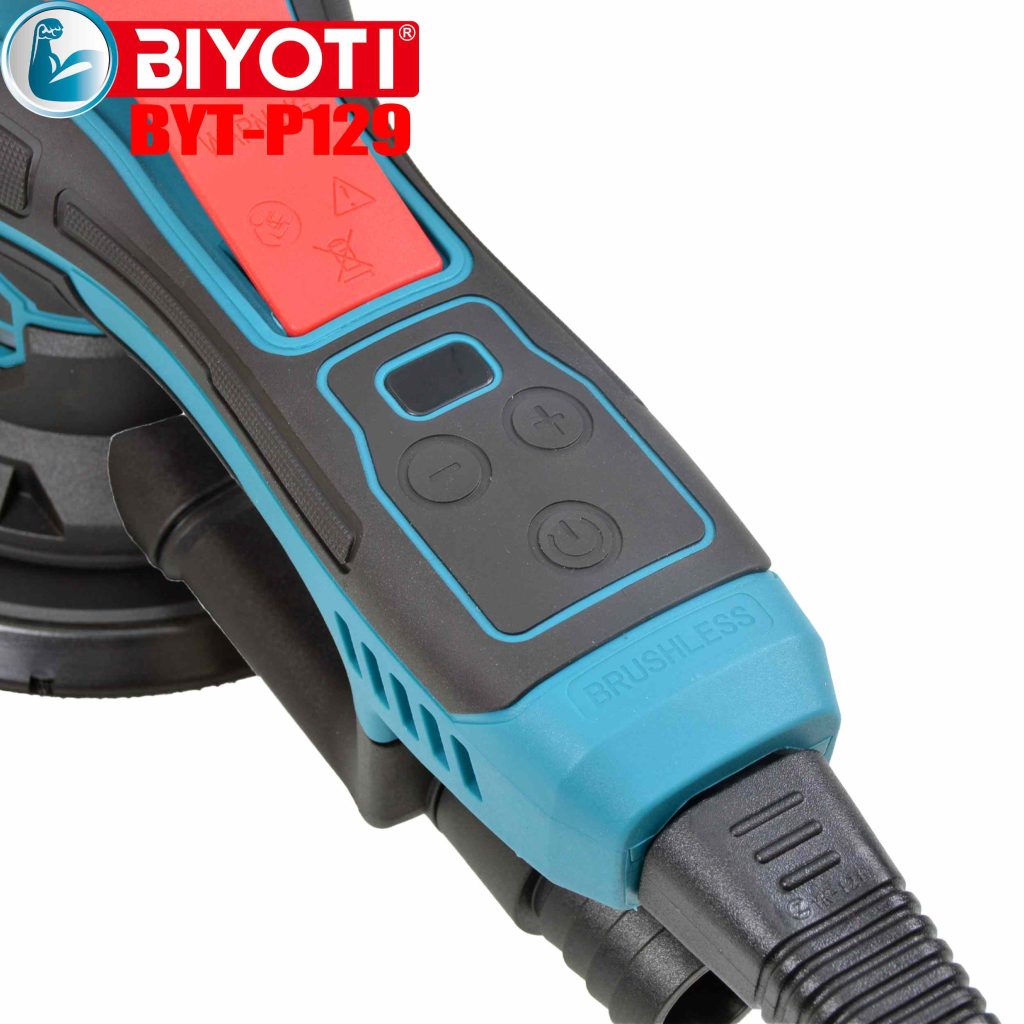
The BYT-P129 Polisher includes a dust extraction interface designed to connect with industrial vacuum systems. For dry sanding work in automotive repair, woodworking, and solid surface finishing, this feature helps keep the work area cleaner and reduces dust buildup around the pad.
What Daily Maintenance Schedule Works Best?
A simple routine works better than a complicated one that nobody follows. The goal is to catch small problems before they become tool failure, bad finish quality, or wasted pads.
| When | Maintenance task | Why it matters |
| Before use | Check cord, plug, pad, disc fit, and dust hose | Prevents unsafe startup |
| First 10 seconds | Run without load and listen | Finds vibration or noise early |
| During work | Keep pad flat and move steadily | Reduces heat and marks |
| Every disc change | Clear dust from pad holes and surface | Protects finish quality |
| After use | Clean vents, pad face, and dust port | Helps motor cooling |
| Weekly | Inspect backing plate and hose seals | Keeps suction strong |
| Monthly | Check vibration, bearing noise, and pad grip | Finds wear before failure |
During actual polishing or sanding, avoid staying in one spot for more than a few seconds. Move in overlapping passes. On larger panels, a cross-hatch path gives better coverage and lowers the chance of uneven marks.
Because the BYT-P129 supports both dry sanding and polishing tasks, this schedule suits busy workshops that move between filler sanding, paint prep, and surface finishing with one 6-inch variable speed polisher.
Brief Introduction to BYT-P129 Polisher
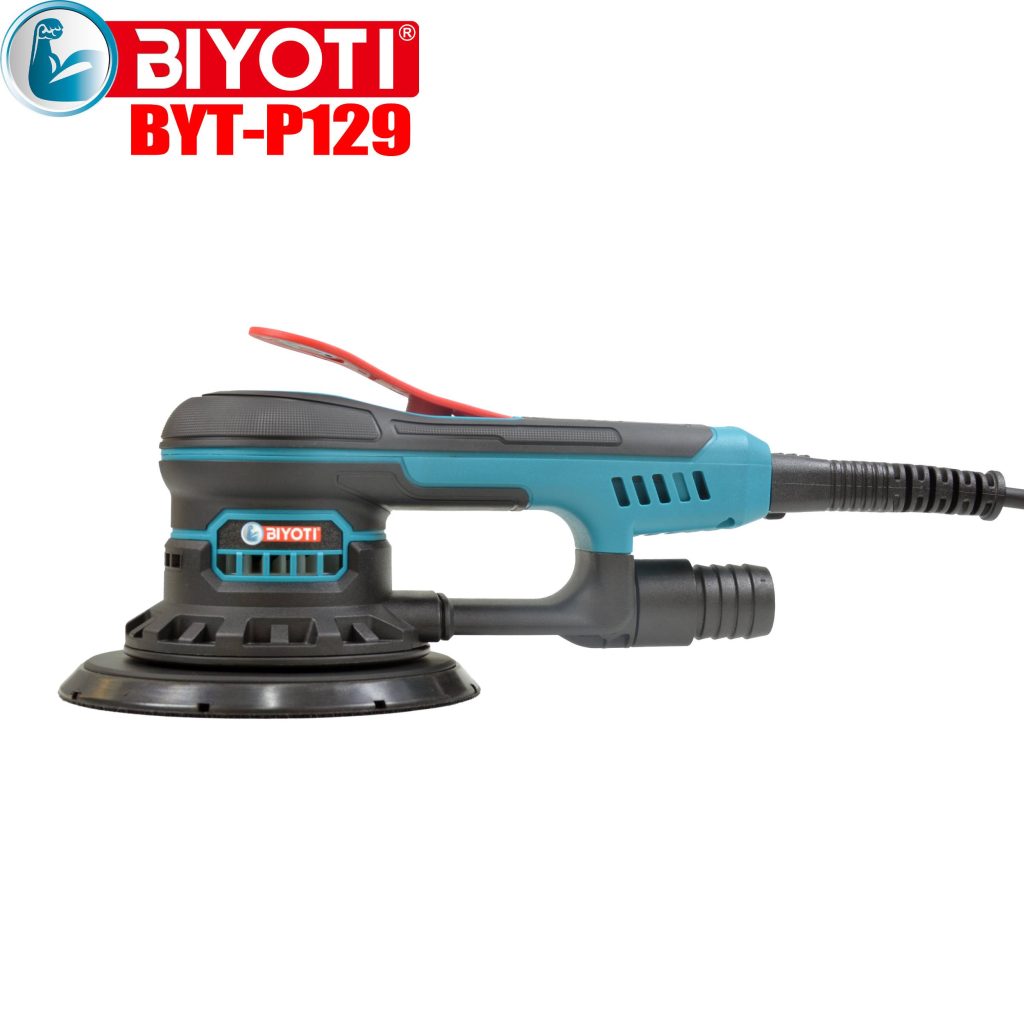
The BYT-P129 Polisher is a 400W, 150mm professional dry sanding and polishing tool made for users who need practical speed control, dust handling, and comfortable operation. Its 4000–10000 RPM variable speed setting lets operators match the machine to coarse sanding, fine sanding, and polishing. The 5.0mm orbit stroke supports efficient material removal while helping reduce swirl marks when the pad is kept flat and clean.
Its 6-inch pad size is widely used in body shops, woodworking, and surface finishing, so sanding discs and polishing pads are easy to source. The dust extraction port helps reduce airborne dust during dry sanding, while the low-profile ergonomic body supports better control during long shifts. For distributors, repair shops, and finishing teams, the BYT-P129 offers a practical balance of power, pad compatibility, and daily-use convenience.
Yongkang Jiakai Industry and Trade Co., Ltd. as a BYT-P129 Polisher Supplier
Yongkang Jiakai Industry and Trade Co., Ltd. is a Chinese company specializing in supplying high quality power tools and workshop equipment under the brand name of BIYOTI, located in Yongkang, Jinhua, Zhejiang Province of China. Our products include: electric drill, angle grinder, laser level, polisher, saw and other power tools. Our powerful product system consists of more than hundreds of tool models, therefore our customers can find all sorts of power tools here within one single supplier according to their requirements.
Value for B2B customers is not limited to the tool itself and includes the product range, supply ability, technical advice and after-sales communication. BIYOTI is a professional manufacturer of power tools from China with manufacturing capacity, a broad product range and competent service for international customers. For buyers looking for a BYT-P129 Polisher supplier, Yongkang Jiakai Industry and Trade Co., Ltd. provides a direct product source with a clear focus on practical, competitive power tools.
The BYT-P129 fits well in this supplier profile because it is not a niche tool for rare use. It is a daily workshop machine with standard 150mm consumables, variable speed control, dust extraction, and a 6PCS/CTN packing option suitable for dealer stocking or repair shop purchasing.
Conclusion
Polisher maintenance is mostly about daily habits. Keep dust moving out of the tool. Keep the pad flat. Do not press harder than needed. Match the speed to the material. Replace worn discs and pads before they damage the finish. These steps protect the motor, reduce stress on the drive system, and help the pad last longer.
The BYT-P129 Polisher is the perfect solution for a workshop requiring a 6″ dry sanding and polishing tool. It has been designed to make your working habits easier by including 400W of power with variable speed from 4000-10000RPM, 150mm pad compatible, 5.0mm orbit and Ergonomic design. Additionally the Polisher has a dust extraction port making it ideal for use in body repair, wood sanding, solid surface and general finishing. With the correct maintenance the BYT-P129 can be a hard working and reliable tool in your workshop.
FAQs
How often should a polisher be cleaned?
A polisher used for dry sanding should be cleaned after every job or at the end of each shift. Vents, dust ports, pad holes, and the backing plate need the most attention. For the BYT-P129 Polisher, regular dust port cleaning helps maintain suction and keeps the 400W motor running cooler.
What speed should be used for polishing?
Fine polishing usually works best around 4000–6000 RPM. Painted surfaces should not be worked at excessive speed because heat can damage the clear coat. The BYT-P129 variable speed polisher allows operators to start low, test the surface, and raise speed only when needed.
How can polishing pad life be extended?
Clean the pad before compound dries, avoid edge pressure, replace worn discs early, and keep the pad flat. A 150mm hook-and-loop pad system like the BYT-P129 uses makes it easy to change consumables before they cause vibration or swirl marks.
Why does a random orbital sander slow down under pressure?
Too much downward force increases drag and makes the motor work harder. A blocked dust path or worn pad can make the problem worse. With the BYT-P129, light pressure, clean dust extraction, and the right RPM setting help keep the sanding action steady.
Is the BYT-P129 suitable for professional workshops?
Yes. The BYT-P129 Polisher is designed around common workshop needs: 150mm consumable compatibility, 400W power, variable speed, dust extraction, and ergonomic control. It is suitable for repair shops, finishing teams, and dealers looking for a practical 6-inch polisher and dry sanding machine.