Woodworkers and contractors know that a solid miter saw changes everything on the job. It handles angles and crosscuts with ease. This guide walks through what matters when picking one. From types to features, get the details to make a smart choice. Focus on tools that fit real work like framing or trim.
Understanding Miter Saw Types
Different projects call for different saws. Start here to match the tool to the task.
Basic Miter Saws
These cut straight angles. They pivot left and right for miters. Good for simple jobs like picture frames or baseboards. No bevel means no tilted cuts.
Many start with these for their straightforward setup. They stay light and portable. Think of cutting crown molding in a tight space – that’s where basics shine.
Compound Miter Saws
Add bevel to the mix. The blade tilts for compound angles. Ideal for crown molding or furniture joints. One-side tilt keeps it simple, while dual bevel flips both ways to save time.
Transition to more advanced cuts. Users often move up from basic models when projects get complex. For example, installing chair rails demands precise bevels.
Sliding Compound Miter Saws
Rails let the blade slide forward. This boosts cut width for wider boards. Handles 12-inch lumber without flipping the piece. Great for flooring or decking.
With extra reach, these tackle big tasks. A contractor might use one for cutting beams on site. They add versatility but weigh more.
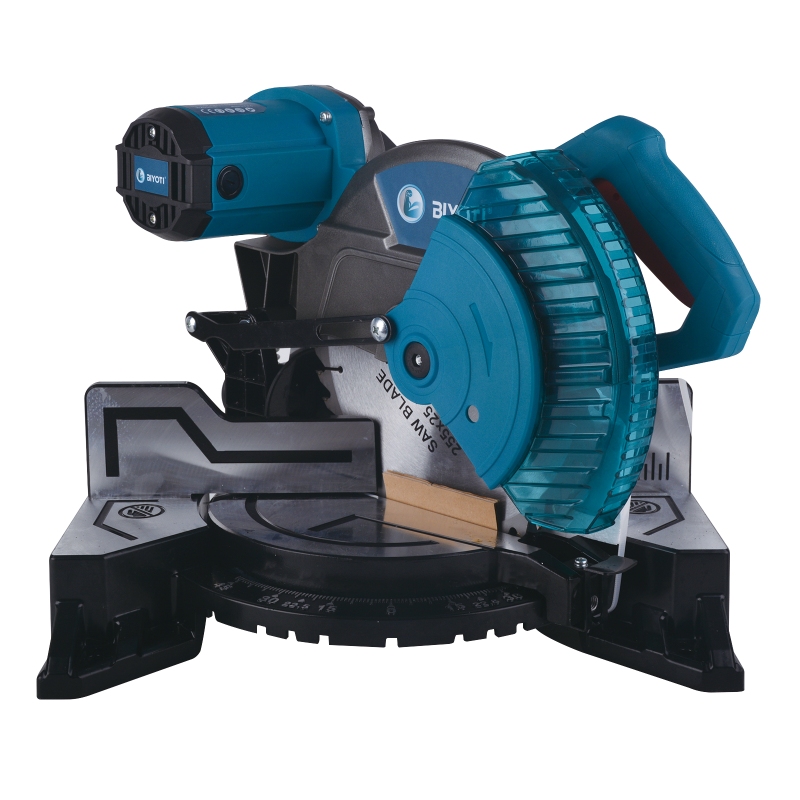
The BYT-MS255 10-Inch Miter Saw stands out in this category. Its 1500W motor spins at 6000 RPM for smooth finishes. The 255mm blade cuts deep into wood or aluminum. Positive stops at 15°, 22.5°, 30°, and 45° make setups quick. A cast aluminum base cuts vibration for accurate work.
Key Features to Consider
Look beyond basics. Features define performance and ease.
Motor Power and Speed
Power matters for tough materials. Aim for at least 1500W to avoid bogging down in hardwood. Speed around 5000-6000 RPM ensures clean edges without burn marks.
High RPM reduces splintering. Picture slicing through oak – steady power keeps the cut true.
Blade Size and Quality
Common sizes are 10-inch or 12-inch. Smaller ones spin faster for finer cuts. Larger handle thicker stock. Carbide-tipped blades last longer.
Choose based on material. For trim, a 60-tooth blade works best. It minimizes tear-out on delicate edges.
Dust Collection and Visibility
Built-in ports connect to vacuums. Keeps the workspace clear. Clear guards let you see the cut line.
Effective dust systems extend tool life. In a shop full of sawdust, good collection means less cleanup and better health.
Laser Guides and LED Lights
Lasers show the cut path. LEDs light the blade area. Both improve accuracy in dim spots.
These extras speed up work. Aligning a cut on marked lumber becomes effortless.
The BYT-MS255 10-Inch Miter Saw excels with these. Its 1500W “POWER MOTOR” maintains speed under load. The 6000 RPM delivers flawless finishes, cutting down sanding time. Bevel tilts for compound angles, and the self-retracting guard boosts safety without blocking views. Perfect for woodworking or aluminum jobs.
Budget and Size Considerations
Costs range from $100 to over $500. Balance price with needs.
Entry-Level Options
Under $200 gets a basic saw for occasional use. Fine for DIY trim or small repairs.
They lack bells but get the job done. A homeowner might grab one for hanging shelves.
Mid-Range Choices
$200-$400 buys compound features. Sliding arms add value for frequent cuts.
This sweet spot suits pros on a budget. Handles daily tasks like cabinetry without breaking the bank.
Professional-Grade Models
Over $400 for heavy-duty builds. Dual bevel and robust motors for all-day work.
Invest here for longevity. Contractors rely on them for site after site.
Size ties to portability. Compact 10-inch models fit in trucks. Larger ones stay in shops.
Weigh mobility against capacity. For fieldwork, lighter is better.
Here’s a quick comparison:
| Feature | Entry-Level | Mid-Range | Professional |
| Power | 1200W | 1500W+ | 1800W+ |
| Blade Size | 8-10 inch | 10 inch | 12 inch |
| Cut Width | Up to 6 inch | Up to 12 inch | Over 12 inch |
| Price Range | $100-200 | $200-400 | $400+ |
The BYT-MS255 10-Inch Miter Saw fits mid-range perfectly. At 1500W, it powers through dense materials. The 10-inch blade manages wide boards for flooring or frames. Its stable base ensures precision, making it a go-to for pros and hobbyists alike.
Safety and Maintenance Tips
Safety first. Proper habits prevent accidents.
Essential Safety Gear
Wear glasses, ear protection, and masks. Dust harms lungs over time.
Clamps secure pieces. Two hands on the tool – one on the handle, one steadying material.
Common Maintenance Practices
Check blades for damage before starts. Tighten bolts regularly.
Clean dust ports after use. Lubricate moving parts monthly.
Wait for full stop after cuts. Store in dry spots to avoid rust.
Bullet points for quick checks:
- Inspect blade for cracks.
- Secure workpiece firmly.
- Use push sticks for small pieces.
- Disconnect power for changes.
These steps keep the tool reliable. A well-maintained saw lasts years.
The BYT-MS255 10-Inch Miter Saw prioritizes safety. Its transparent guard retracts smoothly. The design demands two-handed operation, reducing risks. Always inspect the 255mm blade and wait for it to stop – key for safe, precise cuts in wood or aluminum.
Meet the Supplier: Yongkang Jiakai Industry and Trade Co., Ltd.
Behind quality tools stands a strong maker. Yongkang Jiakai Industry and Trade Co., Ltd., based in Yongkang City, Jinhua, Zhejiang Province, China, produces power tools under the BIYOTI brand. With years in the field, they export to Europe, America, and Southeast Asia. Their focus? Innovation and reliability in items like drills, grinders, and saws. As the supplier for the BYT-MS255 10-Inch Miter Saw, they emphasize customer service and quality. Check their story on About BIYOTI. This builds trust in every cut.
Spotlight on the BYT-MS255 10-Inch Miter Saw
Before wrapping up, dive into this standout model. The BYT-MS255 brings 1500W power for demanding jobs. It hits 6000 RPM for clean results in wood, molding, or aluminum. Miter adjustments with stops at common angles speed setups. Bevel for compounds adds flexibility. The aluminum base damps vibration. Applications span interior trim, woodworking, flooring, and fabrication. Explore more at BYT-MS255 Product Page or the full lineup on BIYOTI Miter Saws. It’s built for precision and durability.
Conclusion
Picking the right miter saw boosts project quality and efficiency. Consider types, features, budget, and safety to find the fit. Tools like these elevate work, whether in a shop or on site. For more on power tools, visit BIYOTI Home. Make informed choices for better results.
FAQs
What is the best miter saw for beginners?
Starters benefit from compound models with easy adjustments. They handle basic angles without overwhelm. Look for stable bases and clear scales.
How to choose miter saw size for woodworking?
Match blade diameter to material. 10-inch suits most trim and frames. Larger for thick lumber. Factor in workspace too.
What are sliding compound miter saw advantages?
Extra reach for wide cuts. No need to flip boards. Speeds up jobs like decking.
Miter saw safety tips for daily use?
Gear up with PPE. Clamp workpieces. Wait for blade stop. Regular checks prevent issues.
Best miter saw features to look for in 2025?
Prioritize power, speed, and dust control. Lasers aid accuracy. Durable builds last.